All Posts By

admin

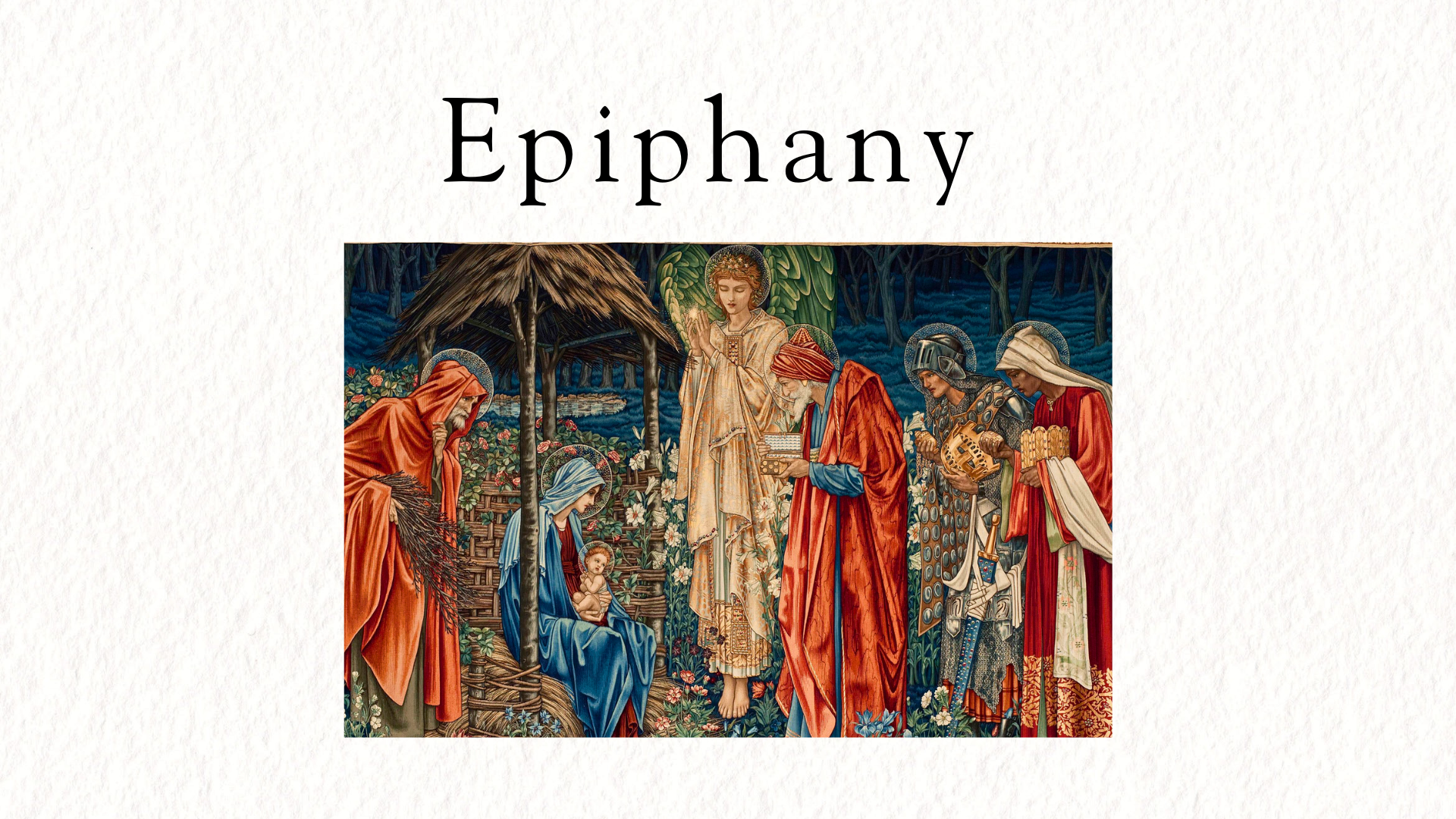
Epiphany

Matthew 2:11

They prostrated themselves and did him homage.

Readings for Sunday: Isaiah, Ephesians, Matthew

Reflection:

The story of the three kings is one of the most beautiful stories in Scripture. This narrative reveals something deeply human: our longing to search for truth. The Gospel, in fact, never calls these three travelers kings, but magi. They were learned men from the East, likely from the Parthian Empire, practitioners of an ancient religion known as Zoroastrianism. They were scholars, observers of the heavens, men who believed that movements in the sky revealed meaning on earth. When these magi saw a star rise, they understood it as a sign: the birth of a king. They didn’t practice astrology as we know it today, but performed a disciplined reading of the cosmos. They had no map, no certainty, no guarantee—only a conviction that something profoundly important had happened. And so they set out, traveling a long, expensive, dangerous journey simply to find the truth. Why would they do this? Surely there were kings closer to home. But they were not searching for power or politics.

They were searching for meaning and for Truth itself. And isn’t that still true of us today? Whether in politics, philosophy, or personal struggle, we are all asking the same questions: What is real? What is good? What gives life meaning?  From Socrates to Plato to modern debates, humanity has always been on this quest. The magi eventually find what they are seeking. What they find is not an idea, but a person: Jesus Christ. They offer gold for a king, incense for God, and myrrh for one who would die. In Him, the Truth became flesh. Jesus is not merely a teacher of truth; He is Truth itself. As He says, “I am the way, the truth, and the life.” This is why the story of the magi is so beautiful. It is our story. The search for meaning, fulfilled in Christ. At Epiphany, God reveals Himself not only to Israel, but to the whole world. We, too, have found the Truth. His name is Jesus.

Reflection Questions

  • What “stars” am I currently following in my own life, and are they truly leading me toward deeper truth, or merely toward comfort, success, or approval?
  • Like the magi, am I willing to take risks, sacrifice comfort, or change direction in order to seek what is truly meaningful and life-giving? Why or why not?
  • If Jesus is truly the embodiment of Truth, how does that challenge the way I make decisions, understand my purpose, and live out my faith each day?

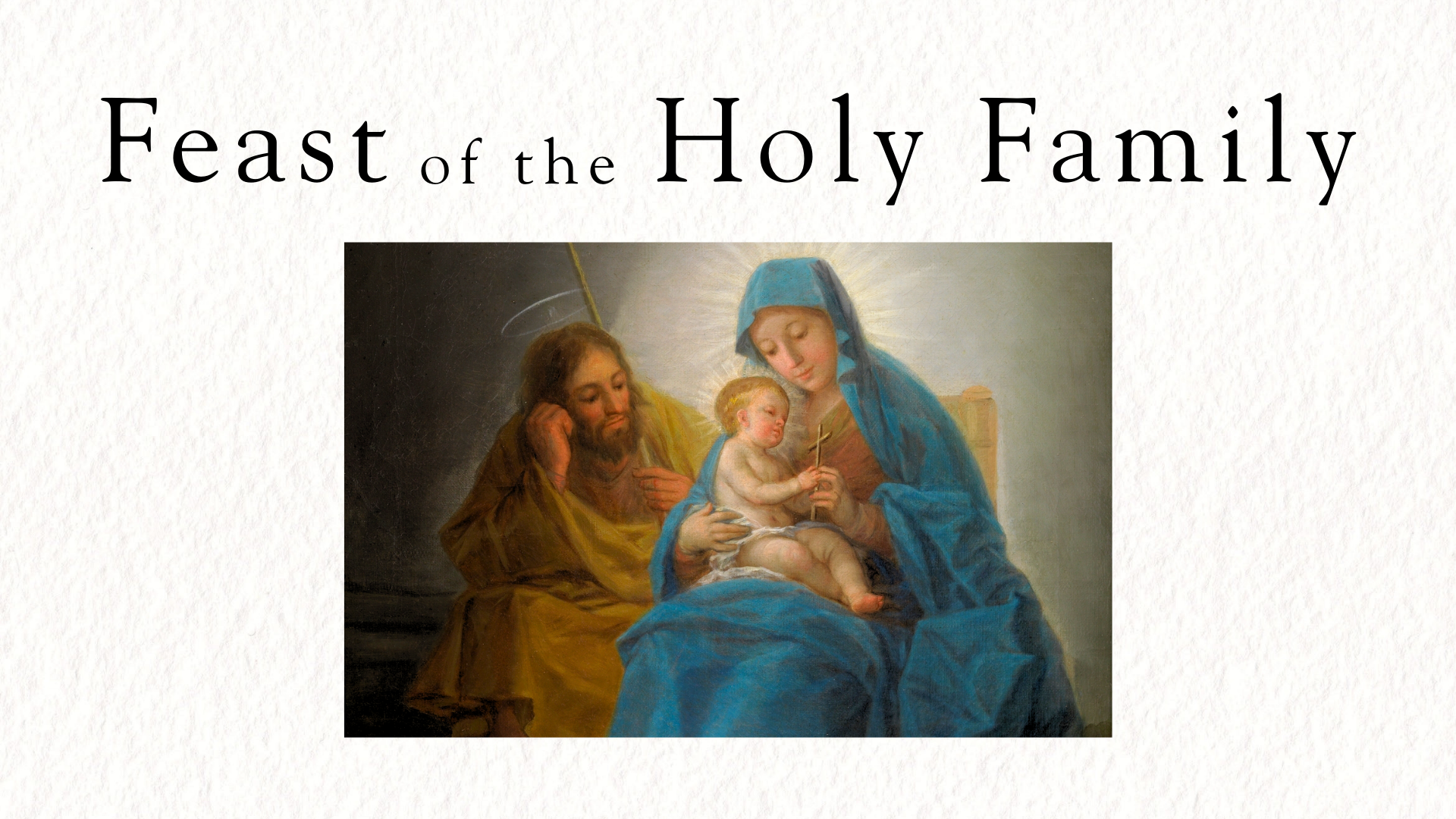
Feast of the Holy Family

Matthew

Out of Egypt I called my son.

Readings for Sunday: Sirach, Colossians, Matthew

Reflection:

The Holy Family is, in one sense, an unusual family. Mary, both wife and mother, is a perpetual virgin who conceives her Son not through human means but by the power of the Holy Spirit. That Son, Jesus, is both fully God and fully man. Technically, no husband was necessary for this divine plan—yet God ensured one anyway. Joseph is given to Mary as husband and to Jesus as a human, adoptive father. This extraordinary family then lives not in a place of prestige, but in Nazareth, a small and insignificant town, so unimpressive that Nathanael famously asks, “Can anything good come from Nazareth?” And yet, despite all this, the Holy Family becomes a model for every family.

In our own time, the very definition of family is often debated and redefined. Throughout history, families have taken different forms—nuclear, extended, adoptive—but in Joseph, Mary, and Jesus we see a clear message from God. To save us, the Son of God took on a true human nature and lived the full gamut of human life. Theoretically, he could have appeared on earth fully grown, but instead He was conceived in Mary’s womb, born as a child, and raised within a family.

Though He did not need a human father, God chose that Jesus would grow up with both a mother and a father, experiencing family life as we do.

In His humanity, Jesus shows us the way to live. He experiences obedience, love, and growth within a home. Marriage, as the Church teaches, is ordered toward the unity of husband and wife and the good of children. While acknowledging the brokenness of the world—divorce, single parenthood, and suffering—the norm remains: a loving, faithful home where children can grow securely.

The Holy Family was not free from hardship, but Joseph and Mary remained committed to each other and to Jesus. In their fidelity, sacrifice, and love, they reveal God’s plan for family life and remind us that even what seems ordinary—or insignificant—can become the place where God’s grace is most powerfully at work.

Reflection Questions

  • In what ways does the Holy Family challenge my understanding of what makes a family “successful” or “normal,” and how does it invite me to rethink God’s plan for family life?
  • How does Jesus’ choice to grow in wisdom and obedience within a human family influence the way I view the roles of parents, marriage, and sacrifice in everyday life?
  • Given the realities of brokenness in families today, how can the example of Joseph, Mary, and Jesus inspire greater commitment, patience, and love in my own family or community?

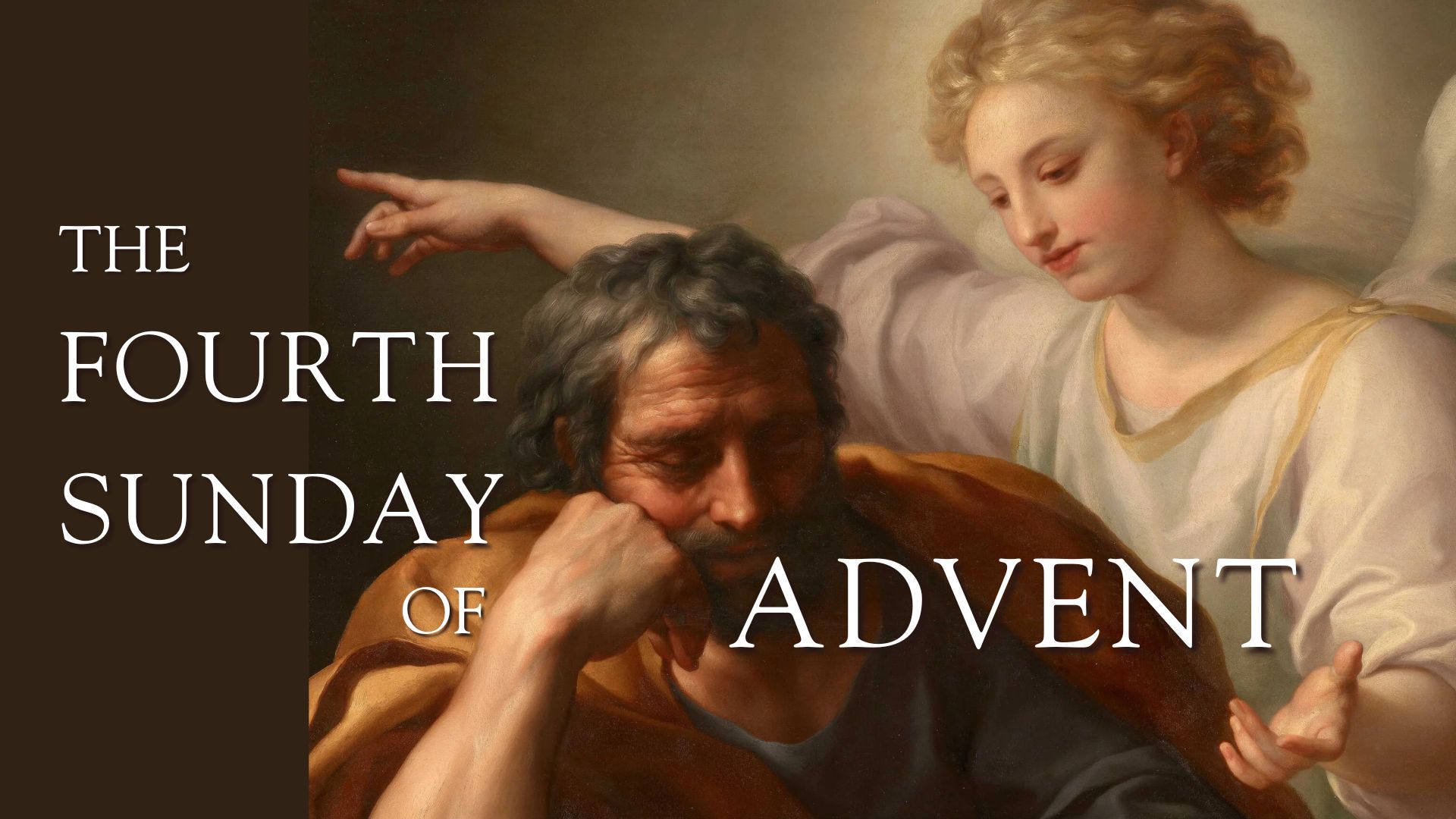
4th Sunday of Advent

Matthew 1:24

When Joseph awoke, he did as the angel of the Lord had commanded him and took his wife into his home.

One of the most striking things we do not learn about Saint Joseph from the Bible is what he said. In fact, if we scour the entire Scriptures, not a single word spoken by Joseph is recorded. At first, this seems very odd. Surely Joseph spoke during his lifetime. Yet the silence of Scripture is fitting, because it reveals exactly who Saint Joseph was: a man whose character is shown not by words, but by actions. He is Joseph the Just, Joseph the Courageous, and Joseph the Foster Father of Jesus and Patron Saint of Workers.

Joseph is called “the just.” His justice is seen clearly in the story of Jesus’ conception. Joseph and Mary were betrothed, a binding legal commitment far more serious than modern engagement. When Mary was found to be pregnant before they lived together, Joseph faced a grave situation. Though the law allowed for public accusation, Joseph chose compassion. As Scripture tells us, “since he was a righteous man, yet unwilling to expose her to shame,” he decided to divorce her quietly.

Even before understanding God’s plan fully, Joseph acted with mercy. When an angel later revealed that Mary’s child was conceived by the Holy Spirit, Joseph immediately obeyed and took her into his home. No words are recorded, only faithful action.

Joseph’s courage is also evident. He accepted Mary despite rumors and raised Jesus as his own son, giving him a place in the royal line of David. Later, warned in a dream, Joseph fled with Mary and Jesus to Egypt, leaving home and livelihood behind to protect his family. Again, without hesitation or argument, he did God’s will.
Finally, Joseph was a foster father and a worker. As a carpenter, he taught Jesus his trade, shaping Christ’s human life through years of quiet labor. For this reason, Joseph is rightly honored as the Patron Saint of Workers. His silent faith, courageous obedience, and steadfast love remind us that holiness is often lived quietly. Like Joseph, sometimes the most powerful witness is shown not by what we say, but by what we do.

Reflection

  • In what ways do my actions reveal my faith more clearly than my words, and where might God be inviting me to act rather than speak?
  • How do I respond when God’s will is unclear or difficult, especially when obedience may cost me comfort or reputation?
  • How can I live holiness more intentionally in my daily responsibilities at home, work, and family life?

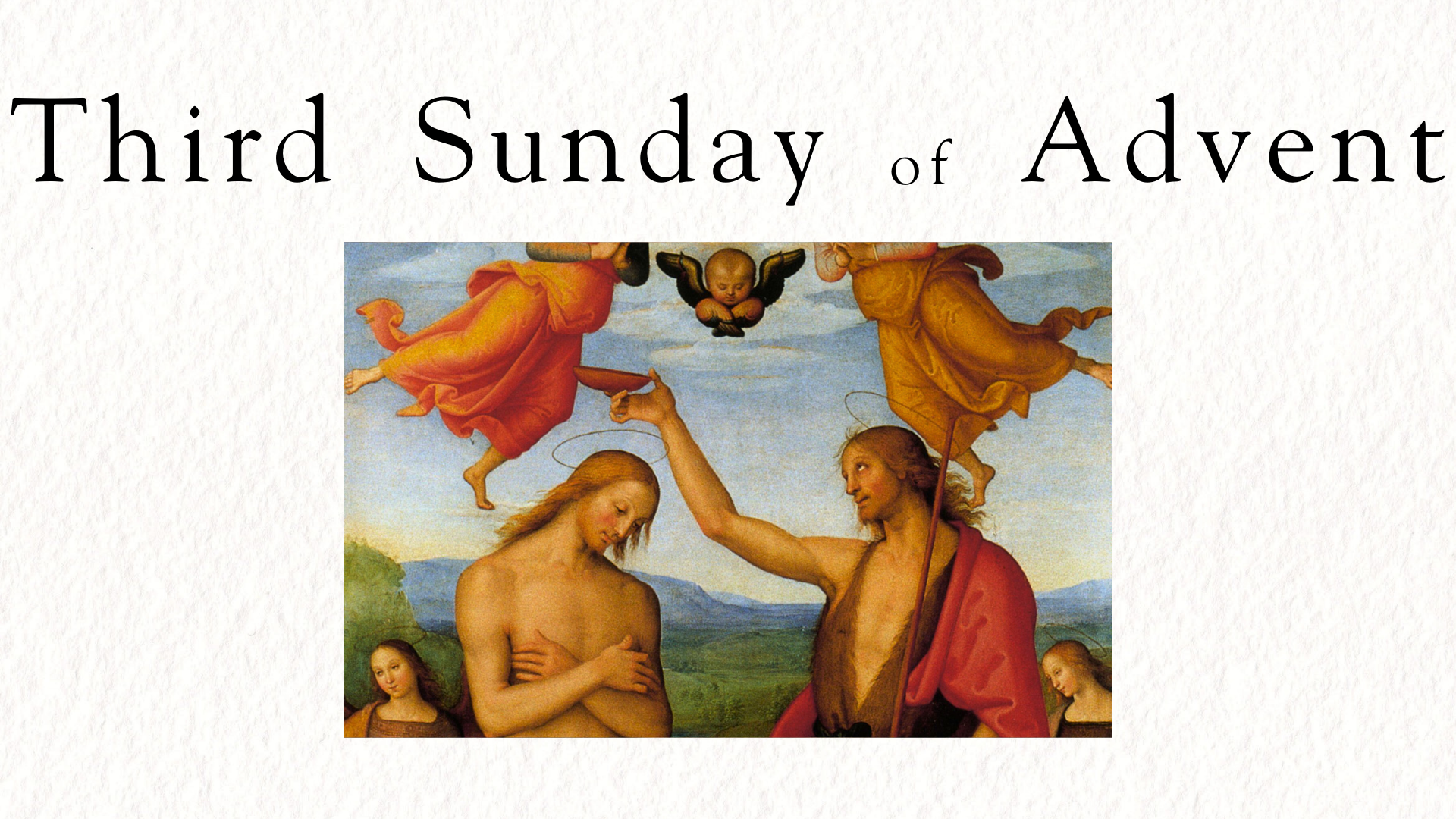
Third Sunday of Advent

James 5:9

Make your hearts firm, because the coming of the Lord is at hand.

Readings for Sunday: Isaiah, James, Matthew

Reflection:

This time of year, the dusty rose vestments remind us that Gaudete Sunday is here—a Sunday of rejoicing as we move closer to Christmas. Today, we once again consider John the Baptist and his expectations about the Messiah. Like John, we also carry expectations of God. We expect Him to hear our prayers, to help us in trouble, to cure illness, and to fix what feels broken. But what do we do when God does not respond in the way we hope?

John the Baptist believed Jesus was the Messiah, yet when Jesus did not act with power and judgment immediately, John questioned. He expected a fiery Messiah who would come with force and authority. Instead, Jesus came with mercy—healing the sick, restoring sight, and raising the dead. Jesus responded to John’s doubts not with anger, but with evidence: the blind see, the lame walk, and the poor receive the Good News. Jesus fulfilled the words of the prophet Isaiah, showing He was truly the one sent by God.

Sometimes, like John, we question because God does not act according to our expectations. Suffering, loss, and unanswered prayers can shake us. But Jesus invites us to trust Him—not because He always gives us what we want, but because He gives what we need for salvation. Earthly healing is temporary, but the Gospel offers eternal life.

As we continue through Advent, we are called to adjust our expectations—not asking God to meet our plan, but trusting His. One day we will meet Jesus face-to-face. Everything He allows in our lives prepares us for that moment.

Reflection Questions

  • What expectations do I currently have of God, and how do I respond when He doesn’t meet them in the way I hoped or imagined?
  • In moments of uncertainty, like John the Baptist experienced, do I take time to look for signs of God’s presence and goodness already at work around me?
  • Am I more focused on asking God for earthly comfort and answers, or am I open to the deeper work He wants to do in my heart to prepare me for eternal life?

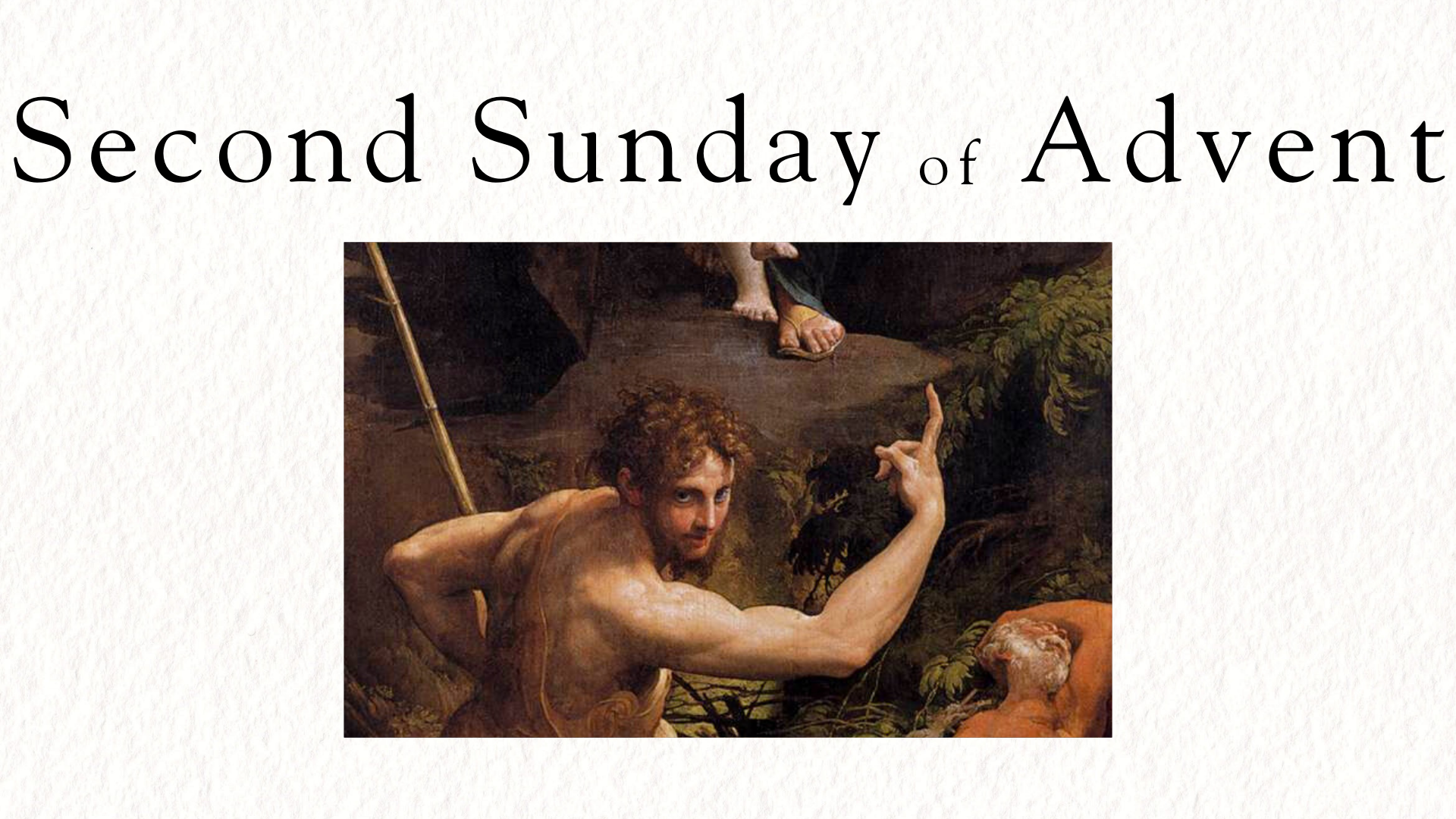
Second Sunday of Advent

Matthew 3:3

Prepare the way of the Lord, make straight his paths.

Readings for Sunday: Isaiah, Romans, Matthew

Reflection:

Imagine a man who approaches you dressed in a camel-hair tunic, cinched with a leather belt, crunching on a handful of locusts dipped in honey. Suddenly he points at you and cries, “Repent, for the kingdom of heaven is at hand!” Most of us would probably think he was mentally ill and had forgotten to take his medication. Yet this is exactly the kind of shocking figure John the Baptist was.

We come to church, hear the familiar stories of Jesus’ birth, and think, “Isn’t that nice?” They can become heart-warming background noise, especially if we’ve heard them so many times that we hardly pay attention. But the reality is far from tame. John the Baptist bursts onto the scene in today’s Gospel as a jarring figure. By our standards, he would seem eccentric for living alone in the desert, wearing strange clothing, and shouting dire predictions. The prophets throughout salvation history were the same. These were strange people doing outrageous things, not evil but certainly not “normal.”

The Advent scriptures are full of such figures precisely to shake us out of complacency.

Imagine arriving at a party, only to see a huge tree about to collapse onto the house and kill everyone inside. You run in to warn them, but everyone is too drunk to care. Who is truly thinking clearly; you or the partygoers? That is the prophets’ situation. They appear shocking only because our perspective has been dulled by sin.

Many who abandon Christianity don’t do so because doctrine failed them, but because their lifestyles clashed with the faith. As Chesterton wrote, “The Christian ideal has not been tried and found wanting. It has been found difficult; and left untried.” John the Baptist tries to wake us from our stupor. To repent means to think differently—to see the danger clearly and then act accordingly. Even believers can fall into living like everyone else, rationalizing sin because “everyone does it.” John’s words still shock because they confront our comfort and expose our self-deception. And Advent calls us to awaken.

Reflection Questions

  • In what ways might I have grown complacent in my spiritual life, accepting behaviors or attitudes simply because “everyone else does it”?
  • Where do I sense John the Baptist’s call to “think differently” in my own life—what truths am I avoiding, and what changes might they demand of me?
  • How do I respond when God’s message feels uncomfortable or disruptive—do I rationalize my habits, or allow myself to be awakened and transformed?

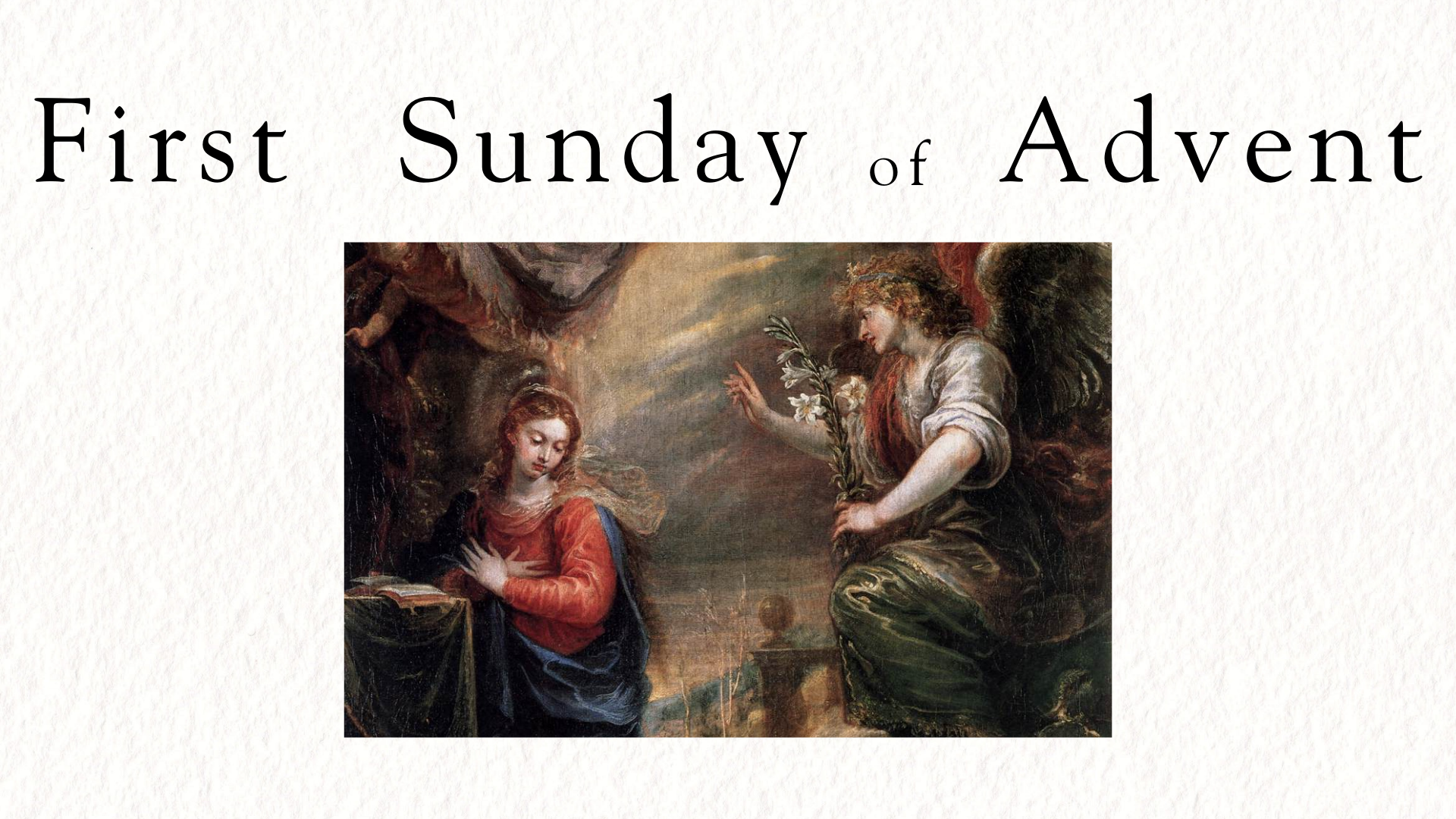
First Sunday of Advent

Matthew 24:44

So too, you also must be prepared, for at an hour you do not expect, the Son of Man will come.

Readings for Sunday: Isaiah, Romans, Matthew

Reflection:

At first glance, the idea of “canceling Christmas” sounds outrageous, but perhaps it invites us to ask a deeper question: Why do we celebrate Christmas at all? For many people, the holiday has lost its meaning—becoming little more than parties, shopping, decorating, and baking. If Christmas is meant to honor Jesus, then celebrating it while having no desire to speak with Him or welcome Him into our lives is an empty gesture. Maybe what needs canceling is not Christmas itself, but the way we have come to observe it.

The Church teaches that the most important celebration of the year is actually Easter. The Triduum of Holy Thursday, Good Friday, and the Easter Vigil commemorates the passion, death, and resurrection of Jesus. Thes are the center of our salvation. But this raises a question: if Jesus is truly God made man, how did He enter our world? This brings us to Christmas, the second most important feast. It commemorates not only His birth in Bethlehem two thousand years ago, but also His promised return. As St. Paul says, “The night is advanced, the day is at hand.” By celebrating His first coming, we anticipate and hope for His second.

Advent, therefore, is a season of preparation not just for December 25, but for the moment Jesus returns in glory. Jesus warns us that many will be unprepared, living ordinary lives with no thought for eternity. St. Paul urges us to “throw off the works of darkness” and “put on the armor of light.” Advent calls us to repentance, virtue, and intentional readiness.
This season, we should choose one area in which to grow (patience, prayer, righteousness) offering it as a birthday gift to Christ. Then, should He knock on our door on Christmas morning, we will joyfully say, “I was hoping you would come. Maranatha; come, Lord Jesus.”

Reflection Questions

  • In what ways has Christmas become routine or superficial for me, and how might I refocus it on Christ’s coming—both His first and His promised return?
  • What “works of darkness” or habits do I need to cast aside this Advent so I can truly “put on the armor of light”?
  • What is one concrete virtue or spiritual practice I can offer to Jesus as a birthday gift by intentionally growing in it this season?

Christ The King

Colossians 1:16

...whether thrones or dominions or principalities or powers; all things were created through him and for him.

Readings for Sunday: 2 Samuel, Colossians, Luke

Reflection:

Today’s political climate is marked by conflict, division, and constant disagreement. Suppose we swept away the presidency, Congress, the Supreme Court, and every political party, replacing them with a single king. Most of us would hesitate at the idea. History teaches that kings often became self-serving, unjust, or even despotic. Yet imagine if we could be guaranteed a king who was truly perfect. This king would be perfectly just, perfectly wise, perfectly selfless. A king who always acted for the good of his people, ruled with compassion, and could never die or be corrupted. With such a leader, elections, partisanship, and political corruption would vanish. Many of us might be intrigued by this possibility, though we assume no such king exists.

We Catholic Christians, however, profess that such a king does exist whose kingdom is not political and not confined to any earthly nation. God is King, not through force or election, but by virtue of being Creator. He made the universe from nothing, established the laws of physics, and sustains everything in existence. His “rules” are not arbitrary impositions but the wise principles that allow life and creation to flourish.

In ancient Israel, even human kings ruled only as God’s representatives, for God alone was the true King. We believe Jesus is God, who took on human nature without ceasing to be divine. As St. Paul teaches, all creation was made through him and for him; he is both the center and sustainer of the universe.

Jesus is King not only in his divinity but in his perfect humanity. He is the just, compassionate ruler who came not to be served but to serve, offering his life on the cross to save humanity. There on the crucifix we see our true King—a ruler whose throne is sacrifice and whose reign brings eternal life.

And so, the perfect, eternal King we imagine is not a fantasy. We have such a King in Jesus Christ.

Reflection Questions

  • In your prayer, ask: Where in my life do I still cling to earthly forms of power or security; rather than trusting in the perfect kingship of Christ?
  • Reflect on this: How does contemplating Jesus as both Creator and sacrificial King invite me to deepen my relationship with Him?
  • Consider in quiet reflection: In what concrete ways am I being called to imitate Christ’s self-giving kingship—serving rather than seeking to be served?

33rd Sunday In Ordinary Time

Luke 21:6

“The days will come when not one stone will be left upon another.”

Readings for Sunday: Malachi, 2 Thessalonians, Luke

Reflection:

This world is not our true home. Everything we see will one day pass away; even the most beautiful and big things, like the Grand Canyon, will end. In this Sunday’s Gospel, Jesus leads His disciples to the magnificent Temple of Jerusalem, where God dwelt with his people. Yet Jesus says, “The days will come when not one stone will be left upon another.” That must have seemed impossible, especially since the people thought that they were obeying God’s commandments.

We too like to think that we are “ok” with God, and therefore that he will give us comfortable lives on earth. We spend so much time worrying about work, money, homes, and possessions. Yet, truthfully, how close are we to God? How much do we invest in our relationship with God? Everything we build and acquire in this world will vanish. Only our faith and love for Christ will endure.

When the Temple fell, God did not abandon His people. He came to dwell with his people in a new way: Jesus Christ. Jesus is the new temple, literally the God-man, God dwelling with us. With his Resurrection, he lives forever and hence his kingdom will never end.

So, we must ask ourselves: if someone observed my life, would they see that Christ comes first? At work, at home, in my words and choices, do I live for Jesus, or for the world? Sometimes being a disciple of Jesus brings opposition, even ridicule. Yet Jesus tells us, “By your perseverance you will save your lives.” Let us live each day as if it were our last, seeking confession, prayer, charity, and reconciliation. If it were illegal to be a Christian, would there be enough evidence to convict us? The world will end — but those who live for Christ will live forever.

Reflection Questions

  • Where do I place my deepest trust and attention — in the temporary things of this world, or in my relationship with Christ that will last forever?
  • If someone observed my daily life, would they clearly see that Jesus comes first in my priorities, choices, and words?
  • What practical step can I take this week — such as prayer, confession, or an act of charity — to live more fully for Christ rather than for the world?

Thirtieth Sunday in Ordinary Time

Readings: Sirach, 2 Timothy, Luke

[W]hoever exalts himself will be humbled, and the one who humbles himself will be exalted."

If you could take a completely clean sheet of paper and describe the kind of person you truly want to be, what would you write? There is no cost to it—ink is cheap and imagination is free. You could write down your ideal physical self: 6 feet tall, 200 pounds, 4% body fat, strong and cut like a young champion bodybuilder. You might not be that today, but it is easy enough to picture. We can all imagine the ideal version of ourselves: smart, educated, confident, charismatic, disciplined.

But what about our spiritual ideal? There it suddenly becomes harder. Most of us assume we are “doing okay.” We look in the mirror every morning, but we rarely look into the soul. The problem is that we let ourselves off the hook far too easily. The phrase people often use is, “Well… I’m basically a good person.” But “basically” usually means, “I haven’t killed anyone or robbed a bank.” That is a low bar. When we look honestly, we see the “small” sins: we lie, we gossip, we judge others, we skip Sunday mass while claiming to love God. It is like saying “I love my spouse, I just never want to spend time with him/her.” We assume the worst about other people’s motives, while giving ourselves the benefit of every excuse.

Jesus addressed this mindset in the Gospel: those convinced of their own righteousness who despised others. The Pharisee congratulated himself; the tax collector simply bowed his head and said, “O God, be merciful to me, a sinner.” Only one went home justified.
The spiritual ideal begins not with self-congratulation, but humility: not “I am basically good,” but “Lord, I am a sinner in need of mercy.” Only there does transformation begin—when we let God tell us who he wants us to be; after all, he is our creator and wants us to be truly holy, truly amazing.

Reflection

  • If you were to take a blank sheet of paper today and write down the kind of person you want to become spiritually—not just physically or socially—what qualities would you list, and why aren’t they yet visible in your life?
  • When you say, “I’m basically a good person,” what are you really relying on for that measure—your own comparison with others, or an honest examination before God?
  • Do you pray more like the Pharisee (listing what makes you righteous) or like the tax collector (humbly acknowledging your need for mercy), and what would need to change for your prayer to reflect true humility?

Twenty-Ninth Sunday in Ordinary Time

Readings: Exodus, 2 Timothy, Luke

Pray always without becoming weary.

If an alien were to visit our planet, it might quickly conclude that humanity’s most popular religion revolves around a mysterious black box. Every home has at least one— if not several shrines to it. Worshipers gather nightly for hours before it, eyes fixed in trance-like devotion. This “god” tells them what to think, what to buy, even for whom to vote. In recent years, this god went on a diet and is much, much thinner.
We spend hours before our screens, whether it be TVs or tablets, all the while neglecting the true God, the One who actually hears and loves us. In the Gospel this Sunday, Jesus tells us to “pray always without becoming weary.” He asked, “When the Son of Man comes, will he find faith on earth?” Real faith isn’t found in front of a glowing screen; it’s cultivated in prayer—daily, personal conversation with God.
Prayer, at its heart, is simply talking with God. Sometimes it’s vocal—words spoken aloud or in silence within our hearts. We offer praise, glorifying God for His goodness.

We make acts of contrition, seeking forgiveness for our sins. We lift up petitions, asking for what we or others truly need. And we give thanks, expressing gratitude for His countless blessings.
But a healthy relationship requires listening, too. Prayer isn’t a monologue—it’s a dialogue. Through meditation, we quiet our hearts so we can hear God’s gentle whisper. Just as lovers lean close to share a word of affection, God invites us to draw near and listen.

The Church offers powerful ways to do this—like the rosary or lectio divina – they are time-tested methods that help us focus our minds and hearts on God.
God doesn’t always answer our prayers the way we expect, but He always responds—with love that draws us toward perfect union with Him.
So tonight, before bowing down before the black box, turn it off. Spend that time with the living God. Speak to Him, listen to Him, and let faith be found alive in your heart.

Reflection

  • What “black boxes” in my own life might be competing with my time and attention for God?
  • Which form of vocal prayer—praise, contrition, petition, or thanksgiving—do I practice most often, and which one might I need to grow in?
  • When was the last time I truly listened for God’s voice in silence, in meditation?
Join us for our Mass livestream Watch Online