All Posts By

admin

Seventh Sunday in Ordinary Time

Luke 6:27

Love your enemies, do good to those who hate you.

Readings for Sunday: 1 Samuel, 1 Corinthians, Luke

Reflection:

Sometimes Jesus’ commands seem crazy; for example, in today’s Gospel, he tells us to “love our enemies, do good to those who hate you.” Yet, if we understand it, it makes perfect sense. In the first place, the actual word in the original Greek text is Ἀγαπᾶτε (agapate); it is the command form of the verb agapaó, “to love.” But this is different than the other Greek words for love such as phileō (brotherly love, the love of friends), stérgō (family feeling), éramai (physical love, romantic love, sexual love). Agapaó means to do good for the other person without expectation of repayment. It has nothing to do with how you feel, rather, it is about what you do. Jesus would ultimately say, “No one has greater love (agape) than this, to lay down one’s life for one’s friends.

We, as sinners, were in a sense God’s enemies. St. Paul wrote, “God proves his love for us in that while we were still sinners Christ died for us” (Romans 5:8). We see God’s love for us in the Cross. We see God’s love in what he did for us, not expeting repayment because it is impossible to buy or earn or compensate God’s for our salvation. As God loves us, we are to love others, even our enemies.

There is a difference between authentically loving someone and liking someone. Liking someone means you enjoy being around that person, and or you agree with that person, and so on. You can truly love (agapaó) someone while not liking him. You can like someone without truly loving her. We have probably all had friends who like us but didn’t truly love us: they were not there when we truly needed them or they were not willing to do good for us without expecting some kind of payment or return. Jesus is not like that: he truly loves us, even when we are not being very likable; he truly loves us even though we are sinners.

Reflection Questions

  • In your prayer ask: Do I distinguish, in my own mind, loving someone from liking someone? Do I truly love God and my neighbor, or do I sometimes only “like” them?
  • Reflect on this: How can I love my enemies by doing good to them, even when I don’t like them? How can I desire the greatest good for my enemies, even if it isn’t to my advantage?
  • Consider in quiet reflection: How strong must Jesus’ love for me be, if he became human, and then suffered and died on a cross to save me, sinner that I am?

The Presentation of the Lord

Hebrews 2:17

...he had to become like his brothers and sisters in every way, that he might be a merciful and faithful high priest before God
to expiate the sins of the people.

Readings for Sunday: Malachi, Hebrews, Luke

Reflection:

At the Field Museum there was an exhibit filled with shoes—endless varieties from around the world, even boots. A sign read, “Walk a mile in my shoes,” inviting us to understand others’ lives by imagining their journeys. It was inspiring. But something was missing—a pair of sandals, worn by a Jewish carpenter from Nazareth named Jesus.

Those sandals represent something profound: that God Himself understands us. God, as God, knows everything.Yet in Jesus, God takes our humanity, walking among us, experiencing life as we do.

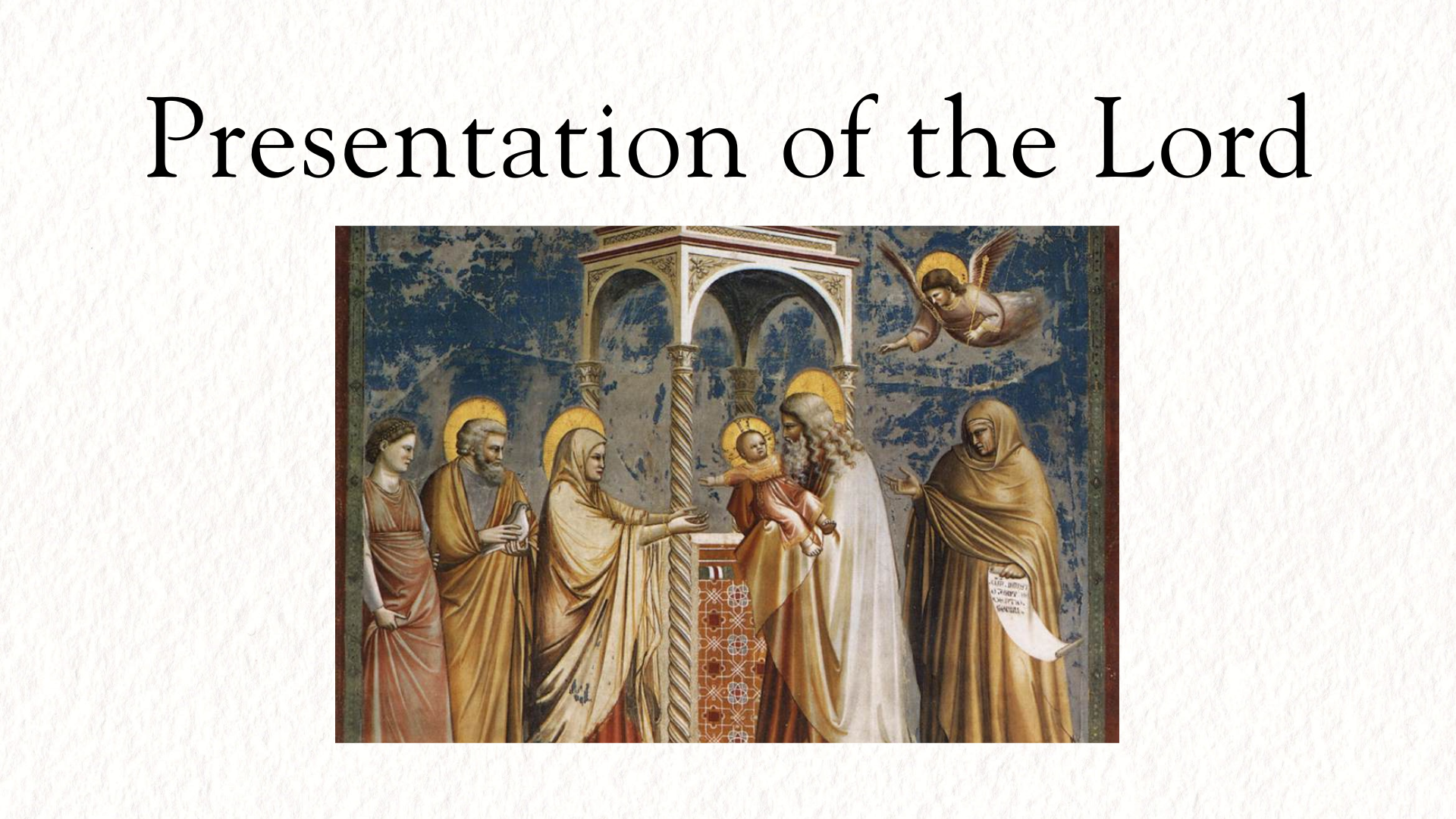
The feast we celebrate today, the Presentation of the Lord, reminds us of this incredible truth. Mary and Joseph brought Jesus to the temple—the place where God’s glory, His shekinah, dwelled among His people.

For centuries, that glory had seemed distant—hidden behind the curtain of the Holy of Holies, accessible only to the high priest, and only once a year at that. But Malachi foretold a day when the Lord Himself would come to His temple. And when He did, it wasn’t with fire and lightning, but as a baby in His mother’s arms.

In Jesus, the glory of God walked a mile in our shoes. He shared in our joys and sorrows, even our death, to save us from sin and bring us into a new relationship with God—as His beloved children.

So, when life feels dark or overwhelming, follow Simeon’s example. Keep your eyes on Jesus. Because in Jesus, our God is with us in our experience, even when life is hard.

Reflection Questions

  • In Your Prayer Ask: How does knowing that Jesus “walked a mile in our shoes” change the way you view your relationship with God? How can this truth bring you comfort in moments of darkness or difficulty?

  • Reflect on This: Simeon waited his whole life to see Jesus, trusting in God’s promise. What are you waiting for or trusting God with right now? How might keeping your eyes on Jesus help you find hope and strength in your journey?

  • Consider in Quiet Reflection: The museum exhibit invited visitors to “walk a mile” in someone else’s shoes. How can Jesus’ example inspire you to better understand and show compassion to others? Who in your life might need you to walk alongside them today?

Fourth Sunday of Advent

Luke 1:42

Blessed are you among women, and blessed is the fruit of your womb.

Readings for Sunday: Micah, Hebrews, Luke

Reflection:

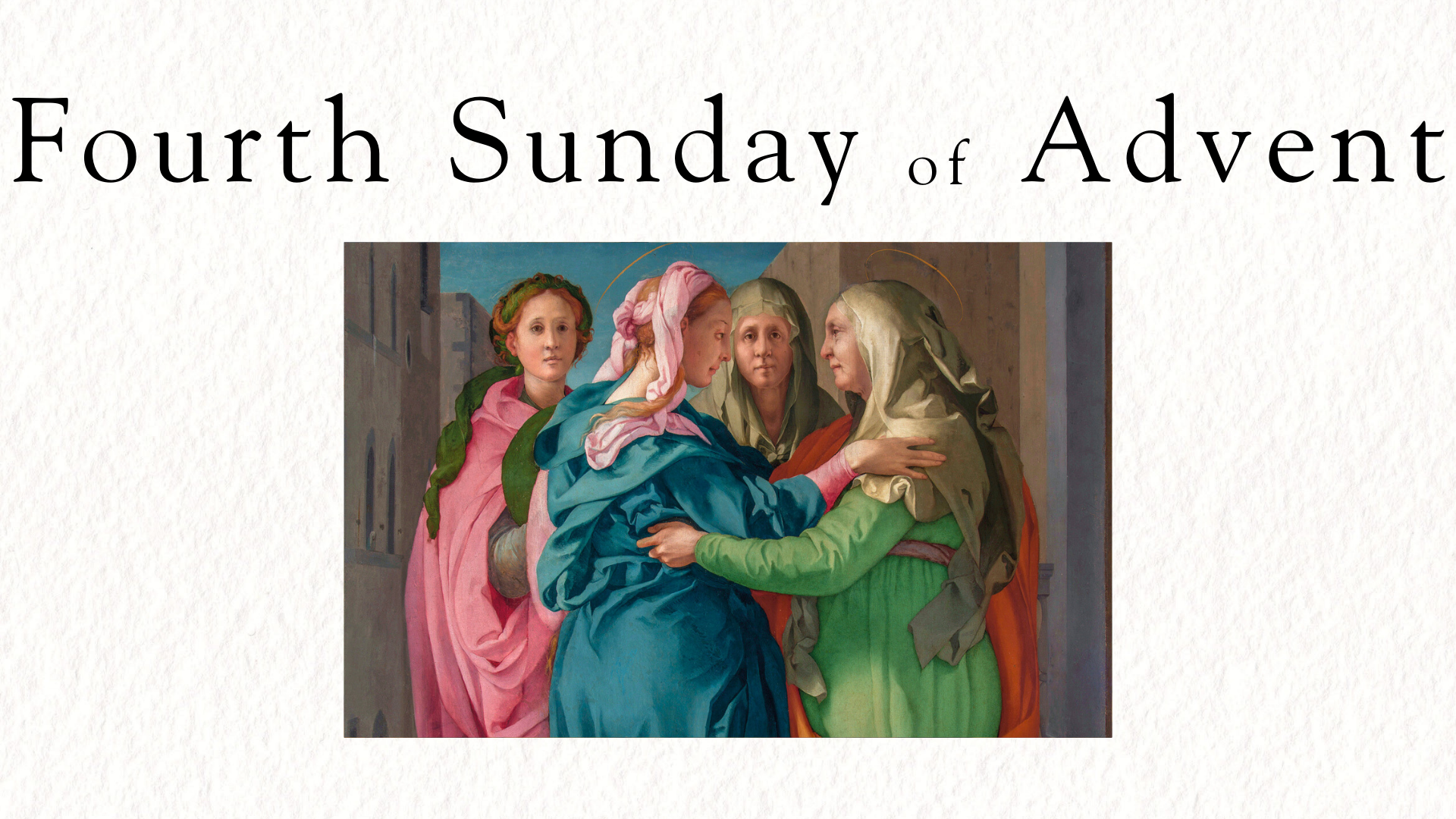
Ever wonder why we Catholics honor Mary? You can find the answer in this Sunday’s Gospel reading, which comes from Luke 1:39-45. In the verses immediately preceding this passage (Luke 1:26-38), we hear how the Archangel Gabriel announced to Mary that she would conceive and bear a son. Gabriel also informed Mary that her cousin Elizabeth had conceived a child in her old age. With the Christ child in her womb, Mary sets off to visit her cousin.

When Mary arrives at Elizabeth’s house, Elizabeth, “filled with the Holy Spirit,” exclaims: “Blessed are you among women, and blessed is the fruit of your womb. And how does this happen to me, that the mother of my Lord should come to me?”

While Jesus is clearly present (in Mary’s womb), Elizabeth, inspired by the Holy Spirit, honors Mary. This honor is not in opposition to or competition with Jesus; rather, Elizabeth honors Mary because of her unique relationship with her Son.

And so it is with us. When we pray the Hail Mary, we are simply quoting scripture: “Hail Mary, full of grace, the Lord is with thee,” echoes the Archangel Gabriel’s greeting to Mary. The line “Blessed are you among women, and blessed is the fruit of your womb” is from Elizabeth’s greeting. To these scriptural words, we add the petition, “Holy Mary, Mother of God, pray for us sinners…”

Reflection Questions

  • How do I honor Mary in my life today, as St. Elizabeth did in hers? Do I see Mary as bringing her Son to me so that I may be closer to him?
  • How do I become more like Mary in bringing Jesus to others?
  • Am I willing to serve others like Mary, who, when she heard of St. Elizabeth’s pregnancy, went to see her, despite the hardship of travel in those days?

Assistant Director of Music

Job Opening: Assistant Director of Music
St. James Parish, Arlington Heights, IL

St. James Parish is seeking a highly skilled Assistant Director of Music to join our vibrant and dedicated music ministry. This full-time, benefit-eligible position offers the opportunity to continue our rich tradition of excellence in sacred music and support the liturgical and choral life of our parish community.

Key Responsibilities:

  • Serve as a high-level accompanist and organist throughout the Liturgical year for our Traditional and Contemporary Adult Choirs, as well as additional concerts and liturgies as needed.
  • Collaborate with the Director of Music to plan, rehearse, and execute choral music for the parish.
  • Play a key role in preparing for major choral works. Previous larger scale offerings include such works as Brahms’ Requiem, Mozart’s Requiem, Rutter’s Requiem, among others. Rossini’s Stabat Mater (to be performed this upcoming Spring with Orchestra).
  • Accompany the parish choir and assist with the development of the music program, ensuring that it reflects the highest musical and liturgical standards.

Qualifications:

  • Strong proficiency as an organist and accompanist, with experience in liturgical and choral settings.
  • Extensive knowledge of Roman Catholic liturgical practices and sacred music tradition.
  • Familiarity with large sacred choral works and the ability to collaborate with a variety of musicians.
  • A passion for sacred music and the ability to elevate the worship experience through thoughtful and skillful musicianship.
  • Bachelor’s degree in music or equivalent professional experience required; advanced degrees or additional certifications are a plus.


Additional Information:

  • Full-time, benefits-eligible position with competitive compensation commensurate with experience.
  • Our parish music program is known for its strong choral tradition, and our performances can be found on platforms such as Spotify and Apple Music.

This is an exciting opportunity for a talented musician with a deep understanding of sacred music and the Roman Catholic Church to make a significant impact in the life of St. James. St. James Parish is a welcoming Catholic Community whose mission is to be Disciples of Christ and to make Disciples of Christ. The Parish weekend attendance is around 3,300. We are seeking a dedicated individual who shares our commitment to upholding and advancing our longstanding musical traditions.

To apply, please submit a resume, cover letter, and references in the form below.

32nd Sunday In Ordinary Time

Mark 12:44

She, from her poverty, has contributed all she had, her whole livelihood.

Readings for Sunday: 1 Kings, Hebrews, Mark

Reflection:

Have you ever wondered what God wants from you? Often, we rush through our days, focused on routines—work, school, family—without thinking about deeper questions. It’s usually when something goes wrong—a sickness, job loss, or loss of a loved one—that we pause and ask, “God, what do you want from me?”

God’s answer is simple yet profound: He wants everything—our whole hearts and lives. In Sunday’s Gospel (Mark 12:38-44), Jesus notices a poor widow placing her last coins in the temple treasury. “For they have all contributed from their surplus wealth, but she, from her poverty, has contributed all she had, her whole livelihood.”

Unlike the wealthy who give what’s extra, she gives everything she has out of love and trust in God.

This story reflects how God gives Himself to us fully, especially through Christ, who poured out His life on the cross and continues to offer Himself in the Mass. Just as the widow gave all she had, God invites us to surrender our lives back to Him. This is the heart of stewardship—not just giving money but offering our time, talents, and entire selves. Through this, we love God with everything we are and have, allowing His love to transform our lives.

Reflection Questions

  • In your prayer, ask: “Lord, in what areas of my life am I holding back from fully giving myself to You? Help me to see how I can follow the example of the widow who gave all she had.”
  • Reflect on this: “Just as the widow gave her last coins out of love and trust, what ‘last coins’—be it time, talent, or energy—might you be called to offer in love to God, even if it feels small or insignificant?”
  • Consider in quiet reflection: “How would your life look if you gave God not just the surplus of your time and resources, but your ‘whole livelihood’? What steps can you take to live with this kind of generosity and trust?

31st Sunday In Ordinary Time

Mark 12:30-31

Love the Lord your God with all your heart, with all your soul, with all your mind, and with all your strength.

Readings for Sunday: Deuteronomy, Hebrews, Mark

Reflection:

In today’s Gospel (Mark 12:28-34), Jesus is asked which commandment is the greatest. His response is both simple and profound: “Love the Lord your God with all your heart, soul, mind, and strength;” and then he adds a second, “Love your neighbor as yourself.” These two commands encapsulate the essence of our faith, but they are far from easy to live out.

This passage invites us to reflect on what true love means. In our culture, love is often reduced to a feeling or preference—liking someone or something. However, Jesus calls us to a much deeper love, the kind He showed on the cross: agape, a love of self-sacrifice and action. It’s not about feelings but about choosing to do good for others, even those we may not like or who hurt us. True love is laying down our lives in small ways for the sake of others.

Yet, we often find our hearts divided. We say we love God, but we can let other “gods” creep in—work, money, comfort, or even our reputation or self-image. How often do we prioritize these things over God? Just as importantly, we struggle to love our neighbors, especially those who challenge or inconvenience us.

Jesus reminds us that these commandments are inseparable. Loving God fully allows us to love others more deeply. The call to love requires us to act, not just to feel. Through prayer, Mass, and serving those around us, we can grow in this love, allowing it to shape our lives and draw us closer to God’s Kingdom. Let us ask for the grace to love God with our whole hearts, and to love others as He loves us.

Reflection Questions

  • In your prayer, ask: Do I truly love God with all my heart, or are there areas of my life where I place other priorities above Him?
  • Reflect on this: How do I view love? Is it more about my feelings or my willingness to sacrifice and act for others, even when it’s difficult?
  • Consider in quiet reflection: Are there people in my life whom I struggle to love? How might loving God more deeply help me to love those around me better, especially those who are challenging to love?

30th Sunday In Ordinary Time

Christ and the pauper | Andrey Mironov | 2009

Mark 10:51

Master I want to see

Readings for Sunday: Jeremiah, Hebrews, Mark

Reflection:

Fear touches every part of our lives. We fear sickness, loneliness, financial loss, and ultimately, death. These fears can paralyze us, keeping us from moving forward. But in today’s Gospel, the story of Bartimaeus offers a profound reflection on how we can find hope through faith in Jesus.

Bartimaeus, whose name means “son of fear,” lived his life in darkness, unable to work or support himself, left to beg on the streets. Fear blinds us in a similar way, preventing us from seeing solutions, hope, or a way forward. Yet, when Bartimaeus hears Jesus is near, he doesn’t hold back. He cries out in humility, asking for mercy: “Jesus, Son of David, have pity on me.”

His cry is a model for our own prayer—persistent, humble, and trusting. Even when others try to silence him, Bartimaeus continues to call out, trusting that Jesus will respond. And Jesus does stop, calling Bartimaeus to come to Him. In an act of faith, Bartimaeus throws aside his cloak, a symbol of his old life, and asks for healing.

Jesus asks, “What do you want me to do for you?” Bartimaeus answers simply, “Master, I want to see.” This is more than a request for physical sight. It is a recognition of who Jesus is—a surrender to His will and a desire for true discipleship. Bartimaeus gains his sight, but more importantly, he gains the ability to follow Jesus.

This story calls us to reflect on our own fears. When we cry out to Jesus, are we ready to respond to His call? Are we willing to throw aside our old ways and trust in His mercy, even if His response is different from what we expect? Like Bartimaeus, we are called not just to receive, but to follow—through our fears, through the cross, and into the hope of resurrection. Faith is not just belief; it is trust, surrender, and a willingness to follow Jesus wherever He leads.

Reflection Questions

  • In your prayer, ask: “Jesus, where are my fears keeping me from fully trusting You? Am I ready to call on You in my struggle and listen for Your voice?”
  • Reflect on this: “Am I clinging to an old way of living that keeps me from following Jesus more closely? What do I need to ‘throw aside’ in order to walk with Him?”
  • Consider in quiet reflection: “If Jesus asked me, ‘What do you want me to do for you?’ how would I respond? Am I seeking to follow Him, or just asking for what I want?”

29th Sunday In Ordinary Time

Mark 10:45

For the Son of Man did not come to be served but to serve and to give his life as a ransom for many.

Readings for Sunday: Isaiah, Hebrews, Mark

Reflection:

In reflecting on the role of the priesthood, we are reminded of the profound insights from the Letter to the Hebrews. In this passage, we are told that Jesus is our great High Priest, who has “passed through the heavens” and can sympathize with our weaknesses, having been tested in every way, yet without sin. This speaks to the depth of Christ’s love and solidarity with us. He understands our struggles, and as our High Priest, He intercedes for us continually before the Father.

In the Old Testament, the high priests offered sacrifices on behalf of the people to atone for their sins, but these sacrifices were temporary.

However, Jesus, as the perfect High Priest, offered Himself once and for all on the cross, providing a permanent way for the forgiveness of sins and the gift of eternal life. His priesthood is not limited by time or human frailty—it is eternal.

Today, our Catholic priests participate in this priesthood of Christ. Through the sacraments, especially the Eucharist and confession, they make present the grace of Christ’s sacrifice. As we reflect, let us approach the “throne of grace” with confidence, knowing that through Christ, we find mercy and help in every moment of need. Pray for more priests to continue this vital mission.

Reflection Questions

  • In your prayer, ask: How does understanding Jesus as our eternal High Priest change the way I approach the sacraments, particularly confession and the Eucharist?
  • Reflect on this: In what ways can I allow the example of Christ’s priestly sacrifice to influence my own willingness to serve and sacrifice for others?
  • Consider in quiet reflection: How can I actively support and encourage the vocation of the priesthood, whether through prayer or conversations with young men who may be called to serve?

24th Sunday In Ordinary Time

Mark 8:35

Whoever loses his life for my sake and that of the gospel will save it.

Readings for Sunday: Isaiah, James, Mark

Reflection:

Even when Christians, including Catholics, think about death, they usually wind up actually believing different things. Many assume that immediate entry into heaven is the default outcome, relying on popular perceptions or selective interpretations of Scripture. Yet, Jesus offers a more nuanced perspective: “For whoever wishes to save his life will lose it, but whoever loses his life for my sake and that of the gospel will save it.” This teaching underscores a crucial point: salvation is not merely a matter of avoiding the worst moral pitfalls but involves a profound transformation of life aligned with Christ’s teachings.

To understand this better, imagine standing before God at the end of your life and asking to enter heaven. If God were to question why you should be admitted, citing that you’re “not as bad” as notorious historical figures, such as Adolph Hitler, or professing a general love of humanity without a clear life of doing good to and for others, might not be convincing. Genuine love for God must be reflected in daily actions and choices, not just verbal affirmations.

Catholicism presents a comprehensive path to salvation, one that demands an active, daily commitment to living out the faith. We cannot earn our salvation, but at the same time it involves more than a single moment of acceptance of Jesus as Lord and Savior; it is a lifelong journey of faithfulness, much like a marriage. True love for God means dedicating time to prayer, seeking His will, and living a life that aligns with His teachings.

In contrast to some evangelical perspectives that emphasize a one-time declaration of faith, Catholicism calls for ongoing engagement and fidelity. It is a way of life where salvation is realized through persistent faith and practice through God’s grace. By adhering to this path, we prepare ourselves to be welcomed into heaven, fully united with Christ.

Reflection Questions

  • How does your current understanding of salvation align with the idea of a lifelong journey rather than a one-time declaration? What steps can you take to deepen your commitment to living out your Catholic faith and nurturing your relationship with Christ?
  • In what ways are you actively living out your love for God on a daily basis? Are there areas in your life where you could be more faithful or intentional about aligning your actions with His will?
  • When you imagine standing before God at the end of your life, how do you think you would explain why you should be admitted into heaven? What does your response reveal about how you live your faith today?

10th Sunday In Ordinary Time

Mark 3:28

"All sins and all blasphemies that people utter will be forgiven them. But whoever blasphemes against the Holy Spirit will never have forgiveness, but is guilty of an everlasting sin"

Readings for Sunday: Genisis, Second Corinthians, Mark

Reflection:

Many people have wondered what Jesus meant, in the Sunday Gospel reading, when he said: “all sins and all blasphemies that people utter will be forgiven them. But whoever blasphemes against the Holy Spirit will never have forgiveness, but is guilty of an everlasting sin.” God wants our salvation; thus he forgives our sins. The prerequisite for receiving that forgiveness, however, is repentance. Without acknowledging our sins, how can we recognize that we need God’s mercy? Once we have recognized our need, it is then the act of repentance in which we open our hearts to receive that mercy.

If we understand this, then we can understand what Jesus meant. According to Augustine, blasphemy against the Holy Spirit is the refusal to repent. In refusing to repent, one is not only rejecting God’s mercy, and hence will forever be stuck in sin, but also profaning God’s name by making God out to be a liar. It is effectively asserting that I am right, and God is wrong; it is effectively asserting that what he calls sin, I decide to be good (at least for me).

Reflection Questions

  • Where is there still sin in your life? Are you willing to repent, or are you obstinate, justifying yourself?
  • Do you engage in an examination of conscience at the end of every day, recognizing your sins in order to ask for God’s mercy and change your life the next day?
  • Do you seek the illumination of the Holy Spirit to show you the areas of sin in your life that, perhaps, you do not sufficiently recognize?
Join us for our Mass livestream Watch Online