All Posts By

admin

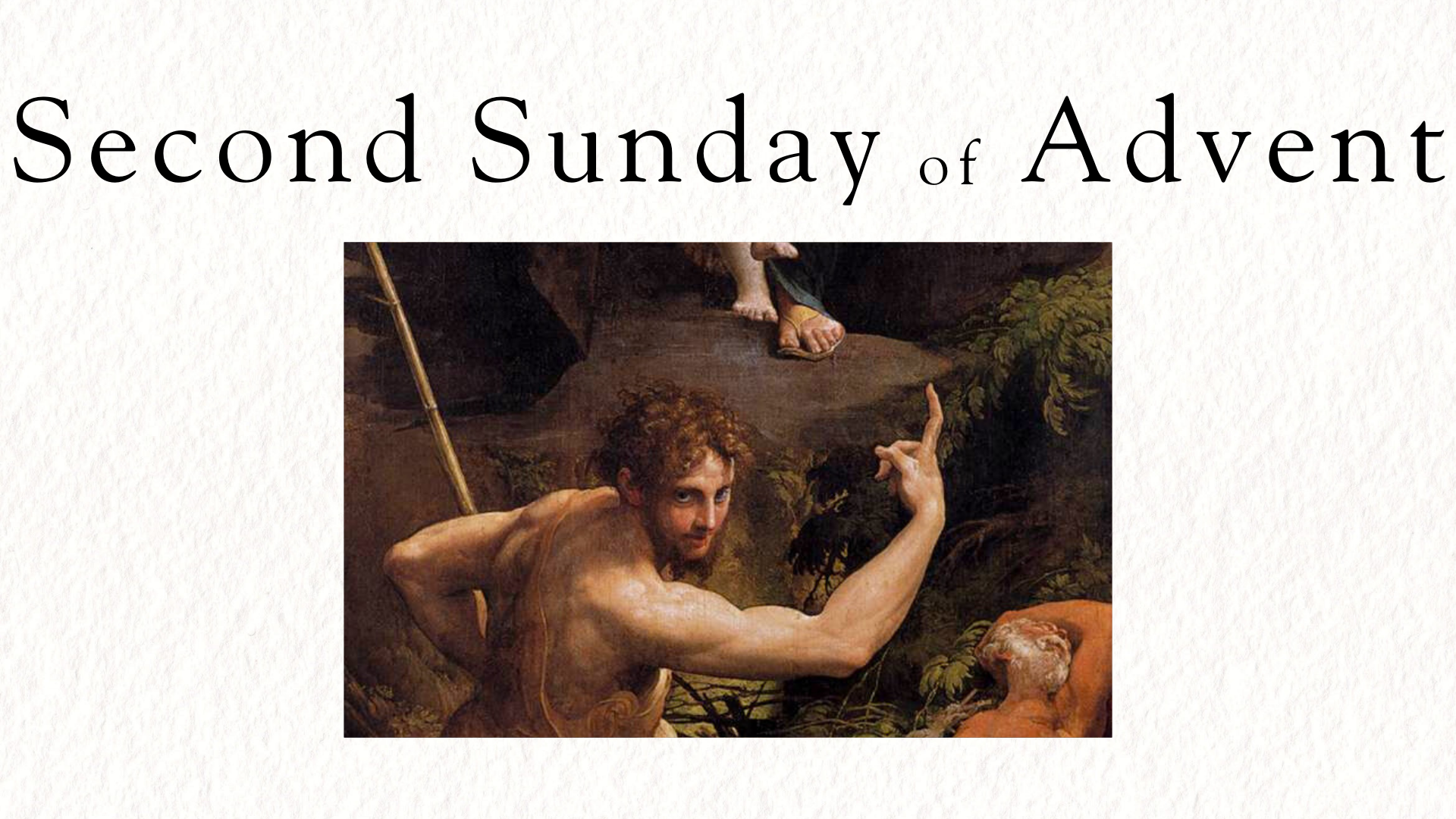
Second Sunday of Advent

Matthew 3:3

Prepare the way of the Lord, make straight his paths.

Readings for Sunday: Isaiah, Romans, Matthew

Reflection:

Imagine a man who approaches you dressed in a camel-hair tunic, cinched with a leather belt, crunching on a handful of locusts dipped in honey. Suddenly he points at you and cries, “Repent, for the kingdom of heaven is at hand!” Most of us would probably think he was mentally ill and had forgotten to take his medication. Yet this is exactly the kind of shocking figure John the Baptist was.

We come to church, hear the familiar stories of Jesus’ birth, and think, “Isn’t that nice?” They can become heart-warming background noise, especially if we’ve heard them so many times that we hardly pay attention. But the reality is far from tame. John the Baptist bursts onto the scene in today’s Gospel as a jarring figure. By our standards, he would seem eccentric for living alone in the desert, wearing strange clothing, and shouting dire predictions. The prophets throughout salvation history were the same. These were strange people doing outrageous things, not evil but certainly not “normal.”

The Advent scriptures are full of such figures precisely to shake us out of complacency.

Imagine arriving at a party, only to see a huge tree about to collapse onto the house and kill everyone inside. You run in to warn them, but everyone is too drunk to care. Who is truly thinking clearly; you or the partygoers? That is the prophets’ situation. They appear shocking only because our perspective has been dulled by sin.

Many who abandon Christianity don’t do so because doctrine failed them, but because their lifestyles clashed with the faith. As Chesterton wrote, “The Christian ideal has not been tried and found wanting. It has been found difficult; and left untried.” John the Baptist tries to wake us from our stupor. To repent means to think differently—to see the danger clearly and then act accordingly. Even believers can fall into living like everyone else, rationalizing sin because “everyone does it.” John’s words still shock because they confront our comfort and expose our self-deception. And Advent calls us to awaken.

Reflection Questions

  • In what ways might I have grown complacent in my spiritual life, accepting behaviors or attitudes simply because “everyone else does it”?
  • Where do I sense John the Baptist’s call to “think differently” in my own life—what truths am I avoiding, and what changes might they demand of me?
  • How do I respond when God’s message feels uncomfortable or disruptive—do I rationalize my habits, or allow myself to be awakened and transformed?

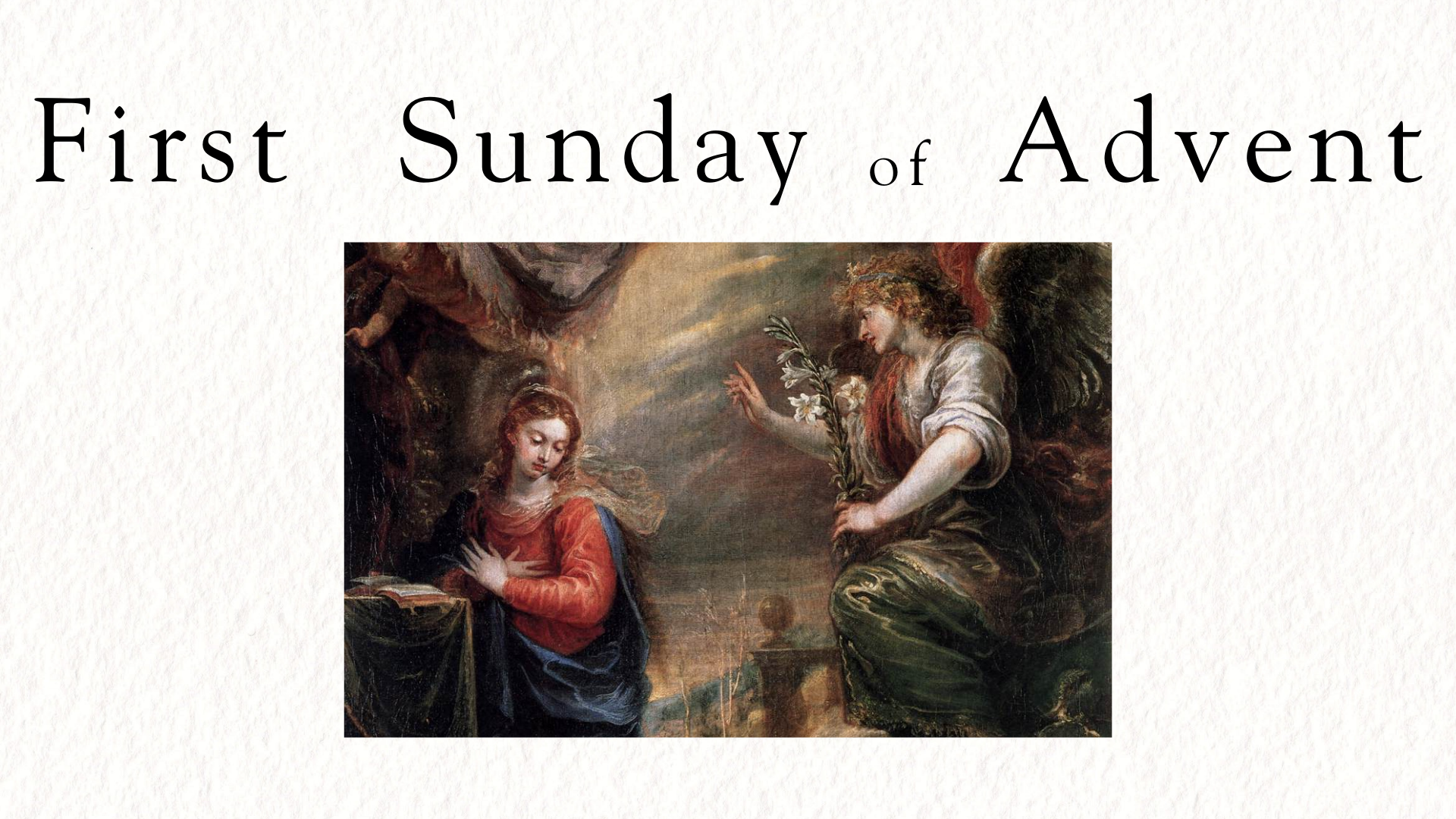
First Sunday of Advent

Matthew 24:44

So too, you also must be prepared, for at an hour you do not expect, the Son of Man will come.

Readings for Sunday: Isaiah, Romans, Matthew

Reflection:

At first glance, the idea of “canceling Christmas” sounds outrageous, but perhaps it invites us to ask a deeper question: Why do we celebrate Christmas at all? For many people, the holiday has lost its meaning—becoming little more than parties, shopping, decorating, and baking. If Christmas is meant to honor Jesus, then celebrating it while having no desire to speak with Him or welcome Him into our lives is an empty gesture. Maybe what needs canceling is not Christmas itself, but the way we have come to observe it.

The Church teaches that the most important celebration of the year is actually Easter. The Triduum of Holy Thursday, Good Friday, and the Easter Vigil commemorates the passion, death, and resurrection of Jesus. Thes are the center of our salvation. But this raises a question: if Jesus is truly God made man, how did He enter our world? This brings us to Christmas, the second most important feast. It commemorates not only His birth in Bethlehem two thousand years ago, but also His promised return. As St. Paul says, “The night is advanced, the day is at hand.” By celebrating His first coming, we anticipate and hope for His second.

Advent, therefore, is a season of preparation not just for December 25, but for the moment Jesus returns in glory. Jesus warns us that many will be unprepared, living ordinary lives with no thought for eternity. St. Paul urges us to “throw off the works of darkness” and “put on the armor of light.” Advent calls us to repentance, virtue, and intentional readiness.
This season, we should choose one area in which to grow (patience, prayer, righteousness) offering it as a birthday gift to Christ. Then, should He knock on our door on Christmas morning, we will joyfully say, “I was hoping you would come. Maranatha; come, Lord Jesus.”

Reflection Questions

  • In what ways has Christmas become routine or superficial for me, and how might I refocus it on Christ’s coming—both His first and His promised return?
  • What “works of darkness” or habits do I need to cast aside this Advent so I can truly “put on the armor of light”?
  • What is one concrete virtue or spiritual practice I can offer to Jesus as a birthday gift by intentionally growing in it this season?

Christ The King

Colossians 1:16

...whether thrones or dominions or principalities or powers; all things were created through him and for him.

Readings for Sunday: 2 Samuel, Colossians, Luke

Reflection:

Today’s political climate is marked by conflict, division, and constant disagreement. Suppose we swept away the presidency, Congress, the Supreme Court, and every political party, replacing them with a single king. Most of us would hesitate at the idea. History teaches that kings often became self-serving, unjust, or even despotic. Yet imagine if we could be guaranteed a king who was truly perfect. This king would be perfectly just, perfectly wise, perfectly selfless. A king who always acted for the good of his people, ruled with compassion, and could never die or be corrupted. With such a leader, elections, partisanship, and political corruption would vanish. Many of us might be intrigued by this possibility, though we assume no such king exists.

We Catholic Christians, however, profess that such a king does exist whose kingdom is not political and not confined to any earthly nation. God is King, not through force or election, but by virtue of being Creator. He made the universe from nothing, established the laws of physics, and sustains everything in existence. His “rules” are not arbitrary impositions but the wise principles that allow life and creation to flourish.

In ancient Israel, even human kings ruled only as God’s representatives, for God alone was the true King. We believe Jesus is God, who took on human nature without ceasing to be divine. As St. Paul teaches, all creation was made through him and for him; he is both the center and sustainer of the universe.

Jesus is King not only in his divinity but in his perfect humanity. He is the just, compassionate ruler who came not to be served but to serve, offering his life on the cross to save humanity. There on the crucifix we see our true King—a ruler whose throne is sacrifice and whose reign brings eternal life.

And so, the perfect, eternal King we imagine is not a fantasy. We have such a King in Jesus Christ.

Reflection Questions

  • In your prayer, ask: Where in my life do I still cling to earthly forms of power or security; rather than trusting in the perfect kingship of Christ?
  • Reflect on this: How does contemplating Jesus as both Creator and sacrificial King invite me to deepen my relationship with Him?
  • Consider in quiet reflection: In what concrete ways am I being called to imitate Christ’s self-giving kingship—serving rather than seeking to be served?

33rd Sunday In Ordinary Time

Luke 21:6

“The days will come when not one stone will be left upon another.”

Readings for Sunday: Malachi, 2 Thessalonians, Luke

Reflection:

This world is not our true home. Everything we see will one day pass away; even the most beautiful and big things, like the Grand Canyon, will end. In this Sunday’s Gospel, Jesus leads His disciples to the magnificent Temple of Jerusalem, where God dwelt with his people. Yet Jesus says, “The days will come when not one stone will be left upon another.” That must have seemed impossible, especially since the people thought that they were obeying God’s commandments.

We too like to think that we are “ok” with God, and therefore that he will give us comfortable lives on earth. We spend so much time worrying about work, money, homes, and possessions. Yet, truthfully, how close are we to God? How much do we invest in our relationship with God? Everything we build and acquire in this world will vanish. Only our faith and love for Christ will endure.

When the Temple fell, God did not abandon His people. He came to dwell with his people in a new way: Jesus Christ. Jesus is the new temple, literally the God-man, God dwelling with us. With his Resurrection, he lives forever and hence his kingdom will never end.

So, we must ask ourselves: if someone observed my life, would they see that Christ comes first? At work, at home, in my words and choices, do I live for Jesus, or for the world? Sometimes being a disciple of Jesus brings opposition, even ridicule. Yet Jesus tells us, “By your perseverance you will save your lives.” Let us live each day as if it were our last, seeking confession, prayer, charity, and reconciliation. If it were illegal to be a Christian, would there be enough evidence to convict us? The world will end — but those who live for Christ will live forever.

Reflection Questions

  • Where do I place my deepest trust and attention — in the temporary things of this world, or in my relationship with Christ that will last forever?
  • If someone observed my daily life, would they clearly see that Jesus comes first in my priorities, choices, and words?
  • What practical step can I take this week — such as prayer, confession, or an act of charity — to live more fully for Christ rather than for the world?

Thirtieth Sunday in Ordinary Time

Readings: Sirach, 2 Timothy, Luke

[W]hoever exalts himself will be humbled, and the one who humbles himself will be exalted."

If you could take a completely clean sheet of paper and describe the kind of person you truly want to be, what would you write? There is no cost to it—ink is cheap and imagination is free. You could write down your ideal physical self: 6 feet tall, 200 pounds, 4% body fat, strong and cut like a young champion bodybuilder. You might not be that today, but it is easy enough to picture. We can all imagine the ideal version of ourselves: smart, educated, confident, charismatic, disciplined.

But what about our spiritual ideal? There it suddenly becomes harder. Most of us assume we are “doing okay.” We look in the mirror every morning, but we rarely look into the soul. The problem is that we let ourselves off the hook far too easily. The phrase people often use is, “Well… I’m basically a good person.” But “basically” usually means, “I haven’t killed anyone or robbed a bank.” That is a low bar. When we look honestly, we see the “small” sins: we lie, we gossip, we judge others, we skip Sunday mass while claiming to love God. It is like saying “I love my spouse, I just never want to spend time with him/her.” We assume the worst about other people’s motives, while giving ourselves the benefit of every excuse.

Jesus addressed this mindset in the Gospel: those convinced of their own righteousness who despised others. The Pharisee congratulated himself; the tax collector simply bowed his head and said, “O God, be merciful to me, a sinner.” Only one went home justified.
The spiritual ideal begins not with self-congratulation, but humility: not “I am basically good,” but “Lord, I am a sinner in need of mercy.” Only there does transformation begin—when we let God tell us who he wants us to be; after all, he is our creator and wants us to be truly holy, truly amazing.

Reflection

  • If you were to take a blank sheet of paper today and write down the kind of person you want to become spiritually—not just physically or socially—what qualities would you list, and why aren’t they yet visible in your life?
  • When you say, “I’m basically a good person,” what are you really relying on for that measure—your own comparison with others, or an honest examination before God?
  • Do you pray more like the Pharisee (listing what makes you righteous) or like the tax collector (humbly acknowledging your need for mercy), and what would need to change for your prayer to reflect true humility?

Twenty-Ninth Sunday in Ordinary Time

Readings: Exodus, 2 Timothy, Luke

Pray always without becoming weary.

If an alien were to visit our planet, it might quickly conclude that humanity’s most popular religion revolves around a mysterious black box. Every home has at least one— if not several shrines to it. Worshipers gather nightly for hours before it, eyes fixed in trance-like devotion. This “god” tells them what to think, what to buy, even for whom to vote. In recent years, this god went on a diet and is much, much thinner.
We spend hours before our screens, whether it be TVs or tablets, all the while neglecting the true God, the One who actually hears and loves us. In the Gospel this Sunday, Jesus tells us to “pray always without becoming weary.” He asked, “When the Son of Man comes, will he find faith on earth?” Real faith isn’t found in front of a glowing screen; it’s cultivated in prayer—daily, personal conversation with God.
Prayer, at its heart, is simply talking with God. Sometimes it’s vocal—words spoken aloud or in silence within our hearts. We offer praise, glorifying God for His goodness.

We make acts of contrition, seeking forgiveness for our sins. We lift up petitions, asking for what we or others truly need. And we give thanks, expressing gratitude for His countless blessings.
But a healthy relationship requires listening, too. Prayer isn’t a monologue—it’s a dialogue. Through meditation, we quiet our hearts so we can hear God’s gentle whisper. Just as lovers lean close to share a word of affection, God invites us to draw near and listen.

The Church offers powerful ways to do this—like the rosary or lectio divina – they are time-tested methods that help us focus our minds and hearts on God.
God doesn’t always answer our prayers the way we expect, but He always responds—with love that draws us toward perfect union with Him.
So tonight, before bowing down before the black box, turn it off. Spend that time with the living God. Speak to Him, listen to Him, and let faith be found alive in your heart.

Reflection

  • What “black boxes” in my own life might be competing with my time and attention for God?
  • Which form of vocal prayer—praise, contrition, petition, or thanksgiving—do I practice most often, and which one might I need to grow in?
  • When was the last time I truly listened for God’s voice in silence, in meditation?

28th Sunday In Ordinary Time

Luke 17:19

Your faith has saved you.

Readings for Sunday: 2 Kings, 2 Timothy, Luke

Reflection:

The Gospel story is “worse” than you think. Yes, of the ten lepers who were miraculously cured by Jesus, only the Samaritan returned to thank God. But Samaritans were not merely foreigners. In that time period and beyond, the Jewish people distinguished between Jews and non-Jews, or gentiles. Samaritans, while considered gentiles, were especially rejected.

The nation of Israel wound up being divided into two kingdoms during the reign of King Solomon’s son, Rehoboam: a northern kingdom, composed of ten tribes, and a southern kingdom, comprised of the tribes of Judah and Benjamin. In the eighth century BC, the Assyrian Empire invaded the northern kingdom, and exiled the leadership, educated, and mercantile classes to deep within the empire. Those ten tribes never returned to the northern kingdom and are considered lost. The Jews that remained were the poor and soon intermarried with the gentiles that the Assyrians moved from elsewhere in the empire to the northern kingdom, with its capital city of Samaria. Those gentiles were pagans, worshipping many gods.

The result was the nation of Samaria, the people being of mixed genetic lines with a syncretistic religion, mixing elements of Judaism and paganism. Jews in the southern kingdom, eventually called Judea, and the Jews who eventually resettled the far north of the northern kingdom, called Galilee, viewed the Samaritans very negatively. Samaritans were not considered to truly be Jewish and occupied land that should be occupied by Jews. They claimed the God of Abraham to be their god, along with worshipping other gods.

When only the Samaritan came back to thank God, it was shocking. Yet Jesus tells him something even more shocking: “your faith has saved you.” Beyond the miraculous physical cure that Jesus affected, he offers the man salvation in the kingdom. Even a Samaritan could be saved, as he came to faith in Jesus. God’s offer is open to everyone; it is up to each individual to accept or reject it.

Reflection Questions

  • Am I grateful to God for all he has done for me, or do I take things for granted? Am I grateful for the offer of salvation that he gives me in Jesus Christ?
  • How much time do I spend thanking God each day?
  • Do I presume my own salvation, and at times do I think there are people that are beyond salvation?

27th Sunday In Ordinary Time

Habakkuk 1

The just one, because of his faith, shall live.

Readings for Sunday: Habakkuk, 2 Timothy, Luke

Reflection:

Today, on this Respect Life Sunday, we pause to remember that the right to life is the foundation of all human dignity. If we fail to protect innocent life at its most vulnerable stage—at conception—then every other right becomes fragile. Once a society decides that life is valuable only when it is wanted, then life at any stage can be discarded. That is why we now see euthanasia and other grave attacks against human life becoming more acceptable.
The numbers are staggering. Since 1973, there have been over 65 million abortions in our country and more than a billion worldwide. In fact, estimates vary from as little as one billion to as many as three billion worldwide; many sources indicate that 2.5 billion is a fair estimate. These numbers far exceed the casualties of all the wars of the last century. As the prophet Habakkuk cried, “Violence! Why do you let me see ruin?” We too cry out at the immorality before us.

We love our nation, but we cannot close our eyes to these evils. Sin always carries consequences. A society that destroys its future in the womb cannot flourish. As Mother Teresa once said, “If a mother can kill her own child, what is left but for us to kill one another?”
What, then, is our response? Not silence. It is tempting to say, “I am personally against abortion, but I will not tell others what to do.” Yet abortion is the taking of human life. As disciples of Jesus, we are called to bear witness—even when it costs us. We must foster a culture of life beginning in our families, supporting women in crisis pregnancies, and offering love both to mother and child. We must also live chastity, strengthening true love that protects and cherishes life. Above all, we act in faith. Even faith the size of a mustard seed can move mountains, for it is God who works through us.

Reflection Questions

  • On this Respect Life Sunday, ask yourself: how will I respond as a disciple of Jesus?

26th Sunday In Ordinary Time

Luke 16:25

My child, remember that you received what was good during your lifetime while Lazarus likewise received what was bad...

Readings for Sunday: Amos, 1 Timothy, Luke

Reflection:

The parable of the rich man and Lazarus provides insight into what it means to be “a good person.” The rich man lived in luxury, dressed in purple garments dyed from costly sea snails, a sign of immense wealth. Lazarus, by contrast, was homeless, sick, and so neglected that dogs licked his sores. When both died, Lazarus was carried to Abraham’s bosom, while the rich man found himself in torment.

What is striking is that the rich man had not murdered, stolen, or committed obvious crimes. By many measures, he might have been considered a “good” man. Yet he failed to recognize Lazarus as a fellow human being deserving love and respect. Even in torment, he treated Lazarus as an object to serve his needs. He asks Abraham to send him with water or to warn his brothers. His downfall was a hardened heart, ignoring the suffering at his doorstep and refusing to heed God’s word.


This lesson resonates today when we consider churchgoing and charity. A 2017 study from Indiana University revealed a staggering difference in giving: 62% of religious households donated to charity, averaging $1,590 annually, compared to 46% of non-religious households, averaging only $695. While some religious giving supports church institutions, much of it directly aids the poor through mission appeals, Catholic Charities, disaster relief, and other works of mercy. Churches also cultivate social capital, fostering generosity and service among their members.

Faith is not merely about avoiding sin but about continual conversion. More and more, we are called to love God and neighbor in concrete ways. As Paul urged Timothy, we must pursue righteousness, devotion, faith, love, patience, and gentleness, striving to “lay hold of eternal life.” Each day, discipleship calls us to see Christ in others, especially the poor, and to build treasure in heaven through generosity and compassion.

Reflection Questions

  • In the parable of the rich man and Lazarus, the rich man’s sin was not active cruelty but indifference. In what ways might we overlook or ignore the suffering of those around us today?
  • Today’s scriptures remind us that faith involves continual conversion, not just avoiding sin. What practices can help you keep your heart open to God and to the needs of others?

25th Sunday In Ordinary Time

Luke 16

No servant can serve two masters.

Readings for Sunday: Amos, 1 Timothy, Luke

Reflection:

Jesus’ teaching that “no servant can serve two masters” remains as relevant today as it was two thousand years ago. Though few people would admit to serving “mammon,” or money, many of our daily decisions are quietly driven by it—what we buy, how we spend, and what we hope to gain. Rarely do we pause to ask whether our choices are guided by love of God, by justice, or by care for the poor. This struggle is not new; it has always been part of human life.

The root of the problem often begins with the word “mine.” We claim ownership of things, but in truth nothing ultimately belongs to us. God, who created and sustains all things, is the true owner. Even our very bodies are not our own, as St. Paul reminds us: “You are not your own… you were bought with a price. Therefore glorify God in your body” (1 Cor 6:19-20). C.S. Lewis makes the same point in The Screwtape Letters, where he notes that humans cannot truly say “mine” about anything. In the end, all will belong either to God or to the Enemy.

The antidote to this illusion of ownership is the idea of stewardship. In the ancient world, a steward (oikonomos: oikos meaning “house” and nomos meaning “law”) was entrusted with managing an entire household, though he owned none of it himself. His task was to ensure that bills were paid, meals were served, and children were taught—all for the well-being of the family. In the same way, God entrusts us with lives, talents, and opportunities. These are gifts meant not only for our benefit, but for God’s glory and the good of others.

Jesus’ parable of the dishonest steward highlights the urgency of stewardship. Though the steward acted unjustly, his master commended him for his cleverness. Jesus’ point is that if the “children of this world” are so shrewd with worldly goods, how much more wisely should the “children of light” use what God has entrusted to them. Earthly wealth is fleeting, but true wealth is eternal life with Christ.

Therefore, we must stop saying “mine” in the deepest sense. Everything is God’s. Our task is to be faithful stewards, always asking: “Lord, what do you want me to do with what you have given me?”

Reflection Questions

  • In what ways do I let money or possessions influence my decisions more than love of God, justice, or service to others?
  • How does remembering that everything ultimately belongs to God change the way I view ownership and responsibility?
  • What would it look like for me to live as a faithful steward, using what God has entrusted to me not only for my good but also for His glory and the good of others?
Join us for our Mass livestream Watch Online