
All Posts By

Natalie Conseur

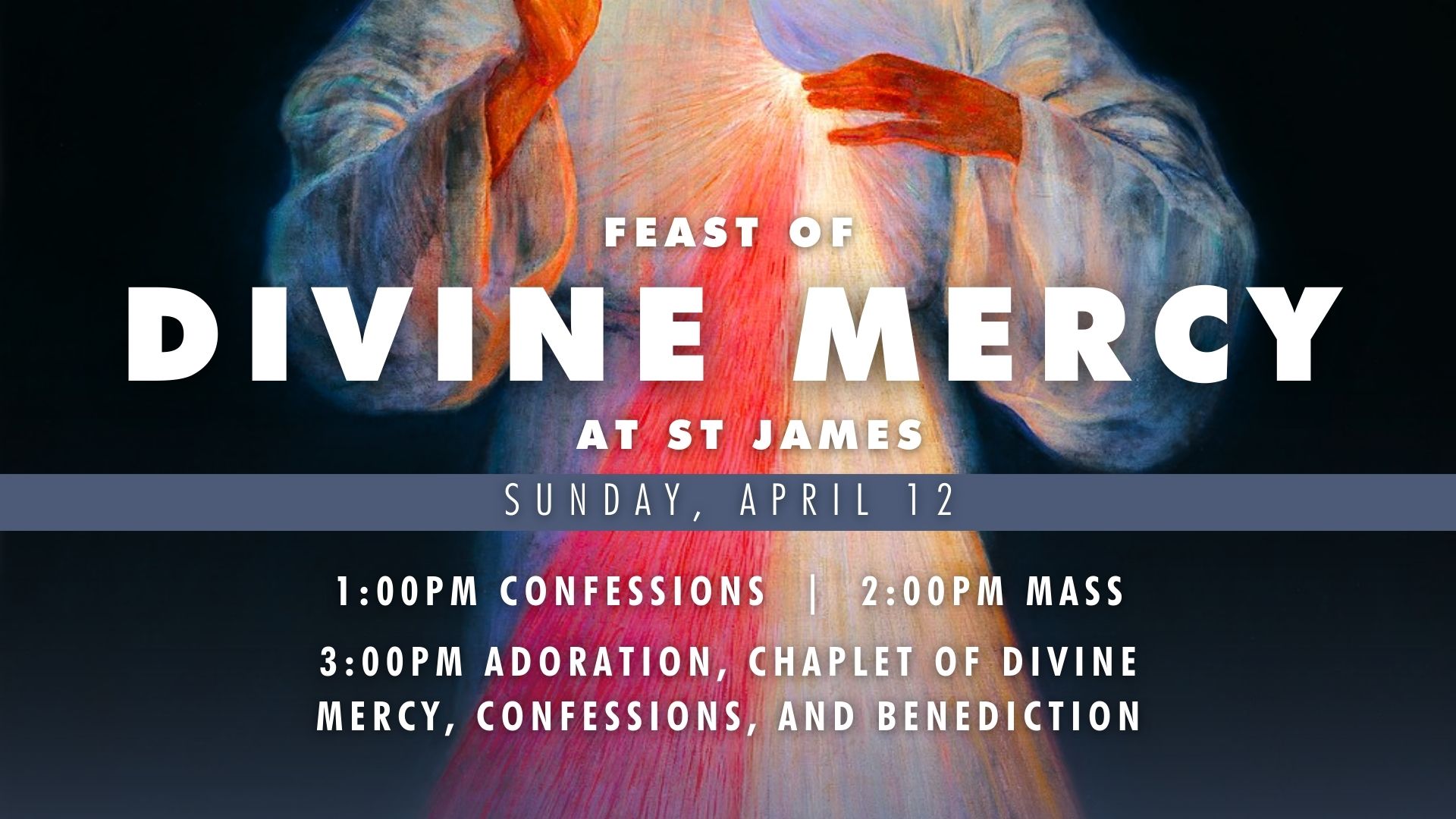
Divine Mercy Sunday

Excerpt from St. Faustina's Diary

"I pour out a whole ocean of graces upon the souls who approach the Fount of My Mercy. Let no soul fear to draw near to Me, even though its sins be as scarlet..."

Divine Mercy Sunday Readings: Acts, Revelation, John

Reflection:

Throughout history, no one doubted that Jesus was human. He walked, taught, ate, and suffered like any of us. But the real question is this: was He also divine? That’s the heart of the debate. Many who claim to be God are frauds or delusional. Some argue that Jesus was just a wise teacher, not God. Culture often echoes this idea, because if Jesus truly is God, then we must obey Him, we can’t simply pick and choose what we like.

So, why believe in His divinity? In a sense, the answer is simple: the Resurrection. Jesus was truly dead and buried for three days. Rising from the dead is something only God could do. Even the skeptical Thomas, upon seeing the risen Christ, exclaimed, “My Lord and my God!”

While Jesus was compassionate, ultimately his miracles were meant to establish his identity as God. For example, when healed the paralytic, He first said, “Your sins are forgiven.” This prompted the scribes to ask, “Who but God can forgive sins?” They were correct, and Jesus confirmed his identity as God by then healing the man.

Before ascending, Jesus entrusted this authority to forgive sins to His Church. In John 20, He breathed on His apostles and gave them the power to forgive sins in his name. This is the foundation of confession: Jesus working through His Church. On Divine Mercy Sunday, we are reminded: sin wounds us deeply, but God’s mercy restores. Through repentance and confession, we encounter his healing power to save us from sin and death. It was for this, that God came to us in Jesus Christ.

Reflection Questions

  • If Jesus truly is both God and man, how does that change the way I respond to His teachings and commands in my daily life?
  • Do I truly believe in the power of confession to encounter God’s mercy, or do I hold back out of fear, pride, or misunderstanding?
  • How can I live out the mercy I have received from God by being more merciful and forgiving toward others in my life?

Easter Sunday

Colossians 3:4

When Christ your life appears, then you too will appear with him in glory.

Readings for Sunday: Acts, Colossians, John

Reflection:

The story of Easter is not a recent one—it was written nearly 2,000 years ago. It centers on a man named Jesus of Nazareth, a carpenter by trade, whose life and death sparked a movement that has endured for millennia. He was executed by crucifixion, a brutal method perfected by the Romans. To ensure his death, a soldier pierced his side with a lance. By all accounts, he was undeniably dead.

Yet, three days later, on Sunday morning, his followers claimed to have seen him alive—not as a ghost or a mere apparition, but truly and fully bodily alive. He bore the wounds of crucifixion, could appear and disappear, and even ate food with them. His resurrection was not symbolic. It was physical, tangible, and unprecedented.

Eyewitnesses like Peter declared, “We ate and drank with him after he rose from the dead.” Mary Magdalene discovered the empty tomb and, according to the Gospel accounts, did not immediately assume a resurrection. At that time, Jewish belief held that bodily resurrection would occur at the end of time, not to a single person in the present.

Despite facing persecution and death, the disciples never wavered in their assertion that they saw Jesus, bodily risen from the dead. That belief radically changes how a person sees life and even existence itself.

If Jesus is indeed the God-man, possessing eternal life in himself, then perhaps our lives should reflect that truth. As St. Paul urges: “Seek what is above… For you have died, and your life is hidden with Christ in God.” This is the heart of Easter.

Reflection Questions

  • If Jesus truly rose from the dead, what implications does that have for how I view life, death, and what comes after?

  • How might my daily priorities or long-term goals change if I genuinely believed that eternal life is found in Christ?

  • What does it mean for my life to be “hidden with Christ in God,” and how can I live more intentionally in that reality?

Palm Sunday of the Lord’s Passion

Isaiah 50:7

"The Lord GOD is my help, therefore I am not disgraced."

Readings for Sunday: Luke, Isaiah, Philippians, Luke

Reflection:

About 2,000 years ago, Jesus walked into Jerusalem in triumph on the first day of the Jewish week. They were waving palm branches, the historic and biblical sign of victory. By Friday, the crowd was yelling, “crucify him!” What happened in between? Even among the twelve apostles, Judas betrayed him, Peter denied him, and all but John ran away. The Blessed Mother Mary and a few other women stood fast. But overall, Holy Week begins with the reading of the Passion story: Jesus was abandoned, denied, tortured, and publicly executed. The man did absolutely nothing wrong in life whatsoever; he was and is sinless.

We see in Jesus, God’s love for us in that God took on our humanity and then suffered and died at our hands to save us from sin and everlasting death.

When we celebrate Easter, Christ’s victory, the cross itself becomes transformed. In that way, the cross takes on multiple meanings: our sins, God’s mercy and love, the transformation of human suffering, and ultimate victory.

All four Gospels, Matthew, Mark, Luke and John, are different in their own ways. Yet all four center on, and devote the most space to, the Passion narrative. It is the center of our faith. If Jesus didn’t suffer, die, and rise, we simply would not exist as the Church; there would be no St. James Parish.

Reflection Questions

  • Do I really stand out from the crowd of modern-day society? Do I go along with what is societally acceptable, or do I really stand for Jesus Christ, even if people will oppose me?
  • How do I see the cross of Jesus Christ? Do I see it as guilt, as love, and/or as freedom?
  • What I am going to do extra this week, to draw closer to Jesus Christ?

Fifth Sunday of Lent

John 8:11

"Go, [and] from now on do not sin any more.”

Readings for Sunday: Isaiah, Philippians, John

Reflection:

In today’s world, we live in a culture that emphasizes permissiveness and a reluctance to judge others. Phrases like “live and let live” dominate discussions on morality. Today’s Gospel—where Jesus tells the crowd, “Let he who is without sin cast the first stone”—is often misinterpreted as supporting a non-judgmental attitude toward sin. But is this truly the message of Christ?

The Gospel presents a profound moment: the Pharisees bring a woman caught in adultery before Jesus, attempting to trap Him. If He condemns her, He violates Roman law; if He spares her, He contradicts Mosaic law. Jesus’ response is brilliant—He neither denies the law nor authorizes her stoning but shifts the focus onto the sinfulness of her accusers. One by one, they leave, beginning with the elders who recognize their own faults.

However, the story does not end with Jesus simply letting the woman go. His final words to her are crucial: “Go, and from now on, do not sin anymore.” This is where contemporary interpretations often falter. Jesus does not endorse a “live however you want” attitude; rather, He calls for repentance.

There is a difference between judging a person’s soul—reserved for God alone—and judging actions according to God’s moral law. Sin is not subjective; it is real, and it damages our souls. This Lenten season reminds us that God’s patience is meant to lead us to salvation. True freedom lies not in permissiveness, but in striving to live in Christ, embracing holiness, and rejecting sin.

Reflection Questions

  • How do I balance mercy and truth in my own life?
  • Do I sometimes confuse judging a person with judging an action?
  • In what areas of my life is God calling me to repentance this Lent?

Fourth Sunday of Lent

Luke 15:32

"Your brother was dead and has come to life again; he was lost and has been found."

Readings for Sunday: Joshua, 2 Corinthians, Luke

Reflection:

Have you ever considered what it would be like if everyone could see your thoughts—like a screen floating above your head, broadcasting every hidden idea 24/7? Scary, right? The truth is, while no one else can see those thoughts, God can. Every lie, impure thought, selfish decision—He sees it all. That’s a sobering thought because, if we’re honest, we often believe we’re “good enough” for heaven. Yet, if we were all suddenly in heaven, thinking and behaving as we are now, heaven would no longer be a perfect place.

That is why we need Jesus. The story of the Prodigal Son reminds us of this. The younger son took his inheritance early—essentially wishing his father dead—then squandered it recklessly. When he hit rock bottom, starving and tending pigs, he decided to return home. Not because of a deep love for his father, but because he was hungry—an imperfect contrition born from need, not pure love.

Yet, his father saw him from a distance, ran to him, and welcomed him back as a son, not a servant. God is like that father—eager to forgive, seeking us out even when we think we’re the ones searching for Him. Maybe you see yourself in the younger son, feeling distant from God. Or perhaps you relate to the older son—dutiful yet struggling to love fully.

Wherever you are, God is waiting. His forgiveness is not earned; it’s a gift. As Easter approaches, consider seeking reconciliation. God’s grace is there—freely given, paid for by Christ. Will you accept it?

Reflection Questions

  • How does the idea of God seeing all of our thoughts and actions challenge the way you perceive your own moral standing?
  • In what ways do you relate to either the younger or older son in the story of the Prodigal Son, and how does that shape your understanding of God’s grace?
  • As Easter approaches, what steps can you take to seek reconciliation with God and embrace the forgiveness that is freely given?

Eighth Sunday in Ordinary Time

Luke 6:45

A good person out of the store of goodness in his heart produces good.

Readings for Sunday: Sirach, 1 Corinthians, Luke

Reflection:

If an anthropologist from the future, traveling back in time with an invisibility cloak could observe you every day, all day, for months: what type of report would he write? It is easy for us to declare what our ideals are, but talk is cheap. How do we actually live? In the Gospel for this Sunday, Jesus says, “A good tree does not bear rotten fruit, nor does a rotten tree bear good fruit. For every tree is known by its own fruit… A good person out of the store of goodness in his heart produces good, but an evil person out of a store of evil produces evil; for from the fullness of the heart the mouth speaks.” We all like to think of ourselves as good people, yet, if we are honest, we not only sin but even have thought patterns that are not always good. We judge people, we lust, and we are often selfish and self-centered.

Holiness is not simply avoiding sin; though to be clear, we should not sin. Holiness, in the end, is about conformity to Jesus Christ. It is to become just like him: to be a son or daughter of God in and through the Son of God.

To think like him, be like him, take on his dispositions and, in the end, act like him. That is why the Catholic Church teaches both about what entertainment we “consume” and the inculcation of virtue, that is, good habits.

Regarding entertainment, as well as books and so on, the Church teaches us to choose carefully. We like to think that we have great mental filters, and that we can filter out bad material. But that is not true. After all, have you ever had a song stuck in your head? How did it get there? Virtue is the day in and day out doing of good things, to the point that they become habit. Habits can be good (virtues) or bad (vices). We want to be so like Jesus Christ that it becomes “natural;” we want to be holy.

Reflection Questions

  • In your prayer ask: What TV shows, internet content, books, etc. do I watch and read?  Is it good? Does it lead me to Jesus Christ or away from him?
  • Reflect on this: What are my vices? Am I cultivating virtue in my life; am I working on eliminating my vices?
  • Consider in quiet reflection: What type of report would an invisible anthropologist write about me after observing just how I live every day, let alone what I think?
Seventh Sunday in Ordinary Time

Luke 6:27

Love your enemies, do good to those who hate you.

Readings for Sunday: 1 Samuel, 1 Corinthians, Luke

Reflection:

Sometimes Jesus’ commands seem crazy; for example, in today’s Gospel, he tells us to “love our enemies, do good to those who hate you.” Yet, if we understand it, it makes perfect sense. In the first place, the actual word in the original Greek text is Ἀγαπᾶτε (agapate); it is the command form of the verb agapaó, “to love.” But this is different than the other Greek words for love such as phileō (brotherly love, the love of friends), stérgō (family feeling), éramai (physical love, romantic love, sexual love). Agapaó means to do good for the other person without expectation of repayment. It has nothing to do with how you feel, rather, it is about what you do. Jesus would ultimately say, “No one has greater love (agape) than this, to lay down one’s life for one’s friends.

We, as sinners, were in a sense God’s enemies. St. Paul wrote, “God proves his love for us in that while we were still sinners Christ died for us” (Romans 5:8). We see God’s love for us in the Cross. We see God’s love in what he did for us, not expeting repayment because it is impossible to buy or earn or compensate God’s for our salvation. As God loves us, we are to love others, even our enemies.

There is a difference between authentically loving someone and liking someone. Liking someone means you enjoy being around that person, and or you agree with that person, and so on. You can truly love (agapaó) someone while not liking him. You can like someone without truly loving her. We have probably all had friends who like us but didn’t truly love us: they were not there when we truly needed them or they were not willing to do good for us without expecting some kind of payment or return. Jesus is not like that: he truly loves us, even when we are not being very likable; he truly loves us even though we are sinners.

Reflection Questions

  • In your prayer ask: Do I distinguish, in my own mind, loving someone from liking someone? Do I truly love God and my neighbor, or do I sometimes only “like” them?
  • Reflect on this: How can I love my enemies by doing good to them, even when I don’t like them? How can I desire the greatest good for my enemies, even if it isn’t to my advantage?
  • Consider in quiet reflection: How strong must Jesus’ love for me be, if he became human, and then suffered and died on a cross to save me, sinner that I am?

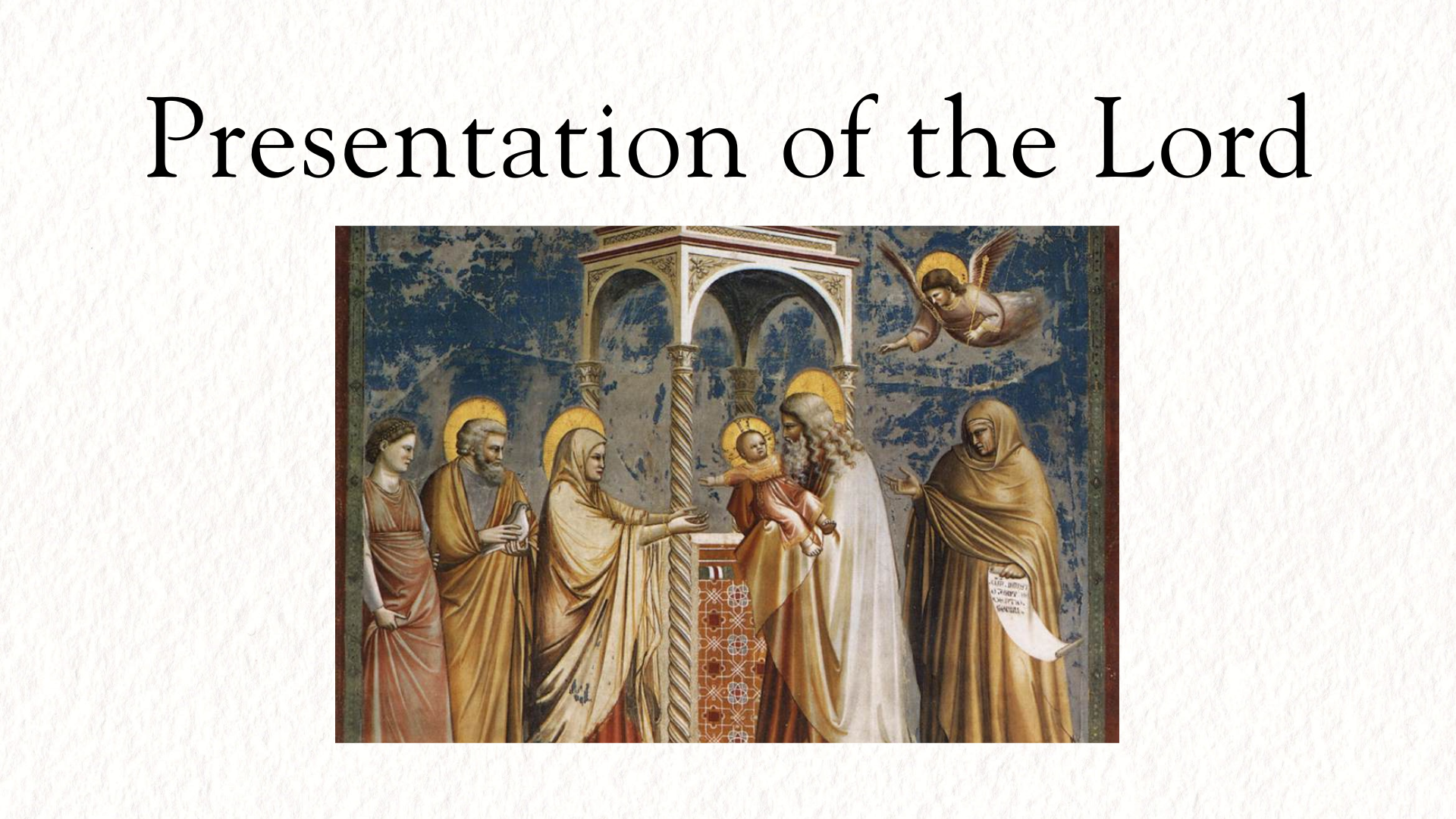
The Presentation of the Lord

Hebrews 2:17

...he had to become like his brothers and sisters in every way, that he might be a merciful and faithful high priest before God
to expiate the sins of the people.

Readings for Sunday: Malachi, Hebrews, Luke

Reflection:

At the Field Museum there was an exhibit filled with shoes—endless varieties from around the world, even boots. A sign read, “Walk a mile in my shoes,” inviting us to understand others’ lives by imagining their journeys. It was inspiring. But something was missing—a pair of sandals, worn by a Jewish carpenter from Nazareth named Jesus.

Those sandals represent something profound: that God Himself understands us. God, as God, knows everything.Yet in Jesus, God takes our humanity, walking among us, experiencing life as we do.

The feast we celebrate today, the Presentation of the Lord, reminds us of this incredible truth. Mary and Joseph brought Jesus to the temple—the place where God’s glory, His shekinah, dwelled among His people.

For centuries, that glory had seemed distant—hidden behind the curtain of the Holy of Holies, accessible only to the high priest, and only once a year at that. But Malachi foretold a day when the Lord Himself would come to His temple. And when He did, it wasn’t with fire and lightning, but as a baby in His mother’s arms.

In Jesus, the glory of God walked a mile in our shoes. He shared in our joys and sorrows, even our death, to save us from sin and bring us into a new relationship with God—as His beloved children.

So, when life feels dark or overwhelming, follow Simeon’s example. Keep your eyes on Jesus. Because in Jesus, our God is with us in our experience, even when life is hard.

Reflection Questions

  • In Your Prayer Ask: How does knowing that Jesus “walked a mile in our shoes” change the way you view your relationship with God? How can this truth bring you comfort in moments of darkness or difficulty?

  • Reflect on This: Simeon waited his whole life to see Jesus, trusting in God’s promise. What are you waiting for or trusting God with right now? How might keeping your eyes on Jesus help you find hope and strength in your journey?

  • Consider in Quiet Reflection: The museum exhibit invited visitors to “walk a mile” in someone else’s shoes. How can Jesus’ example inspire you to better understand and show compassion to others? Who in your life might need you to walk alongside them today?

Join us for our Mass livestream Watch Online