Category

Path To Sunday

Eighth Sunday in Ordinary Time

Luke 6:45

A good person out of the store of goodness in his heart produces good.

Readings for Sunday: Sirach, 1 Corinthians, Luke

Reflection:

If an anthropologist from the future, traveling back in time with an invisibility cloak could observe you every day, all day, for months: what type of report would he write? It is easy for us to declare what our ideals are, but talk is cheap. How do we actually live? In the Gospel for this Sunday, Jesus says, “A good tree does not bear rotten fruit, nor does a rotten tree bear good fruit. For every tree is known by its own fruit… A good person out of the store of goodness in his heart produces good, but an evil person out of a store of evil produces evil; for from the fullness of the heart the mouth speaks.” We all like to think of ourselves as good people, yet, if we are honest, we not only sin but even have thought patterns that are not always good. We judge people, we lust, and we are often selfish and self-centered.

Holiness is not simply avoiding sin; though to be clear, we should not sin. Holiness, in the end, is about conformity to Jesus Christ. It is to become just like him: to be a son or daughter of God in and through the Son of God.

To think like him, be like him, take on his dispositions and, in the end, act like him. That is why the Catholic Church teaches both about what entertainment we “consume” and the inculcation of virtue, that is, good habits.

Regarding entertainment, as well as books and so on, the Church teaches us to choose carefully. We like to think that we have great mental filters, and that we can filter out bad material. But that is not true. After all, have you ever had a song stuck in your head? How did it get there? Virtue is the day in and day out doing of good things, to the point that they become habit. Habits can be good (virtues) or bad (vices). We want to be so like Jesus Christ that it becomes “natural;” we want to be holy.

Reflection Questions

  • In your prayer ask: What TV shows, internet content, books, etc. do I watch and read?  Is it good? Does it lead me to Jesus Christ or away from him?
  • Reflect on this: What are my vices? Am I cultivating virtue in my life; am I working on eliminating my vices?
  • Consider in quiet reflection: What type of report would an invisible anthropologist write about me after observing just how I live every day, let alone what I think?

Seventh Sunday in Ordinary Time

Luke 6:27

Love your enemies, do good to those who hate you.

Readings for Sunday: 1 Samuel, 1 Corinthians, Luke

Reflection:

Sometimes Jesus’ commands seem crazy; for example, in today’s Gospel, he tells us to “love our enemies, do good to those who hate you.” Yet, if we understand it, it makes perfect sense. In the first place, the actual word in the original Greek text is Ἀγαπᾶτε (agapate); it is the command form of the verb agapaó, “to love.” But this is different than the other Greek words for love such as phileō (brotherly love, the love of friends), stérgō (family feeling), éramai (physical love, romantic love, sexual love). Agapaó means to do good for the other person without expectation of repayment. It has nothing to do with how you feel, rather, it is about what you do. Jesus would ultimately say, “No one has greater love (agape) than this, to lay down one’s life for one’s friends.

We, as sinners, were in a sense God’s enemies. St. Paul wrote, “God proves his love for us in that while we were still sinners Christ died for us” (Romans 5:8). We see God’s love for us in the Cross. We see God’s love in what he did for us, not expeting repayment because it is impossible to buy or earn or compensate God’s for our salvation. As God loves us, we are to love others, even our enemies.

There is a difference between authentically loving someone and liking someone. Liking someone means you enjoy being around that person, and or you agree with that person, and so on. You can truly love (agapaó) someone while not liking him. You can like someone without truly loving her. We have probably all had friends who like us but didn’t truly love us: they were not there when we truly needed them or they were not willing to do good for us without expecting some kind of payment or return. Jesus is not like that: he truly loves us, even when we are not being very likable; he truly loves us even though we are sinners.

Reflection Questions

  • In your prayer ask: Do I distinguish, in my own mind, loving someone from liking someone? Do I truly love God and my neighbor, or do I sometimes only “like” them?
  • Reflect on this: How can I love my enemies by doing good to them, even when I don’t like them? How can I desire the greatest good for my enemies, even if it isn’t to my advantage?
  • Consider in quiet reflection: How strong must Jesus’ love for me be, if he became human, and then suffered and died on a cross to save me, sinner that I am?

Sixth Sunday in Ordinary Time

Luke 6:23

Behold, your reward will be great in heaven.

Readings for Sunday: Jeremiah, 1 Corinthians, Luke

Reflection:

In today’s Gospel, we hear the Beatitudes. One way to understand them is to see them as: how we are “to be.” Granted, beatitude is blessedness; to be blessed. Yet, we have to be open to receive God’s blessings, and so how “we are” is very much related to being blessed by God.

The Beatitudes show us that what God intends for us is very different than the attitudes conveyed by the world around us. Hence, Jesus says such seemingly crazy things like, “Blessed are you who are poor, for the kingdom of God is yours.” However, the truth is that we are ultimately poor; all of creation is ultimately God’s and we only have temporary possession of the things of the earth. Furthermore, we are existentially poor: we did not create ourselves and we do not save ourselves. We receive everything as a gift from God. How are we “to be” before God? Humble and receptive to his gifts.

Additionally, when we “are” in relationship with God, then we will live differently than many in a world marked by sin. For that reason, Jesus says, “Blessed are you when people hate you, and when they exclude and insult you, and denounce your name as evil on account of the Son of Man.” It may not seem like we are blessed when people hate us, but to be united with Jesus, who himself was rejected by the world, is to have the greatest of all treasures.

Reflection Questions

  • In Your Prayer Ask: What do I consider to be the greatest blessing(s) in my life? Are they material or spiritual? Do I consider Jesus to be the greatest treasure in my life?
  • Reflect on This: What are my ultimate goals in life? Are the success, fame and power? Or are they virtue, holiness, and unity with Christ?
  • Consider in quiet reflection: When I am struggling, poor, or disliked: do I consider that it may be, despite appearances, a blessing from God?

Fifth Sunday in Ordinary Time

1 Corinthians 15:11

So we preach and so you believed.

Readings for Sunday: Isaiah, 1 Corinthians, Luke

Reflection:

This Sunday, we hear in the second reading St. Paul’s summary of the Kerygma. The word kerygma is Greek for proclamation. It is what is translated as “preach” in the last line of the reading: “Therefore, whether it be I or they, so we preach and so you believed.” We now refer to as the Kerygma, the basic message of our faith; it is the Good News or Gospel in summary form.

St. Paul is reminding the members of the Church in the city of Corinth what they heard him preach in person. First, the Good News is that of salvation. But salvation is a journey, which begins at Baptism, but requires our participation and free will choices. We must cooperate with God’s grace.

The Kerygma that St. Paul repeats is the same one explained more fully in the Nicene Creed we recite at mass every Sunday: “Christ died for our sins in accordance with the Scriptures; that he was buried; that he was raised on the third day in accordance with the Scriptures; that he appeared to Cephas, then to the Twelve…”

Reflection Questions

  • In Your Prayer Ask: When someone asks me what I believe as a Catholic, have I considered just reciting the Creed? Do I have the Creed memorized?
  • Reflect on This: Do I think of Jesus and what he has done for me as the Good News of my life?  Would I be more excited to tell people about Jesus or about my winning the lottery?
  • Consider in quiet reflection: Do I think about salvation, and that my life is to be a journey to salvation in Jesus Christ?

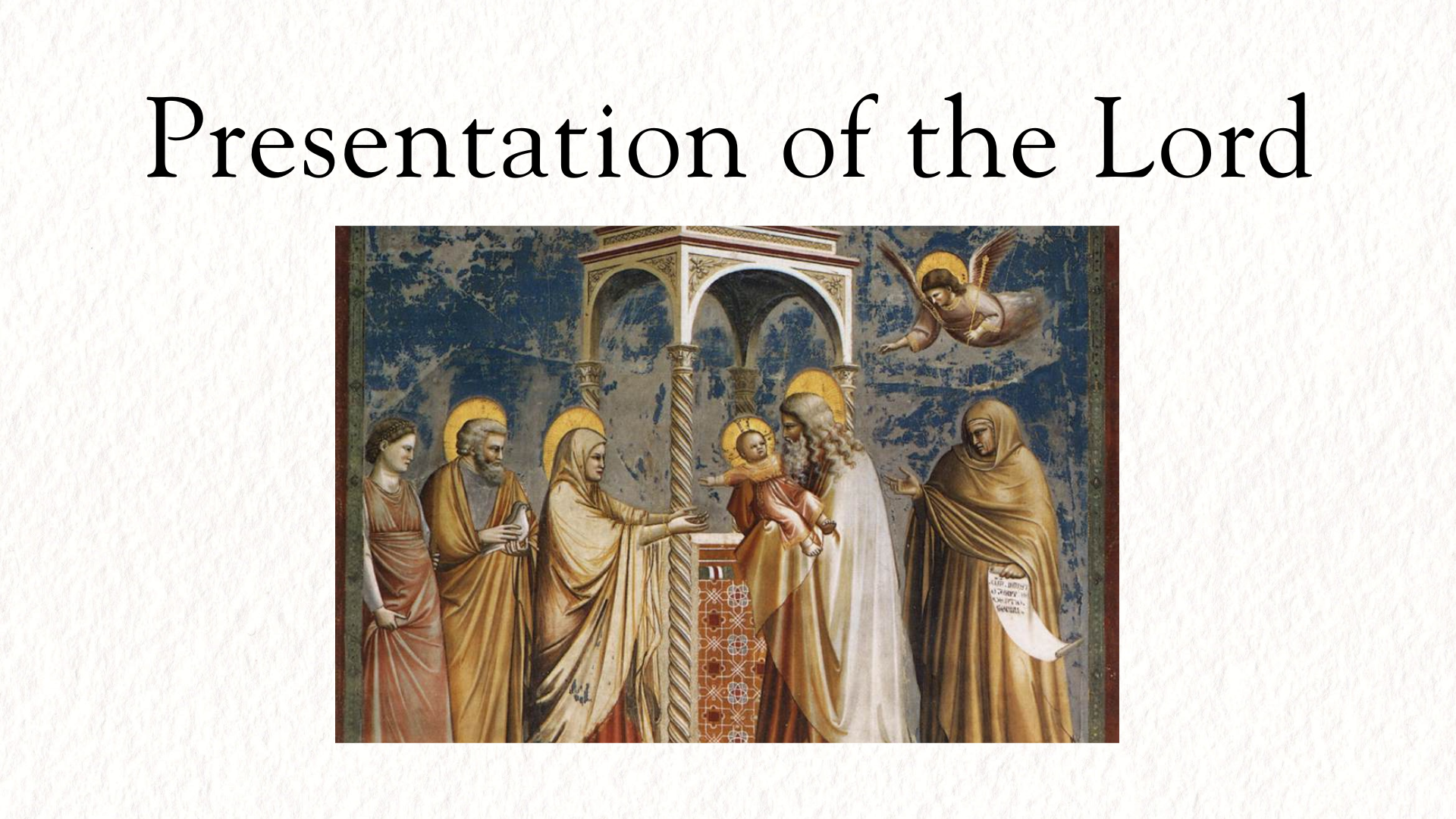
The Presentation of the Lord

Hebrews 2:17

...he had to become like his brothers and sisters in every way, that he might be a merciful and faithful high priest before God
to expiate the sins of the people.

Readings for Sunday: Malachi, Hebrews, Luke

Reflection:

At the Field Museum there was an exhibit filled with shoes—endless varieties from around the world, even boots. A sign read, “Walk a mile in my shoes,” inviting us to understand others’ lives by imagining their journeys. It was inspiring. But something was missing—a pair of sandals, worn by a Jewish carpenter from Nazareth named Jesus.

Those sandals represent something profound: that God Himself understands us. God, as God, knows everything.Yet in Jesus, God takes our humanity, walking among us, experiencing life as we do.

The feast we celebrate today, the Presentation of the Lord, reminds us of this incredible truth. Mary and Joseph brought Jesus to the temple—the place where God’s glory, His shekinah, dwelled among His people.

For centuries, that glory had seemed distant—hidden behind the curtain of the Holy of Holies, accessible only to the high priest, and only once a year at that. But Malachi foretold a day when the Lord Himself would come to His temple. And when He did, it wasn’t with fire and lightning, but as a baby in His mother’s arms.

In Jesus, the glory of God walked a mile in our shoes. He shared in our joys and sorrows, even our death, to save us from sin and bring us into a new relationship with God—as His beloved children.

So, when life feels dark or overwhelming, follow Simeon’s example. Keep your eyes on Jesus. Because in Jesus, our God is with us in our experience, even when life is hard.

Reflection Questions

  • In Your Prayer Ask: How does knowing that Jesus “walked a mile in our shoes” change the way you view your relationship with God? How can this truth bring you comfort in moments of darkness or difficulty?

  • Reflect on This: Simeon waited his whole life to see Jesus, trusting in God’s promise. What are you waiting for or trusting God with right now? How might keeping your eyes on Jesus help you find hope and strength in your journey?

  • Consider in Quiet Reflection: The museum exhibit invited visitors to “walk a mile” in someone else’s shoes. How can Jesus’ example inspire you to better understand and show compassion to others? Who in your life might need you to walk alongside them today?

Third Sunday in Ordinary Time

Nehemiah 8:10

Do not be saddened this day, for rejoicing in the LORD is your strength!

Readings for Sunday: Nehemiah, 1 Corinthians, Luke

Reflection:

How are you doing on your New Year’s resolutions? Here’s a suggestion for another resolution: incorporating daily Bible reading into our routines as a way to strengthen our connection with God. While it might initially seem like a daunting goal, it’s a simple yet profound way to hear His voice and grow spiritually. Many of us wish we could hear God answer our questions directly, but more often, He speaks to us through prayer and scripture. The Bible is not just a collection of ancient writings—it is God’s living Word, full of wisdom and guidance for our lives.

In this Sunday’s first reading, we hear of how the people of Israel, having returned from exile from Babylonian to the Holy Land, listen to Ezra read God’s law, meaning part of scriptures we now call the Old Testament. The people were deeply moved to point of being sorrowful for their sins. But Ezra reminds them that God’s word is to also guide them on how to live, and that in hearing God’s word, the people are to rejoice in the Lord. In the Gospel reading, we hear of how God’s word is ultimately fulfilled in the person of Jesus Christ. After reading from the book of the prophet Isaiah, Jesus tells those listening in the syngague that the scripture passage is “fulfilled in your hearing.” Psalm 19 reminds us of the power of God’s Word, describing it as perfect, refreshing, and life-giving.

Historically, access to the Bible was limited, as copies were rare, and very expensive. Before the moveable type printing press was invented by Gutenberg in the 15th century, every Bible was copied by hand. Usually it was copied on to a form of animal skin such as parchment or vellum. Today, we are fortunate to have easy access to the Bible in many formats, yet it often remains untouched in our daily lives. We can even access it on our phones! Imagine the impact of dedicating just 15-20 minutes a day to scripture—perhaps by reading before bed, during a quiet moment in the morning, or even as a family before dinner. These small adjustments can make a significant difference. By engaging with God’s Word consistently, we can deepen our relationship with Him and find renewed direction and purpose in our lives.

Reflection Questions

  • In Your Prayer Ask: How often do you intentionally dedicate time to reading the Bible or engaging with scripture, and how has this influenced your spiritual growth?
  • Reflect on This: Thinking about the accessibility of the Bible today compared to its historical limitations, how can you better appreciate and utilize this resource to deepen your connection with God?
  • Consider in quiet reflection: What small changes could you make in your daily routine to incorporate regular Bible reading, such as setting aside 30 minutes or involving your family in the practice?

Second Sunday in Ordinary Time

John 2:11

Jesus did this as the beginning of his signs in Cana in Galilee and so revealed his glory, and his disciples began to believe in him.

Readings for Sunday: Isaiah, 1 Corinthians, John

Reflection:

Did you catch it? Jesus’s first public miracle was at the wedding feast in Cana, changing water into wine. Yet, he wasn’t going to do anything until his mother interceded with him. It points to the profound role that Jesus’ human mother, Mary, played in his life. While we are all sinners, and Jesus is not, he is still human. Mary, preserved from sin by God’s grace, is still a human mother. Their relationship teaches us several things.

Motherhood is one of the most powerful roles in human life, shaping not just the physical life of a child, but their very identity and sense of being. Without a loving mother, children often struggle with self-esteem, trust, and relationships. If you think about, infants and toddlers learn a language at home from their parents, especially their mothers. Jesus’ native language was Aramaic because Mary and Joseph spoke it at home. Mary’s importance in salvation history is clear in today’s gospel story and in the fact that when all the apostles fled, except John, she stood at the foot of the cross. From Jesus’ conception through his death and resurrection, Mary was there.

Do we appreciate motherhood as just that: a radically important role? Granted some mothers work outside the home by choice or necessity. Some choose to exclusively work in the home; a stay-at-home mom is working hard. Either which way, mothers are counselors, teachers, nurses, cooks, caregivers, etc. Supporting mothers, especially single mothers, and ensuring just wages for families is essential, especially to enable those mothers who choose to be able to work in the home.

Reflection Questions

  • In Your Prayer Ask: How has your relationship with your own mother, or a mother figure in your life, shaped your sense of identity and trust in others?
  • Reflect on This: What can Mary’s role as both the mother of Jesus and an intercessor teach us about the spiritual and emotional impact of motherhood in our own lives?
  • Consider in quiet reflection: In a society that often undervalues the role of stay-at-home mothers, how can we actively support and uplift the work of all mothers, including those who face unique challenges like single parenthood or financial struggles?

Baptism of the Lord

Luke 3:22

You are my beloved Son; with you I am well pleased.

Readings for Sunday: Isaiah, Titus, Luke

Reflection:

“Have you been saved?” This question invites us to reflect on the profound gift of baptism. For Catholics, salvation begins there, as St. Paul reminds us: “When the kindness and generous love of God our savior appeared, not because of any righteous deeds we had done but because of his mercy, He saved us through the bath of rebirth and renewal by the Holy Spirit” (Titus 3:5-6). Jesus’ own baptism might seem puzzling.

Why would the sinless Son of God receive a baptism for repentance? The answer lies in “recapitulation”—Jesus taking on our broken humanity to restore and renew it. By entering the waters, He sanctified them, imparting the power to cleanse us and unite us to His death and resurrection. His baptism marked the start of His public ministry and His journey toward the Cross.

For us, baptism is the start of a lifelong journey of faith. In that moment, we are adopted by the Father, united to Christ, and filled with the Holy Spirit. But salvation isn’t a one-time event—it’s a relationship that grows through prayer, Mass, Scripture, and acts of love. As St. Paul reminds us, our lives now belong to Christ, who purchased us at a price. Living out our baptism means choosing daily to grow in holiness and love, to see our lives as belonging to God, and to walk the path of faith toward eternal life with Him.

Reflection Questions

  • In your prayer, ask: How have I embraced my baptismal call to live as a disciple of Christ, and where might God be inviting me to grow deeper in faith and love?
  • Reflect on this: Jesus stood in solidarity with sinners through His baptism, though He was without sin. How does His example inspire me to stand with and serve others in their struggles?
  • Consider in quiet reflection: Do I truly see my life as belonging to Christ, and how can I live more intentionally as His follower in my daily choices and relationships?

Epiphany

Matthew 2:11

They prostrated themselves and did him homage.

Readings for Sunday: Isaiah, Ephesians, Matthew

Reflection:

The story of King Herod and the Magi in Matthew 2:1-12 offers a profound reflection on God’s providence, the universality of Jesus’ mission, and our personal journey of faith. Herod the Great, a ruler with no Jewish heritage, symbolizes political power and cruelty. In response to the Magi’s search for the newborn King, he orders the massacre of infants in Bethlehem. The Magi, priestly figures from the East, follow a star to find Jesus, bringing gifts of gold, frankincense, and myrrh. These gifts symbolize His kingship, divinity, and future death, inviting us to reflect on what we offer to Christ in our own lives.

The Gospel reveals three key lessons for us. First, God’s providence is at work in history, guiding people and events to fulfill His plan. While humans make choices, God arranges circumstances for His ultimate purpose.

The Magi, led by a star, are directed to Jesus, fulfilling prophecy. Second, the Magi were non-Jews, showing that Jesus came to save all people, not just the Jews. Their visit reflects the Epiphany, the manifestation of Jesus as the Savior of the world. Lastly, like the Magi, we are called to seek Jesus with dedication, offering our best, whether in time, gifts, or service. Following Jesus means being willing to change and align our lives with His teachings, allowing Him to transform us. This journey of seeking, offering, and transforming is at the heart of our spiritual walk with Christ.

Reflection Questions

  • In your prayer, ask: How am I being called to seek Jesus in my daily life, and what gifts of time, talent, or treasure am I offering to Him?
  • Reflect on this: How does the story of the Magi’s journey challenge me to trust in God’s providence, even when I don’t understand the full picture or path ahead?
  • Consider in quiet reflection: Like the Magi, how might I be called to step out of my comfort zone or change my beliefs to align more closely with Jesus’ teachings and His mission for the world?

Feast of the Holy Family

Luke 2:49

Did you not know that I must be in my Father’s house?

Readings for Sunday: Sirach, Colossians, Luke

Reflection:

In today’s Gospel, we encounter a rare glimpse into Jesus’ childhood, offering us a profound reflection on both His humanity and divinity. At twelve years old, Jesus stays behind in Jerusalem, engaging with the teachers in the temple. When Mary and Joseph return to find Him, they are understandably confused and anxious. But Jesus responds, “Did you not know that I must be in my Father’s house?” This statement reveals His deep understanding of His divine identity—He is the Son of God, with a special relationship to the Father.

This passage highlights the reality that Jesus, though fully divine, was also fully human. He grew in wisdom, age, and favor before God and man, just like any other child. He wasn’t performing miracles or showing off His divine powers; rather, He was simply a young boy learning and growing, living a life free from sin.

His humanity was not a façade; He experienced real childhood, with moments of wonder, growth, and confusion, just as we do.

At the same time, this story hints at something greater—Jesus’ divine mission. The three days spent searching for Him may symbolize His future death and resurrection, pointing to the ultimate mission He would fulfill. Jesus’ identity as both God and man invites us to reflect on His deep understanding of our human struggles. He truly knows us because He lived as one of us, yet He is also the Savior who offers us salvation.

Reflection Questions

  • In your prayer, ask: How does knowing that Jesus experienced childhood and grew in wisdom like I do help me understand His compassion for my own struggles and growth?
  • Reflect on this: Jesus knew His identity as the Son of God even as a child. How can I grow in my own understanding of my identity as a child of God?
  • Consider in quiet reflection: What does it mean for me to seek “my Father’s house” in the midst of my daily life, and how can I cultivate a deeper relationship with God through my actions?
Join us for our Mass livestream Watch Online