Category

Path To Sunday

17th Sunday In Ordinary Time

Luke 11:10

"...To the one who knocks, the door will be opened."

Readings for Sunday: Genesis, Colossians, Luke

Reflection:

Many of us pray, and many of us are frustrated with prayer. Why? Because we treat it like a transaction: I ask, God gives. When He doesn’t give us that for which we ask, we wonder what’s wrong. Sometimes we become angry with God. But what if the problem isn’t with God, but with our understanding of prayer?

In this Sunday’s Gospel reading from Luke chapter eleven, Jesus’ disciples ask Him, “Lord, teach us to pray.” These were good, devout Jews. They already knew how to say prayers and ask God for things. But they saw something deeper in how Jesus prayed. The prayer practice of their teacher was rooted not in asking, but in relationship. As Jesus begins to teach them The Lord’s Prayer, one thing they notice immediately is that the Son of God begins His prayer with a declaration of love and reverence: “Father, hallowed be your name.”

Remember that when Jesus prayed, He wasn’t handing God a to-do list. He was seeking His Father’s will. Even in the garden before His crucifixion, Jesus asked the Father to let the cup of suffering pass him by. Nevertheless, He added, “not my will, but yours be done.”
That’s the heart of real prayer: not asking for stuff or even miracles, but for God’s will, God’s kingdom, and to be in God’s presence now and forever. When we pray like that, when we seek the Holy Spirit, we start to understand prayer as Jesus did. And God, who is our loving Father, will always respond with what we truly need. So maybe the question is not just, “Am I praying?” but, “Am I praying like Jesus?”

Reflection Questions

  • What does it mean to approach God as a loving Father, and how might that change the way I pray?
  • In what ways can my prayer become more about my relationship with God rather than simply asking for things?
  • How can I learn to trust God’s will, even when the answer to my prayer is “no” or silence?

16th Sunday In Ordinary Time

Colossians 1:24

"Now I rejoice in my sufferings for your sake"

Readings for Sunday: Genesis, Colossians, Luke

Reflection:

Challenging us with the bold statement, “I rejoice in my sufferings,” Saint Paul has a lot to tell us about our path to heaven. At first, this may seem puzzling: why would anyone rejoice in suffering? But behind Paul’s declaration is an important truth: suffering is not meaningless, but rather a means of sanctification, becoming holy and “perfect” in Christ.

St. Paul’s joy in suffering stems from his understanding that perfection is not about worldly success (our bodies, finances, or careers) but about becoming more like Christ. At baptism, we are adopted into God’s family and cleansed of sin, but this is only the beginning. The Christian life is a lifelong transformation, a process by which we are perfected in Christ. That means being conformed to Christ in His humanity, authentically loving God and neighbor.

Too often, we assume that getting to heaven is simply about avoiding hell by not murdering people. Yet, if all of us were taken to heaven right now, just as we are and hence without any transformation, heaven would no longer be a place of perfect love, peace and joy. We are the ones who gossip, lie, and lust. For everlasting life to be true love, peace, and joy, we have to be a people perfectly conformed to Christ.

Suffering plays a necessary role in that transformation. St. Paul wrote, “in my flesh I am filling up what is lacking in the afflictions of Christ on behalf of His body, which is the church.” He wasn’t implying that Christ’s suffering was incomplete. Only Christ’s suffering and death on the cross has opened the gates of heaven to us. Christ has saved us.

The power of what he has done for humanity, however, must be actualized in each of us, here and now, across the centuries. Moreover, none of us does it in isolation: if heaven is our union together in Christ, then we are called to love by sacrifice for our brothers and sisters.

This way of enduring is called redemptive suffering, and was summed up in the older phrase, “offer it up.” We are called to offer our afflictions for each other, letting Christ’s power move in us, transforming us in the process.

Reflection Questions

  • In what ways have I tried to avoid suffering instead of embracing it as a path to holiness?

  • How can I better unite my daily struggles and pain with the suffering of Christ for the good of others?

  • For whom, besides myself, should I be “offering up” my afflictions, sacrifices, and suffering?

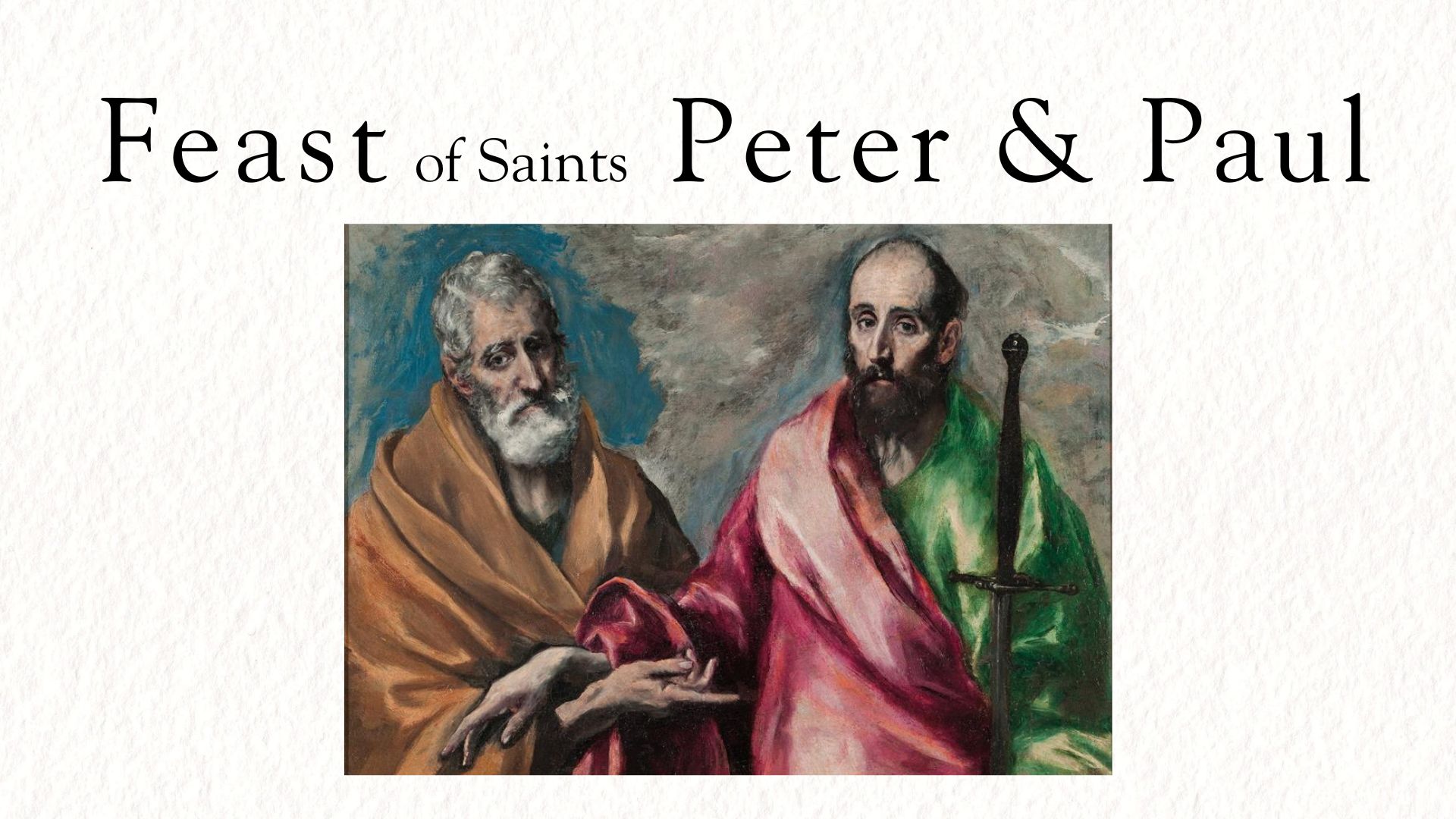
The Feast of Saints Peter and Paul

Matthew 16:18

“You are Peter, and upon this rock I will build my Church.”

Readings for Sunday: Acts, 2 Timothy, Matthew

Reflection:

This Sunday, we celebrate the two great evangelizers of our faith—St. Peter, the apostle to the Jews, and St. Paul, the apostle to the gentiles. Though very different in background and personality, both were chosen by Christ and gave their lives to build His Church. The readings for today offer us a powerful reminder of who they were, what they endured, and what their lives mean for us.

In our first reading, from the Acts of the Apostles, Peter is imprisoned for preaching the Gospel. An angel of the Lord comes, light fills the cell, and Peter walks free. God isn’t done with him yet. It’s a reminder that when we follow Christ, no prison—physical or spiritual—can hold us back.

Next, in Paul’s second letter to Timothy, we read the apostle’s words: “I have fought the good fight, I have finished the race, I have kept the faith.” What a testimony! Paul’s life wasn’t easy—he was beaten, shipwrecked, and imprisoned—but he never gave up. And through it all, he trusted that the Lord would see him through.

Finally, in today’s Gospel from Matthew, we hear that it is Peter, who answers, “You are the Christ, the Son of the living God.” Jesus responds with those unforgettable words: “You are Peter, and upon this rock I will build my Church.”

This isn’t just about Peter personally—it’s about the Church’s foundation. Jesus entrusts Peter with leadership, showing us how God works through human instruments to guide His people.

Peter and Paul weren’t perfect; both would admit that they were sinners. Paul originally persecuted members of the Church and Peter denied Jesus three times before the crucifixion. But grace transformed them—and through them, the world. Their lives encourage us to say “yes” to Jesus, no matter our past, and to trust that God can do great things through each of us.

Let us pray today for their courage, their faith, and their love for Christ. May we, like Peter and Paul, become living stones in the Church that the Father continues to build—in and through Christ, our Lord.

Reflection Questions

  • In Your Prayer Ask: How is God calling me to be a “rock” in my own community, like Peter was for the early Church?

  • Reflect on This: What are the “chains” in my life that might be holding me back from fully following Christ?

  • Consider in Quiet Reflection: Like Paul, can I say I am “fighting the good fight” and “keeping the faith”?

Eighth Sunday in Ordinary Time

Luke 6:45

A good person out of the store of goodness in his heart produces good.

Readings for Sunday: Sirach, 1 Corinthians, Luke

Reflection:

If an anthropologist from the future, traveling back in time with an invisibility cloak could observe you every day, all day, for months: what type of report would he write? It is easy for us to declare what our ideals are, but talk is cheap. How do we actually live? In the Gospel for this Sunday, Jesus says, “A good tree does not bear rotten fruit, nor does a rotten tree bear good fruit. For every tree is known by its own fruit… A good person out of the store of goodness in his heart produces good, but an evil person out of a store of evil produces evil; for from the fullness of the heart the mouth speaks.” We all like to think of ourselves as good people, yet, if we are honest, we not only sin but even have thought patterns that are not always good. We judge people, we lust, and we are often selfish and self-centered.

Holiness is not simply avoiding sin; though to be clear, we should not sin. Holiness, in the end, is about conformity to Jesus Christ. It is to become just like him: to be a son or daughter of God in and through the Son of God.

To think like him, be like him, take on his dispositions and, in the end, act like him. That is why the Catholic Church teaches both about what entertainment we “consume” and the inculcation of virtue, that is, good habits.

Regarding entertainment, as well as books and so on, the Church teaches us to choose carefully. We like to think that we have great mental filters, and that we can filter out bad material. But that is not true. After all, have you ever had a song stuck in your head? How did it get there? Virtue is the day in and day out doing of good things, to the point that they become habit. Habits can be good (virtues) or bad (vices). We want to be so like Jesus Christ that it becomes “natural;” we want to be holy.

Reflection Questions

  • In your prayer ask: What TV shows, internet content, books, etc. do I watch and read?  Is it good? Does it lead me to Jesus Christ or away from him?
  • Reflect on this: What are my vices? Am I cultivating virtue in my life; am I working on eliminating my vices?
  • Consider in quiet reflection: What type of report would an invisible anthropologist write about me after observing just how I live every day, let alone what I think?

Seventh Sunday in Ordinary Time

Luke 6:27

Love your enemies, do good to those who hate you.

Readings for Sunday: 1 Samuel, 1 Corinthians, Luke

Reflection:

Sometimes Jesus’ commands seem crazy; for example, in today’s Gospel, he tells us to “love our enemies, do good to those who hate you.” Yet, if we understand it, it makes perfect sense. In the first place, the actual word in the original Greek text is Ἀγαπᾶτε (agapate); it is the command form of the verb agapaó, “to love.” But this is different than the other Greek words for love such as phileō (brotherly love, the love of friends), stérgō (family feeling), éramai (physical love, romantic love, sexual love). Agapaó means to do good for the other person without expectation of repayment. It has nothing to do with how you feel, rather, it is about what you do. Jesus would ultimately say, “No one has greater love (agape) than this, to lay down one’s life for one’s friends.

We, as sinners, were in a sense God’s enemies. St. Paul wrote, “God proves his love for us in that while we were still sinners Christ died for us” (Romans 5:8). We see God’s love for us in the Cross. We see God’s love in what he did for us, not expeting repayment because it is impossible to buy or earn or compensate God’s for our salvation. As God loves us, we are to love others, even our enemies.

There is a difference between authentically loving someone and liking someone. Liking someone means you enjoy being around that person, and or you agree with that person, and so on. You can truly love (agapaó) someone while not liking him. You can like someone without truly loving her. We have probably all had friends who like us but didn’t truly love us: they were not there when we truly needed them or they were not willing to do good for us without expecting some kind of payment or return. Jesus is not like that: he truly loves us, even when we are not being very likable; he truly loves us even though we are sinners.

Reflection Questions

  • In your prayer ask: Do I distinguish, in my own mind, loving someone from liking someone? Do I truly love God and my neighbor, or do I sometimes only “like” them?
  • Reflect on this: How can I love my enemies by doing good to them, even when I don’t like them? How can I desire the greatest good for my enemies, even if it isn’t to my advantage?
  • Consider in quiet reflection: How strong must Jesus’ love for me be, if he became human, and then suffered and died on a cross to save me, sinner that I am?

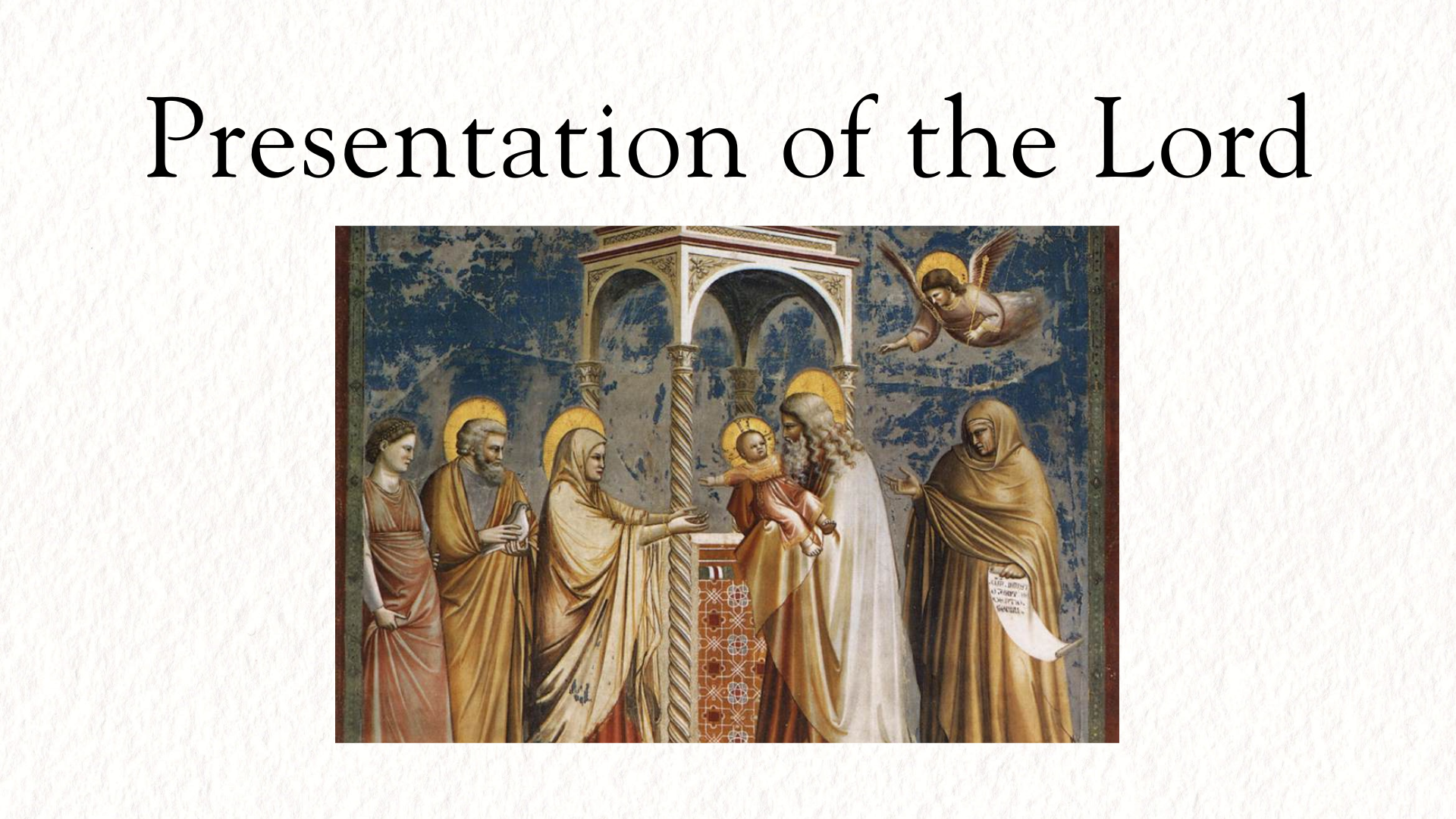
The Presentation of the Lord

Hebrews 2:17

...he had to become like his brothers and sisters in every way, that he might be a merciful and faithful high priest before God
to expiate the sins of the people.

Readings for Sunday: Malachi, Hebrews, Luke

Reflection:

At the Field Museum there was an exhibit filled with shoes—endless varieties from around the world, even boots. A sign read, “Walk a mile in my shoes,” inviting us to understand others’ lives by imagining their journeys. It was inspiring. But something was missing—a pair of sandals, worn by a Jewish carpenter from Nazareth named Jesus.

Those sandals represent something profound: that God Himself understands us. God, as God, knows everything.Yet in Jesus, God takes our humanity, walking among us, experiencing life as we do.

The feast we celebrate today, the Presentation of the Lord, reminds us of this incredible truth. Mary and Joseph brought Jesus to the temple—the place where God’s glory, His shekinah, dwelled among His people.

For centuries, that glory had seemed distant—hidden behind the curtain of the Holy of Holies, accessible only to the high priest, and only once a year at that. But Malachi foretold a day when the Lord Himself would come to His temple. And when He did, it wasn’t with fire and lightning, but as a baby in His mother’s arms.

In Jesus, the glory of God walked a mile in our shoes. He shared in our joys and sorrows, even our death, to save us from sin and bring us into a new relationship with God—as His beloved children.

So, when life feels dark or overwhelming, follow Simeon’s example. Keep your eyes on Jesus. Because in Jesus, our God is with us in our experience, even when life is hard.

Reflection Questions

  • In Your Prayer Ask: How does knowing that Jesus “walked a mile in our shoes” change the way you view your relationship with God? How can this truth bring you comfort in moments of darkness or difficulty?

  • Reflect on This: Simeon waited his whole life to see Jesus, trusting in God’s promise. What are you waiting for or trusting God with right now? How might keeping your eyes on Jesus help you find hope and strength in your journey?

  • Consider in Quiet Reflection: The museum exhibit invited visitors to “walk a mile” in someone else’s shoes. How can Jesus’ example inspire you to better understand and show compassion to others? Who in your life might need you to walk alongside them today?

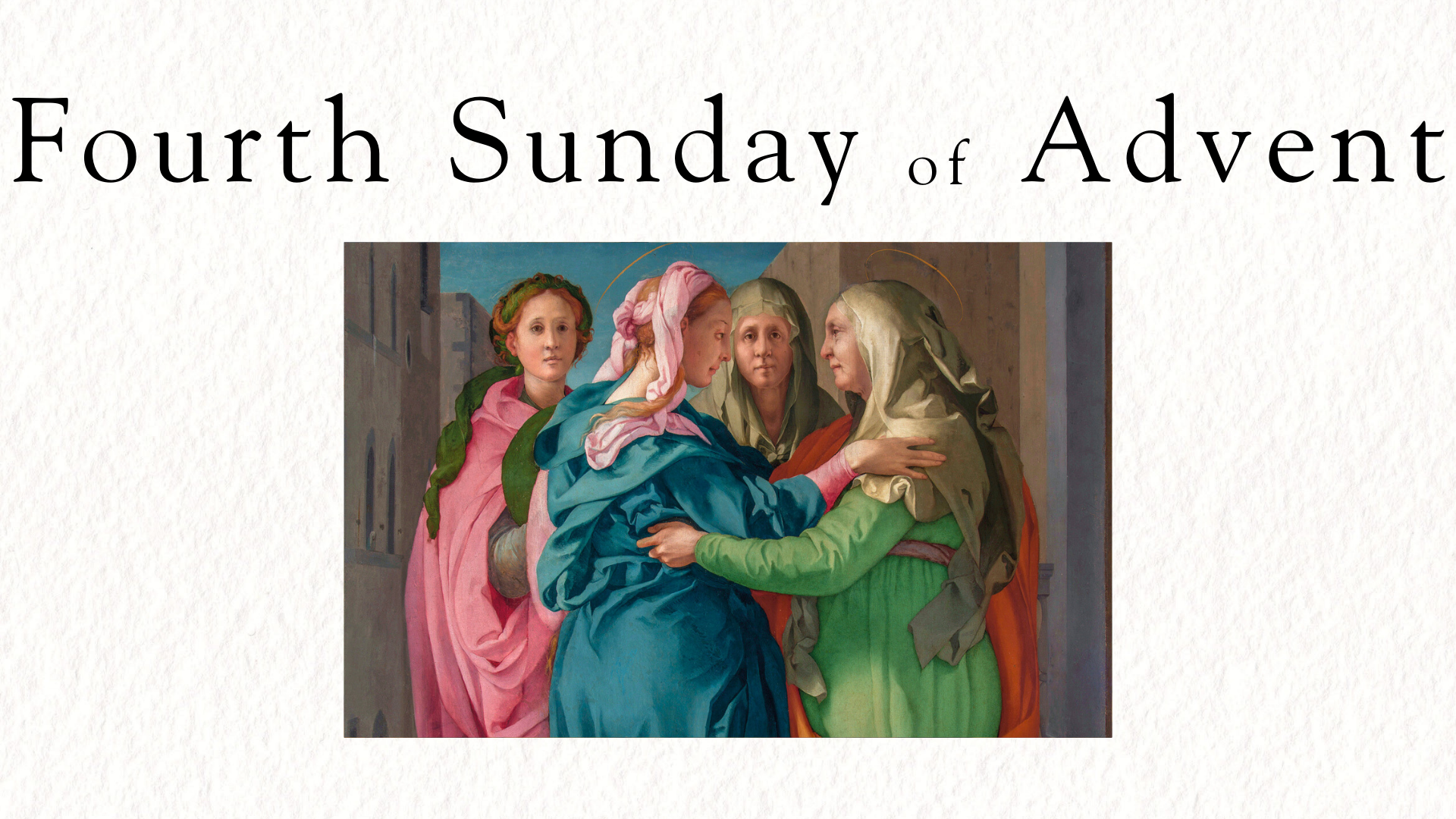
Fourth Sunday of Advent

Luke 1:42

Blessed are you among women, and blessed is the fruit of your womb.

Readings for Sunday: Micah, Hebrews, Luke

Reflection:

Ever wonder why we Catholics honor Mary? You can find the answer in this Sunday’s Gospel reading, which comes from Luke 1:39-45. In the verses immediately preceding this passage (Luke 1:26-38), we hear how the Archangel Gabriel announced to Mary that she would conceive and bear a son. Gabriel also informed Mary that her cousin Elizabeth had conceived a child in her old age. With the Christ child in her womb, Mary sets off to visit her cousin.

When Mary arrives at Elizabeth’s house, Elizabeth, “filled with the Holy Spirit,” exclaims: “Blessed are you among women, and blessed is the fruit of your womb. And how does this happen to me, that the mother of my Lord should come to me?”

While Jesus is clearly present (in Mary’s womb), Elizabeth, inspired by the Holy Spirit, honors Mary. This honor is not in opposition to or competition with Jesus; rather, Elizabeth honors Mary because of her unique relationship with her Son.

And so it is with us. When we pray the Hail Mary, we are simply quoting scripture: “Hail Mary, full of grace, the Lord is with thee,” echoes the Archangel Gabriel’s greeting to Mary. The line “Blessed are you among women, and blessed is the fruit of your womb” is from Elizabeth’s greeting. To these scriptural words, we add the petition, “Holy Mary, Mother of God, pray for us sinners…”

Reflection Questions

  • How do I honor Mary in my life today, as St. Elizabeth did in hers? Do I see Mary as bringing her Son to me so that I may be closer to him?
  • How do I become more like Mary in bringing Jesus to others?
  • Am I willing to serve others like Mary, who, when she heard of St. Elizabeth’s pregnancy, went to see her, despite the hardship of travel in those days?

32nd Sunday In Ordinary Time

Mark 12:44

She, from her poverty, has contributed all she had, her whole livelihood.

Readings for Sunday: 1 Kings, Hebrews, Mark

Reflection:

Have you ever wondered what God wants from you? Often, we rush through our days, focused on routines—work, school, family—without thinking about deeper questions. It’s usually when something goes wrong—a sickness, job loss, or loss of a loved one—that we pause and ask, “God, what do you want from me?”

God’s answer is simple yet profound: He wants everything—our whole hearts and lives. In Sunday’s Gospel (Mark 12:38-44), Jesus notices a poor widow placing her last coins in the temple treasury. “For they have all contributed from their surplus wealth, but she, from her poverty, has contributed all she had, her whole livelihood.”

Unlike the wealthy who give what’s extra, she gives everything she has out of love and trust in God.

This story reflects how God gives Himself to us fully, especially through Christ, who poured out His life on the cross and continues to offer Himself in the Mass. Just as the widow gave all she had, God invites us to surrender our lives back to Him. This is the heart of stewardship—not just giving money but offering our time, talents, and entire selves. Through this, we love God with everything we are and have, allowing His love to transform our lives.

Reflection Questions

  • In your prayer, ask: “Lord, in what areas of my life am I holding back from fully giving myself to You? Help me to see how I can follow the example of the widow who gave all she had.”
  • Reflect on this: “Just as the widow gave her last coins out of love and trust, what ‘last coins’—be it time, talent, or energy—might you be called to offer in love to God, even if it feels small or insignificant?”
  • Consider in quiet reflection: “How would your life look if you gave God not just the surplus of your time and resources, but your ‘whole livelihood’? What steps can you take to live with this kind of generosity and trust?

31st Sunday In Ordinary Time

Mark 12:30-31

Love the Lord your God with all your heart, with all your soul, with all your mind, and with all your strength.

Readings for Sunday: Deuteronomy, Hebrews, Mark

Reflection:

In today’s Gospel (Mark 12:28-34), Jesus is asked which commandment is the greatest. His response is both simple and profound: “Love the Lord your God with all your heart, soul, mind, and strength;” and then he adds a second, “Love your neighbor as yourself.” These two commands encapsulate the essence of our faith, but they are far from easy to live out.

This passage invites us to reflect on what true love means. In our culture, love is often reduced to a feeling or preference—liking someone or something. However, Jesus calls us to a much deeper love, the kind He showed on the cross: agape, a love of self-sacrifice and action. It’s not about feelings but about choosing to do good for others, even those we may not like or who hurt us. True love is laying down our lives in small ways for the sake of others.

Yet, we often find our hearts divided. We say we love God, but we can let other “gods” creep in—work, money, comfort, or even our reputation or self-image. How often do we prioritize these things over God? Just as importantly, we struggle to love our neighbors, especially those who challenge or inconvenience us.

Jesus reminds us that these commandments are inseparable. Loving God fully allows us to love others more deeply. The call to love requires us to act, not just to feel. Through prayer, Mass, and serving those around us, we can grow in this love, allowing it to shape our lives and draw us closer to God’s Kingdom. Let us ask for the grace to love God with our whole hearts, and to love others as He loves us.

Reflection Questions

  • In your prayer, ask: Do I truly love God with all my heart, or are there areas of my life where I place other priorities above Him?
  • Reflect on this: How do I view love? Is it more about my feelings or my willingness to sacrifice and act for others, even when it’s difficult?
  • Consider in quiet reflection: Are there people in my life whom I struggle to love? How might loving God more deeply help me to love those around me better, especially those who are challenging to love?

30th Sunday In Ordinary Time

Christ and the pauper | Andrey Mironov | 2009

Mark 10:51

Master I want to see

Readings for Sunday: Jeremiah, Hebrews, Mark

Reflection:

Fear touches every part of our lives. We fear sickness, loneliness, financial loss, and ultimately, death. These fears can paralyze us, keeping us from moving forward. But in today’s Gospel, the story of Bartimaeus offers a profound reflection on how we can find hope through faith in Jesus.

Bartimaeus, whose name means “son of fear,” lived his life in darkness, unable to work or support himself, left to beg on the streets. Fear blinds us in a similar way, preventing us from seeing solutions, hope, or a way forward. Yet, when Bartimaeus hears Jesus is near, he doesn’t hold back. He cries out in humility, asking for mercy: “Jesus, Son of David, have pity on me.”

His cry is a model for our own prayer—persistent, humble, and trusting. Even when others try to silence him, Bartimaeus continues to call out, trusting that Jesus will respond. And Jesus does stop, calling Bartimaeus to come to Him. In an act of faith, Bartimaeus throws aside his cloak, a symbol of his old life, and asks for healing.

Jesus asks, “What do you want me to do for you?” Bartimaeus answers simply, “Master, I want to see.” This is more than a request for physical sight. It is a recognition of who Jesus is—a surrender to His will and a desire for true discipleship. Bartimaeus gains his sight, but more importantly, he gains the ability to follow Jesus.

This story calls us to reflect on our own fears. When we cry out to Jesus, are we ready to respond to His call? Are we willing to throw aside our old ways and trust in His mercy, even if His response is different from what we expect? Like Bartimaeus, we are called not just to receive, but to follow—through our fears, through the cross, and into the hope of resurrection. Faith is not just belief; it is trust, surrender, and a willingness to follow Jesus wherever He leads.

Reflection Questions

  • In your prayer, ask: “Jesus, where are my fears keeping me from fully trusting You? Am I ready to call on You in my struggle and listen for Your voice?”
  • Reflect on this: “Am I clinging to an old way of living that keeps me from following Jesus more closely? What do I need to ‘throw aside’ in order to walk with Him?”
  • Consider in quiet reflection: “If Jesus asked me, ‘What do you want me to do for you?’ how would I respond? Am I seeking to follow Him, or just asking for what I want?”
Join us for our Mass livestream Watch Online