
Isaiah 50:7
"The Lord GOD is my help, therefore I am not disgraced."
Readings for Sunday: Matthew, Isaiah, Philippians, Matthew
Reflection:
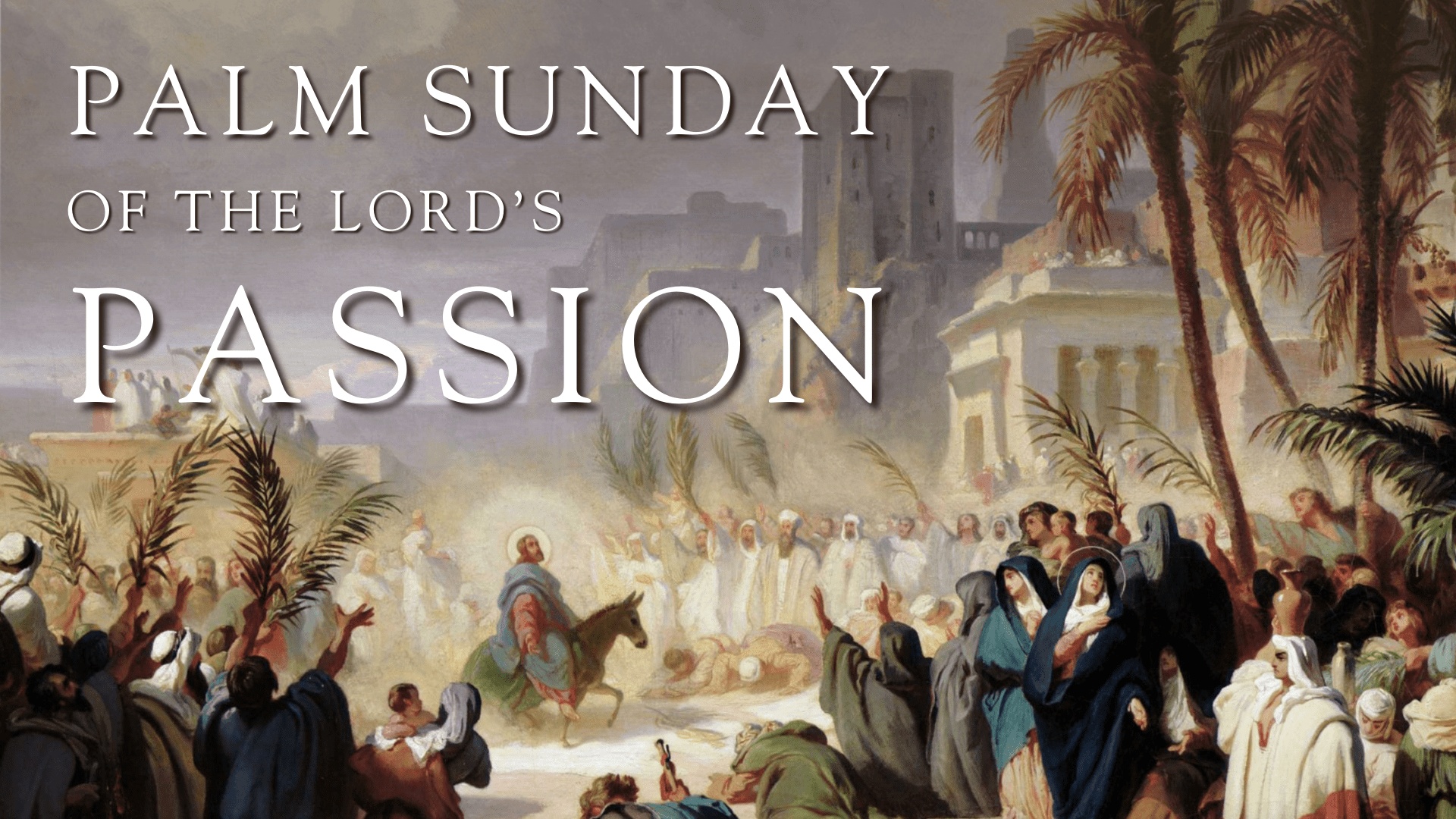
About 2,000 years ago, Jesus walked into Jerusalem in triumph on the first day of the Jewish week. They were waving palm branches, the historic and biblical sign of victory. By Friday, the crowd was yelling, “crucify him!” What happened in between? Even among the twelve apostles, Judas betrayed him, Peter denied him, and all but John ran away. The Blessed Mother Mary and a few other women stood fast. But overall, Holy Week begins with the reading of the Passion story: Jesus was abandoned, denied, tortured, and publicly executed. The man did absolutely nothing wrong in life whatsoever; he was and is sinless.
We see in Jesus, God’s love for us in that God took on our humanity and then suffered and died at our hands to save us from sin and everlasting death.
When we celebrate Easter, Christ’s victory, the cross itself becomes transformed. In that way, the cross takes on multiple meanings: our sins, God’s mercy and love, the transformation of human suffering, and ultimate victory.
All four Gospels, Matthew, Mark, Luke and John, are different in their own ways. Yet all four center on, and devote the most space to, the Passion narrative. It is the center of our faith. If Jesus didn’t suffer, die, and rise, we simply would not exist as the Church; there would be no St. James Parish.
Reflection Questions
- Do I really stand out from the crowd of modern-day society? Do I go along with what is societally acceptable, or do I really stand for Jesus Christ, even if people will oppose me?
- How do I see the cross of Jesus Christ? Do I see it as guilt, as love, and/or as freedom?
- What I am going to do extra this week, to draw closer to Jesus Christ?