All Posts By

admin

The First Hierarchy: Angels

The First Hierarchy: Angels

Fr. Paul Stein

In contemporary American culture, we tend to think of hierarchy as a bad thing; it is one person or party holding power over another. Today’s mainstream culture tends to insist any “archy” is bad: monarchy, patriarchy, oligarchy, anarchy, etc. At least in terms of hierarchy, we have something that, when properly understood and lived, is very good. It is built into creation: the angelic realm.

In the Bible, there are numerous passages regarding angels. While there isn’t one passage that gives the entire hierarchy, there are several that reveal pieces of it.

… and what is the surpassing greatness of his power…which he worked in Christ, raising him from the dead and seating him at his right hand in the heavens, far above every principality, authority, power, and dominion, and every name that is named not only in this age but also in the one to come. (Eph 1:19-21)

He is the image of the invisible God, the firstborn of all creation. For in him were created all things in heaven and on earth, the visible and the invisible, whether thrones or dominions or principalities or powers; all things were created through him and for him.
(Col 1:15-16)

Throughout the Old and New Testaments, we find references to: angels (e.g. Genesis 28:12), Archangels (e.g. Jude 1:9), principalities (e.g. Col 1:16), powers (e.g. Col 1:16), virtues (also called authorities, e.g. Eph 1:21 and 1 Peter 3:22), dominions (e.g. Col 1:16), thrones (e.g. Col 1:16), cherubim (e.g. Ez 10:18) and seraphim (e.g. Is 6:2). All of them pure spirits, members of what is called the invisible part of creation.[1]
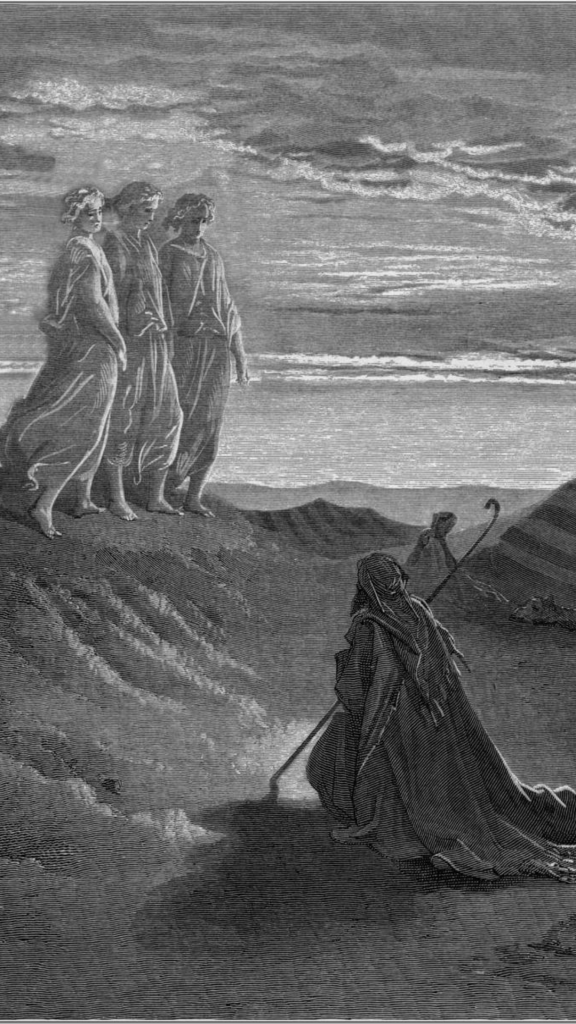
We know that they exist in a hierarchy, not only by the fact that St. Michael is named as an Archangel, but also by the way they are referenced in scripture. Names/titles such as thrones, dominions, and principalities all imply order, governance, and levels of power.

The exact ordering of the hierarchy, however, isn’t entirely clear in the Bible. For this reason, different writers have had slightly different listings of their rank and order. This article will focus on the writings of Dionysius the Arreopagite and his work De Coelesti Hierarchia (On the Celestial Hierarchy).[2] He groups them in three groups of three, reflecting the Trinity:

Seraphim     Dominions      Principalities
Cherubim    Virtues             Archangels         
Thrones        Powers           (Regular) Angels

A contemporary reader may wonder if an angel in the lower part of the hierarchy is somehow “less” than an angel higher up in the order. In a sense, no. Granted, angels higher up have more power, but that does imply less dignity or less importance.[3] (H)ieros meant holy (a hieros was a priest, a holy one), and archia meant to rule. The one above you is empowered by God to elevate you toward him, to lift you up. God empowers or capacitates a hierarchy to look after and be responsible for the one(s) below. Thus, while our guardian angels are “above” us, they take care of us.

For Dionysius, hierarchy is not an oppressive thing, but to the contrary, a responsibility to God and others in the hierarchy. Fans of Spiderman may appreciate the idea that: “with great power comes great responsibility.” This applies to any hierarchy: the military, the family, or the Church. When lived authentically, it is a reflection of the God who took on our humanity in Christ and suffered and died on a cross to save us, in service of humanity. The Church, as the Body of Christ, is supposed to be like a human chain that extends from earth up to heaven, with anyone above, a hierarch, lifting up (the chain) the one below him. Hence, one title of the Pope is the servant of the servants of God.

The Church, as the Body of Christ...a human chain that extends from earth up to heaven, with anyone above, a hierarch, lifting up the one below him.

What This Means For Us

The hierarchy of angels, as created by God, reassures us today when our culture maligns all hierarchy as a form of oppression. Authentic hierarchy is a beautiful and good thing. If it were not, we would not have guardian angels. Ultimately, we want to live in a monarchy under Christ the King. If you don’t want to live in such an order, there is always anarchy.

Footnotes

[1] In the Bible, as in the Nicene Creed that we say on Sundays, we refer to the fact that God made everything, the visible and invisible. While the hierarchy of angels is the main thing we reference as “invisible,” it does include anything that God created that we cannot see as part of this universe. Thus, heaven is likewise included, as is hell and purgatory. It also allows for the fact that God may have created other things of which we are not yet aware. God could have numerous other realms of creation which we do not know.

[2] He has previously been referred to as Pseudo-Dionysius. He is thought to be a fifth or sixth-century author, most probably a Syriac monk, who took the moniker of Dionysius, whom St. Paul converted at the Areopagus in Athens, Greece in Acts 17:34.

[3] See St. Paul’s explanation (1 Corinthians 12:12-26) about how the Church, the Body of Christ, is hierarchically organized. All parts are essential, even those we deem less: “Indeed, the parts of the body that seem to be weaker are all the more necessary, and those parts of the body that we consider less honorable we surround with greater honor, and our less presentable parts are treated with greater propriety, whereas our more presentable parts do not need this. But God has so constructed the body as to give greater honor to a part that is without it, so that there may be no division in the body, but that the parts may have the same concern for one another (1 Cor 12:22-25).

For Further Reading On This Topic
Angels Don’t Get Wings

| Behold-Angels | No Comments
Contrary to the movie, It’s a Wonderful Life, every time a bell rings, an angel does not get its wings. Furthermore, contrary to countless books, TV shows, movies, and famous paintings:…

Billions of Angels

| Behold-Angels | No Comments
If you asked what species President George Washington is/was, the answer would be: human. If you asked what species the Archangel Michael is, the answer would be: Michael. As humans,…

The First Hierarchy: Angels

| Behold-Angels | No Comments
In contemporary American culture, we tend to think of hierarchy as a bad thing; it is one person or party holding power over another. Today’s mainstream culture tends to insist…

Join the Behold Newsletter

and receive topics (like the one above)
on Catholicism straight to your inbox!

* indicates required

Billions of Angels

Billions of angels

Fr. Paul Stein

If you asked what species President George Washington is/was, the answer would be: human. If you asked what species the Archangel Michael is, the answer would be: Michael. As humans, we are soul-bodies, part physical and part spiritual. Yet, our awareness is dominated by the physical universe in which we live. For that reason – just as we think of labradors, poodles, and shelties as all examples of the species we call “dog” – we incorrectly think of archangels, cherubim, and seraphim as examples of the species called “angel.” To the contrary, each angel is its own species, and the term “angel” is a description of what that creature does. Angelos, in the original New Testament Greek, means “messenger.”

As soul-bodies, we can distinguish between the organizing principle of our humanity (the soul) and the material principle of our humanity (the body). Without a soul, you don’t really have a human being, you merely have a corpse. Without a body, you don’t really have a human being, you merely have a ghost. An authentic living human is the unity of soul and body.

While one human body is usually different than another – for example, Sara is 5’2” and Susan is 6’3” – they theoretically don’t have to be. If you could be cloned down to the last molecule, your clone would have the same body as you, down to the last neuron in the brain. It just wouldn’t be you; it would be a different person. The reason is that each soul is unique.[1]

If you think of a human as the unity of body and soul, then we can both distinguish one human being from another as individual persons, yet at the same time group them as one kind of species, homo sapiens, as in contrast to dog, cat, or elephant. Human bodies can be similar to each other, yet human bodies are not the same as dog bodies. In contrast, angels are pure spirits, they do not and have never had bodies; they are a completely different kind of creature(s). As pure spirits, there is no material principle to an angel at all. Thus, “angel” isn’t a type of species.

Similar to how each human soul is unique, each angel as a pure spirit, is unique. In effect, each angel is its own species.[2] Thus, while we group all angels together as we do humans, cats, and dogs, it is best to appreciate the fact that the angelic world is a massive world of individual, unique spirits. A starting point for understanding the angelic realm is to distinguish between what different groups of angels do. For example, guardian angels protect humans. Archangels are leaders among them who: fight against fallen angels (St. Michael), announce messages from God (St. Gabriel), or bring healing (St. Raphael).

A further point for understanding is that some angels are more powerful than others. For example, seraphim are more powerful than guardian angels. Such power is not physical, such as a bear being able to overpower a wolf. It is more like one human having more “brain power” than another. Bishop Fulton Sheen once described angels as being like “pure minds;” this applies very much to what angels do.

Since each angel is its own species, there are, in effect, billions of species of angels. While scripture doesn’t give a number, it does give indications that there are many of them:

“Thousands of thousands ministered to Him, and ten thousand times a hundred thousand stood before Him” (Daniel 7:10).

Then Jesus said to him, “…Do you think that I cannot call upon my Father and he will not provide me at this moment with more than twelve legions of angels?” (Mt 26:52-53).

While you can calculate what twelve legions would equal (at about 5,000-6,000 per legion), the biblical point is that there are many of them. One can infer that, if each human being has a guardian angel, and presuming that one angel only guards one human instead of four or a hundred at a time, then there must be at least 8 billion angels working on the planet right now.

Thousands of thousands ministered to
Him, and ten thousand
times a hundred thousand
stood before Him

What This Means For Us

God is the Creator; his glory is infinite. We see the manifestation of his infinite glory in the multiplicity and variety of creation. In terms of flowers, we not only have roses but also daffodils, orchids, daisies, etc. So too, God’s glory is reflected in an immense angelic realm where each angel is unique. It helps us appreciate how much God rejoices in his creation and that he is attentive to each one of us.

Footnotes

[1] Even with identical twins, who have the exact same DNA, their bodies are slightly different from each other, including a slightly or vastly different neuron arrangement in the brain.

[2] The term “species” properly belongs to the biological/physical world. I use it here to help the reader understand what an angel really is.

For Further Reading On This Topic
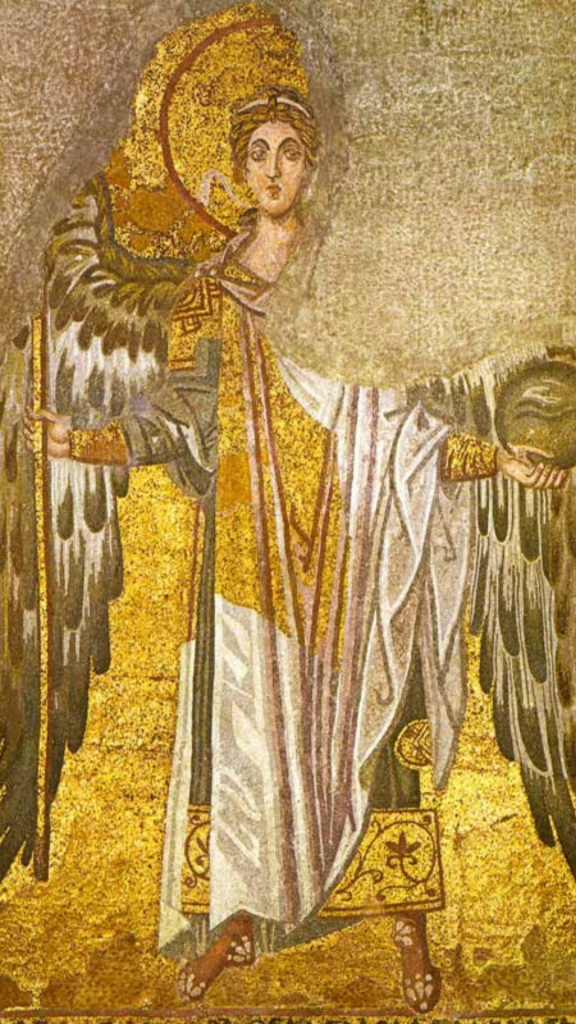
Angels Don’t Get Wings

| Behold-Angels | No Comments
Contrary to the movie, It’s a Wonderful Life, every time a bell rings, an angel does not get its wings. Furthermore, contrary to countless books, TV shows, movies, and famous paintings:…

Billions of Angels

| Behold-Angels | No Comments
If you asked what species President George Washington is/was, the answer would be: human. If you asked what species the Archangel Michael is, the answer would be: Michael. As humans,…

The First Hierarchy: Angels

| Behold-Angels | No Comments
In contemporary American culture, we tend to think of hierarchy as a bad thing; it is one person or party holding power over another. Today’s mainstream culture tends to insist…

Join the Behold Newsletter

and receive topics (like the one above)
on Catholicism straight to your inbox!

* indicates required

Angels Don’t Get Wings

Angels don’t get Wings

Fr. Paul Stein

Contrary to the movie, It’s a Wonderful Life, every time a bell rings, an angel does not get its wings. Furthermore, contrary to countless books, TV shows, movies, and famous paintings: angels cannot become human by “falling” (e.g. City of Angels); aren’t adorable (e.g. the cherubs of baroque art); and don’t engage in physical style battles with vampires and other supernatural creatures (e.g. Buffy the Vampire Slayer and The Mortal Instruments).

Angels are pure spirits; they are not physical. Full stop. In terms of the order of creation, angels were first.[1] They are pure spirits. Second, in terms of creation, is that which is physical; this includes the universe (spacetime) and everything in it. Humanity is the pinnacle of physical creation in that it sits at the boundary between the spiritual and the physical. That is why C.S. Lewis in The Screwtape Letters referred to humans as “spiritual amphibians.”

To be human means to be the unity of body and soul; that is what we are. We are not souls trapped in bodies that escape at death. Death, rather, is the destruction of humans, the separation of soul and body; that is why, to properly live forever, we need to be resurrected. [2] An angel, in contrast, is a pure spirit. [3] An angel is not a soul without a body; an angel is its own type of creature. For that reason, an angel can no sooner become human than a cat can become a dog. Humans and angels are two different types of creatures.

While angels can manifest themselves to human visual perception; it is something merely for our senses. Angels don’t have bodies, and thus they don’t have wings. In the Bible, there are many descriptions of angels having wings (e.g. Ezekiel 1:6).

Humanity is the pinnacle of physical creation
in that it sits at the boundary between
the spiritual and the physical.

The descriptions are meant to help people conceptualize the non-physical characteristics of angels. Angels are swift, both in terms of action and decision and able to go between heaven and earth. Thus, the image is that angels have wings. The highest angels (seraphim) are depicted as having six wings and the second highest angels (cherubim) have four. While they can go between heaven and earth, it is much more like traversing parallel dimensions, than going from one place to another in the universe. Heaven is more of somehow else than somewhere (in this universe) else.

When angels manifest themselves in the Biblical narrative, it is as “messengers” of God, reflecting the literal meaning of the word in both Hebrew, malach, and Greek angelos.

They are God’s servants, not ours, though by God’s command, they do take care of humans and in that sense, serve us. Even though guardian angels do not normally communicate with the humans they protect, their actions in a sense carry God’s message for they are carrying out his will.

When angels do manifest their presence, the universal reaction is fear, not “how cute.”[4] This is exemplified by angels consistently telling humans, “Do not be afraid” (e.g. Luke 2:9-10). Angels are fearsome because they are extremely powerful and reflect the glory of their Creator. A hundred-pound, five-foot-tall man would have the same reaction if, out of thin air, a three-hundred-pound, six-foot-eight soldier were to appear in full battle gear.

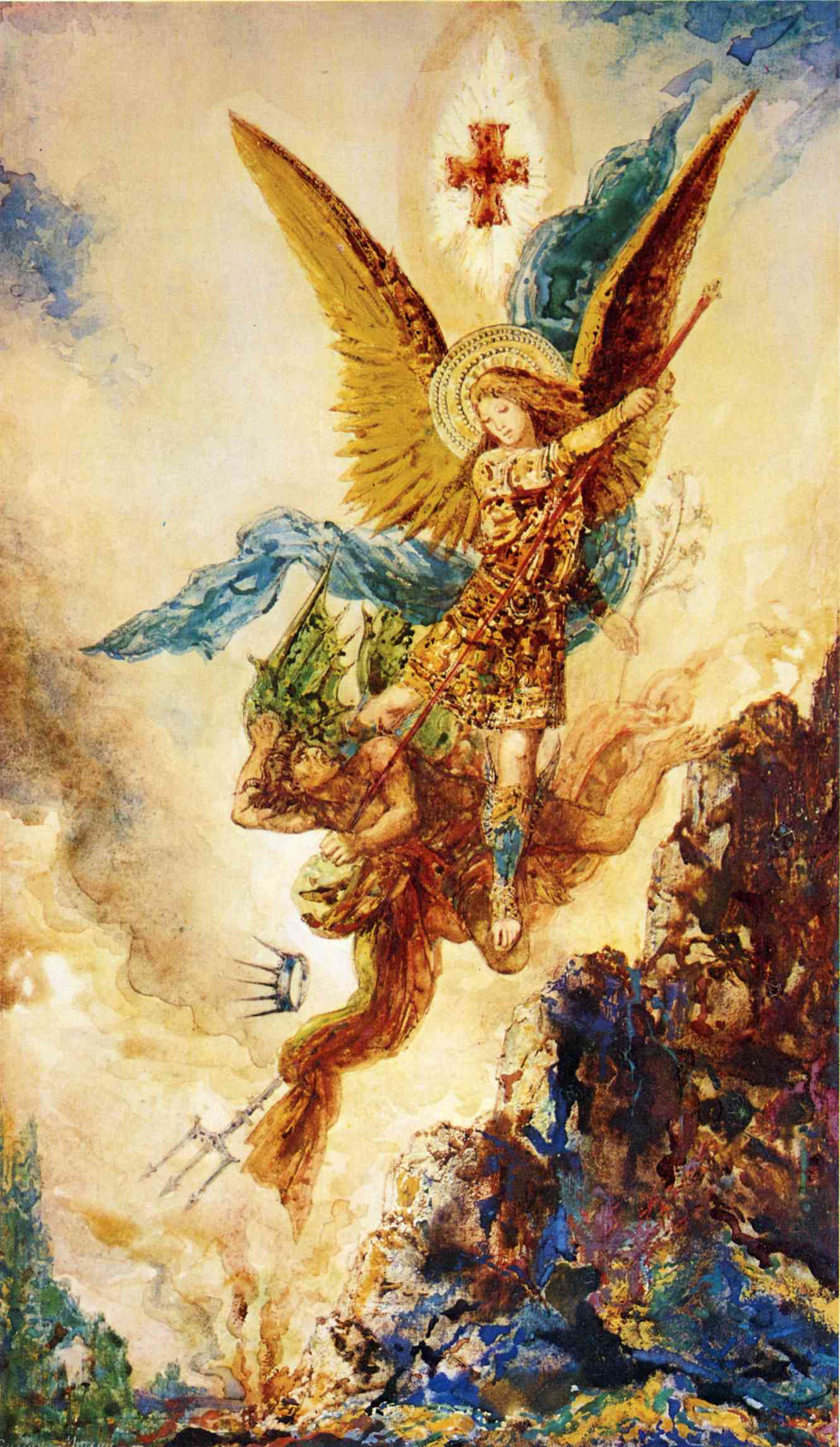
This military image for angels points to the fact that many “regular” angels also serve as guardian angels, under the leadership of the Archangels. The most well-known is St. Michael the Archangel (see Rev 12:7-9). Their regular activity is to protect and defend humans from the actions and influences of Satan and his demons, which are nothing more than fallen angels themselves.[5] Thus, the physical imagery is one of war.

What This Means For Us

There is a whole realm of God’s creation that we do not regularly perceive, that of the angels. Yet, these servants of God regularly assist and help us humans. As pure spirits, they are their own proper creation and show that God’s infinite creativity expresses itself in many ways. We should be aware of this realm, particularly as our life in this universe is still one marked by a spiritual battle, even if we cannot see it.

Footnotes

[1] God as God is eternal: he is outside of time; he is outside of all temporality. Thus, for God, there is no “before,” as all of time is present to him as if it were one moment. He created time – or more specifically spacetime – itself. Even the angels live in a temporality, though different from the sense of time in this universe, called “aeviternity.”

[2] What happens to a person in the “time” between death and the Resurrection at the end of time would be a different Behold article.

[3] This is also why we shouldn’t call God, “pure spirit.” God created the angels and thus is “above” them existentially. He who created the pure spirits is beyond the category. Please see Behold article, “What God Is Not”

[4] We often forget that there is a proper place for the “fear of the Lord,” not because God is out to get us, but because he is Being itself: infinite, eternal, omniscient, omnipotent. Furthermore, the “fear of the Lord,” is not a servile fear, that of a slave dreading a beating from its master. It is a filial fear, that of a son who loves his father and is afraid of doing something that would cause him to lose his relationship with his father. Tragically, modern translations of the gifts of the Holy Spirit from (Is 11:2) speak of “awe and wonder,” when the real translation is “fear of the Lord.”

[5] An angel can “fall” only in the sense of losing his relationship with God by choosing evil. He cannot “fall” and become human.

For Further Reading On This Topic
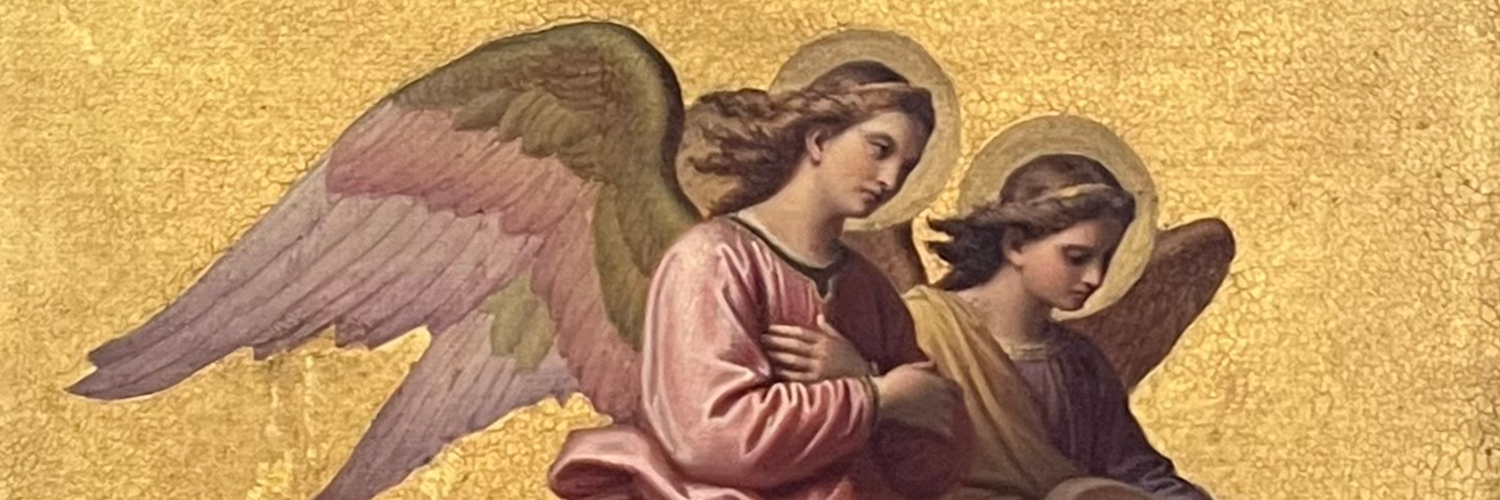
Angels Don’t Get Wings

| Behold-Angels | No Comments
Contrary to the movie, It’s a Wonderful Life, every time a bell rings, an angel does not get its wings. Furthermore, contrary to countless books, TV shows, movies, and famous paintings:…

Billions of Angels

| Behold-Angels | No Comments
If you asked what species President George Washington is/was, the answer would be: human. If you asked what species the Archangel Michael is, the answer would be: Michael. As humans,…

The First Hierarchy: Angels

| Behold-Angels | No Comments
In contemporary American culture, we tend to think of hierarchy as a bad thing; it is one person or party holding power over another. Today’s mainstream culture tends to insist…

Join the Behold Newsletter

and receive topics (like the one above)
on Catholicism straight to your inbox!

* indicates required

The Opposite Of Love Is Not Hate

The Opposite of Love
is not Hate

Fr. Paul Stein

So often, we think that the opposite of love is hate. While hate is contrary to love, so too are many other things. That is because, ultimately, sin is the opposite of love; hate is just one kind of sin. Love is a total (self) gift, whereas sin is grasping.

In the Gospels, when Jesus is asked about which of the commandments is the greatest, he responds:

“You shall love the Lord, your God, with all your heart, with all your soul, and with all your mind. This is the greatest and the first commandment. The second is like it: You shall love your neighbor as yourself. The whole law and the prophets depend on these two commandments.” (Matt 22:37-40).

The word in the original Greek text that Jesus uses for love is agape. In Koine Greek, the original language of the New Testament, there are several words for love. The one Jesus uses means: to do good for/to someone else, for that person’s own sake, without expecting a return or repayment. That is why he goes on to say: “No one has greater love than this, to lay down one’s life for one’s friends” (John 15:13). We see that in the cross of Jesus, true love is a total gift of self for the other person.

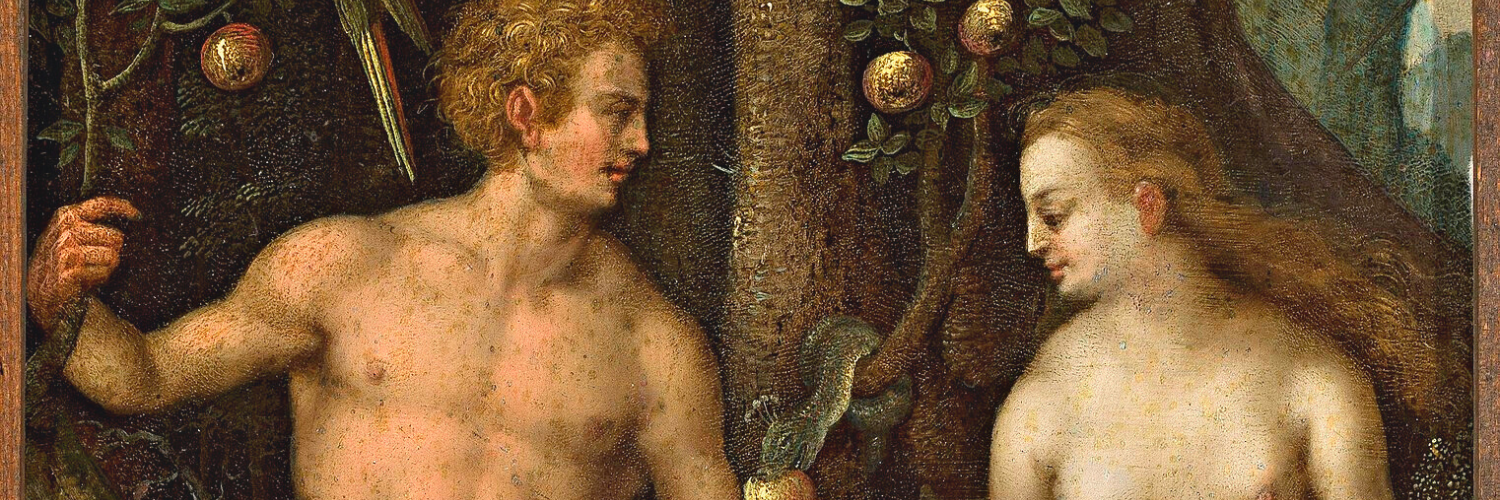
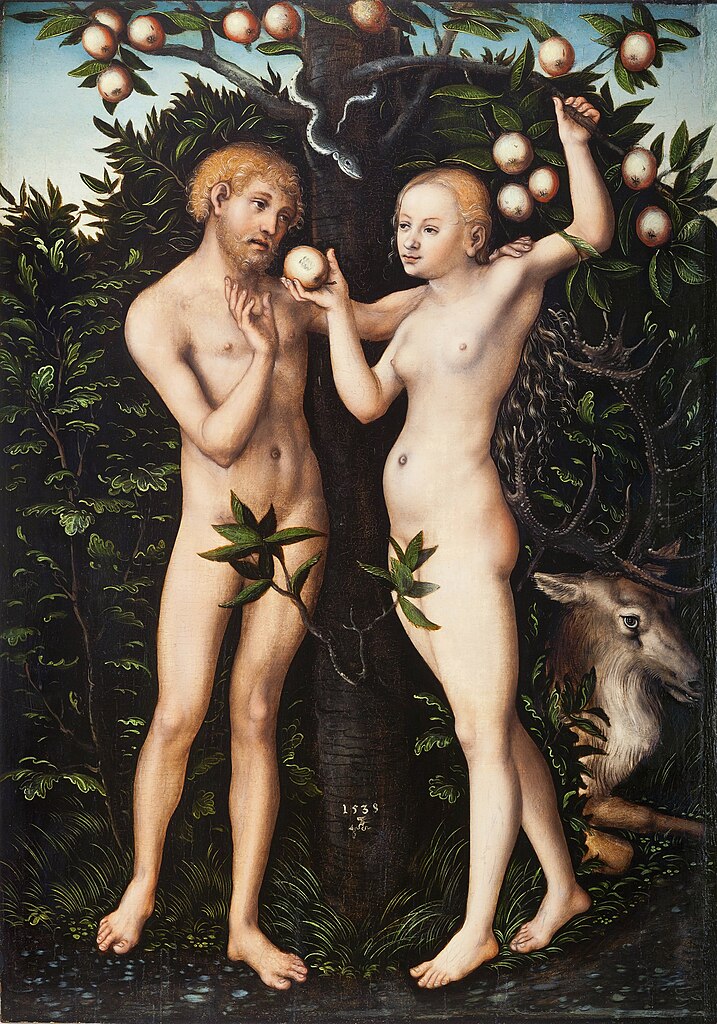
Thus, the direct opposite of love is grasping, which is why original sin is a form of grasping: Adam and Eve grasped the fruit of the tree of the knowledge of good and evil. They grasped at being God, tempted as they were by the serpent: “God knows well that when you eat of it your eyes will be opened and you will be like gods, who know good and evil”(Genesis 3:5).

Every sin is a form of grasping. It can be a sin of commission, seeking to grasp or take something. For example, one can murder (take a life), steal, lust (desire to take sexually), and so on. It can be a sin of omission, maintaining something in one’s grasp and refusing to give it as a person should. For example, withholding the truth, failing to help the poor, or failing to take care of one’s children are all forms of grasping.

Ultimately, God himself is love; it is what God is (see the Behold article God is Father, Son, and Holy Spirit). We see in Jesus, especially on his cross, that God is the self-gift of Father to the Son, of the Son to the Father, that is their Holy Spirit. Thus, if God is self-gift, then sin is a refusal of God. God detests sin, not because he made up an abstract set of rules for humans, not because he is an egomaniac and can’t stand that humans don’t obey his rules; God detests sin because it is contrary to him and the good of his creation. That is why God’s response to sin is wrath; it must be wrath. 

if God
is self-gift,
then sin is the
refusal of God.

What This Means For Us

As disciples of Jesus, we must always seek holiness, living according to God’s design for us as humans. It is too easy to think that sin is not a big deal, that we are just violating some abstract rule that God made up, rather than truly acting contrary to God, who is love. The great saints abhorred every sin they committed, even the venial ones that most people think are no big deal. Let us remember that Jesus suffered and died to forgive what we think of as the smallest of sins.

For Further Reading On This Topic
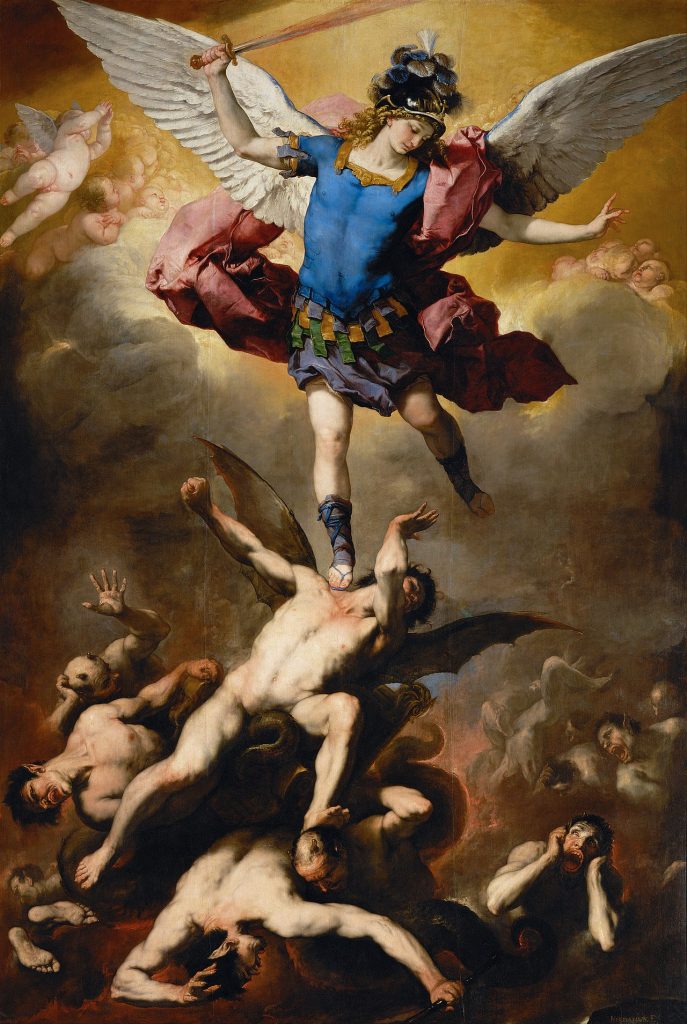
Evil Doesn’t Have Being

| Behold-Sin | No Comments
It may seem odd to see a Catholic writer state that “evil doesn’t have being.” Does that mean that evil is not real or that evil does not exist? No,…

Sin: Original and Deadly

| Behold-Sin | No Comments
Today, so many people get the Book of Genesis wrong. They think that, because current scientific knowledge and theory explain our human origins in the Big Bang and evolution, the…

God Can’t Just Forgive and Forget

| Behold-Sin | No Comments
Have you ever wondered, why did Jesus have to suffer and die to save us from sin? Why didn’t God just forgive and forget? Jesus’ passion, death, and resurrection were…

Join the Behold Newsletter

and receive topics (like the one above)
on Catholicism straight to your inbox!

* indicates required

God Can’t Just Forgive and Forget

God Can't Just
Forgive and Forget

Fr. Paul Stein

Have you ever wondered, why did Jesus have to suffer and die to save us from sin? Why didn’t God just forgive and forget? Jesus’ passion, death, and resurrection were necessary to save us, not because God is petty and demands sacrifice as though he were a spoiled child. They were necessary because sin does real damage; that damage had to be undone. To put it another way: the wounds of sin and death had to be salved/healed [1].

Sometimes, people imagine that God’s laws are mere contrivance; meaning, that God simply made up some rules ad hoc, somewhat in the manner in which people make up rules for a new game. There is no absolute reason why there must be three outs to a team in an inning of baseball; there can just as easily be four or five. In the United States, we drive on the right-hand side of the road, whereas in England they drive on the left.

In contrast, the moral law is intrinsic to our human nature. When we sin, we harm our being. For example, when a person tells a lie, his conscience will boldly “yell,” that is wrong, and that he should not lie. If he lies again, and then again frequently, his consciences becomes more and more muted. At the extreme, a person who habitually lies has a significantly dulled conscience and can lie without thinking about it much if at all [2]. Lying has become, “second nature.”

In the Church, “human nature” means humanity as it can be defined. To be human means to be the unity of body and soul, created in the image and likeness of God. It means to be capable of rational thought and possessing free will, even if we don’t always use our free will, or even use it properly. It ultimately refers to God’s intent in how he created us, no matter how much we have been wounded by original sin. 

It is always important to remember that we are wounded by original sin, thus we don’t always act or desire things in accord with our human nature. Thus statements like, “lying is part of human nature” doesn’t mean that it is part of human nature. Lying may be common, but it is not part of our nature.

For that reason, the phrase “natural law” is different than the cultural phrase, “the law of nature.” The law of nature is simply how the world works as we currently find it; it can encompass the law of the jungle, survival of the fittest, and anything else humans happen to do with their survival or betterment in mind.

Natural law is the interior structure of what it means to be human, according to the plan of our Creator; that law doesn’t change even when we behave contrary to it.

For example, if this author were to design and build a laptop from scratch, and give it to someone with the instruction: it is a gift; just don’t take it in the bathtub. Would such a “law” be an imposition? Would it be a mere rule written on paper? To the contrary, the very intention, design, and nature of a laptop means that it was never meant to be immersed in water. To do so would destroy the laptop and injure the user. (The amount of voltage would be insufficient to kill the user; however, taking a high-wattage lamp in the bathtub probably would.) 

Generally speaking, the moral law is the natural law; God didn’t make up rules ad hoc; he explains how to use the gift of our human lives, and is built into our very being. To violate the law is to harm ourselves. We may be tempted to think that our sins don’t do real harm, but have you ever tried to not gossip? Imagine if there was an LCD monitor magically floating above your head 24/7 broadcasting every thought you have: would you be rather embarrassed?

Original sin did damage to our human nature; so too do the personal sins we commit. We are wounded, and thus, to truly be made whole and ready to be united with God and one another forever in heaven, God needs to heal us. For that reason, the popular imagery of God is incorrect: he is not keeping a checklist of all our good and evil deeds in separate columns like a lawyer, only to compare the totals at the end of our life. That is not how we will be judged. God is more like the divine physician who sees every wound that needs healing.

The word salvation comes from the word salve; we need his healing ointment. For that reason, God cannot just “forgive and forget,” for we would still be deeply wounded.

God is more like the divine physician
who sees every wound that needs healing.

What This Means For Us

While we might prefer for God to “forgive and forget,” it is good news that he does not. Otherwise, if he did grant us everlasting life in heaven, we would be perpetually wounded and incapable of living in peace and harmony with him and one another forever. Rather, we can better appreciate the God who so loves us, that he would go to extremes, becoming human in Jesus Christ to suffer and die on a cross to salve us. We can also better appreciate Purgatory as a gift to those who are not going to hell, but are still in need of healing, even after death.

Footnotes

[1] Salve: to soothe
Definition from Oxford Languages

[2] Insert a joke here about such people entering politics…

For Further Reading On This Topic
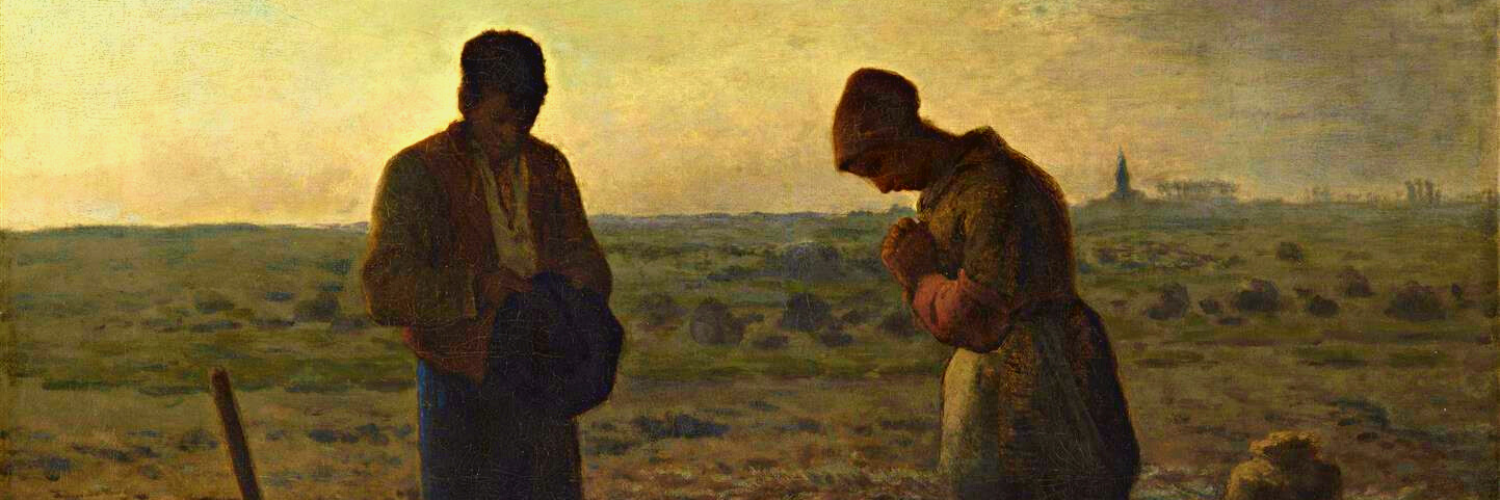
Evil Doesn’t Have Being

| Behold-Sin | No Comments
It may seem odd to see a Catholic writer state that “evil doesn’t have being.” Does that mean that evil is not real or that evil does not exist? No,…

Sin: Original and Deadly

| Behold-Sin | No Comments
Today, so many people get the Book of Genesis wrong. They think that, because current scientific knowledge and theory explain our human origins in the Big Bang and evolution, the…

God Can’t Just Forgive and Forget

| Behold-Sin | No Comments
Have you ever wondered, why did Jesus have to suffer and die to save us from sin? Why didn’t God just forgive and forget? Jesus’ passion, death, and resurrection were…

Join the Behold Newsletter

and receive topics (like the one above)
on Catholicism straight to your inbox!

* indicates required

Sin: Original and Deadly

Sin: Original and Deadly

Fr. Paul Stein

Today, so many people get the Book of Genesis wrong. They think that, because current scientific knowledge and theory explain our human origins in the Big Bang and evolution, the story of Adam and Eve is not true. The difficulty lies in a failure to appreciate that there are different literary ways to tell the truth. A newspaper should attempt to tell the truth not only in its “factual” stories, but also in its other sections. Advertisements should not tell lies. Even the comics tell the truth in their own way; that is why they are, or should be, humorous.[1]

Science as a field of study and as a methodology for learning about the universe is a much more recent phenomenon in human history. It is a wonderful way to come to know the truth. The story of Genesis tells the truth as well, but in a way understood long before science ever existed; Genesis was never intended to be a scientific account. It does, however, answer an urgent question: why is there evil?

Back when the book of Genesis was written, the Israelites were surrounded by nations and their attendant cultures that were pagan. Typically, these cultures had their own creation myths, such as the Enuma Elish of Babylon. In these myths, the creation of humanity was the result of a conflict or battle between the gods. Thus, humanity’s existence was not originally planned; it was, in effect, an afterthought and incidental. Conflict was already part of the cosmos. 

While the story of Genesis uses the mythopoetic language and structure common to Middle Eastern cultures at the time, it does so to communicate the truth. In contrast to pagan creation myths, the one God, purposefully and intentionally created humanity as the pinnacle of creation; wonderfully, he creates humanity in his own image and likeness. At each stage, creation is declared to be “good.”

If God created all things as good: from whence came evil? The story clearly tells us that it came from the misuse of the free will given by the Creator to his creatures. In the story, the serpent represents the tempter, who is nothing more than a creature himself. While the Hebrew text doesn’t use the word, ha satan would be transliterated into many languages, and can be translated as the “adversary.”

The temptation itself is a twisting of the truth, or a half-truth, which is often the most effective form of propaganda. The serpent asks: “Did God really say, ‘You shall not eat from any of the trees in the garden’?” (Gen 3:1). The serpent knows the truth, that God only prohibited the man and woman from eating from the tree of the knowledge of good and evil.

Tragically, the woman in response begins to twist the truth herself: “God said, ‘You shall not eat it or even touch it, or else you will die’” (Gen 3:3). God only prohibited them from eating of the tree; he said nothing about touching it. The serpent continues: “You certainly will not die! God knows well that when you eat of it your eyes will be opened and you will be like gods, who know good and evil” (Gen 3:4-5).

The first lie is that the man and woman will not die. The second is more insidious: telling them that they “will be like gods” implies both that they are not already like God and that God is holding back on them. Tragically, the first man and woman failed to believe that God created them in his image and likeness. The fact that they could eat anything from the garden with the sole exception of the fruit from the tree of the knowledge of good and evil shows that he was giving them everything that is good.

There is great speculation as the why God prohibited them from eating from the tree of the knowledge of good and evil; after all, doesn’t God want humanity to know the truth? The question lies in what type of knowledge the tree represented in the story. The first man and woman know, in general, what is right and wrong. In contrast, the tree, in part, represents experiential knowledge of good and evil. For example, the next chapter of Genesis (chapter four) speaks of how “Adam knew his wife Eve;” that is how Cain and Abel were born (Gen 4:1). When the first man and woman sought knowledge of good and evil, they were rejecting God, seeking to be their own “gods” very much in the pagan sense. This was the original sin. While they did not drop dead on the spot, it is through original sin that death entered the world. The disorder of physical evil now affected humanity.

The results of Original Sin can be seen immediately in the story: “Then the eyes of both of them were opened, and they knew that they were naked; so they sewed fig leaves together and made loincloths for themselves” (Gen 3:7). They were not physically blind before eating of the fruit; they had seen each other naked. However, it is how each of them beheld the other that changed. They no longer saw each other as persons, the image and likeness of God; they started to see each other as an object of lust. Original sin marks the loss of the supernatural gifts of God: Original Justice and Holiness. They lost the grace of God’s friendship and the right ordering of their passions. With Original Sin came concupiscence, the inclination to sin (see the Catechism of the Catholic Church, #2515). With Original Sin, man’s intellect became clouded and his will was weakened.

They no longer
saw each other
as persons,
the image and likeness of God;
they started to see each other as an object

It is the stain of original sin and all its effects that now permeate the rest of the biblical narrative. For example, the same chapter of Genesis (four) that describes Cain and Abel’s birth describes Cain’s murder of Abel. What the story shows is that through human generations, original sin is passed on to the descendants of the first man and woman.

The story in chapter three does continue unusually, in comparison with the way pagan gods were portrayed in ancient societies: God doesn’t destroy the first man and woman for such an affront. While modern readers may think his reactions are harsh, in reality, they are merciful. He starts by arranging for proper loin clothes made of leather instead of the ones they had created out of leaves (Gen 3:21). He then banishes them from the garden. Here the punishment is also merciful because if were they to eat from the Tree of Life, they would live forever in the state of Original Sin. (Yes, up until the first sin, they were permitted to eat from that tree!) God would now have to do something far more radical to give humanity everlasting life…

What This Means For Us

While at first glance the story of Genesis may seem utterly bleak, it is extraordinarily hopeful; it should give us modern-day sinners hope for ourselves. Evil is not God’s punishment on us, but rather the consequences of our sin. Yet, he wants to save us and grant us everlasting life. God holds nothing back from us, that includes his only begotten Son, Jesus Christ.

Footnotes

[1] For example, I think the comic Dilbert is funny because it is so true. If you studied engineering, as this author has, and have worked or work for a large company.

For Further Reading On This Topic
Evil Doesn’t Have Being

| Behold-Sin | No Comments
It may seem odd to see a Catholic writer state that “evil doesn’t have being.” Does that mean that evil is not real or that evil does not exist? No,…

Sin: Original and Deadly

| Behold-Sin | No Comments
Today, so many people get the Book of Genesis wrong. They think that, because current scientific knowledge and theory explain our human origins in the Big Bang and evolution, the…

God Can’t Just Forgive and Forget

| Behold-Sin | No Comments
Have you ever wondered, why did Jesus have to suffer and die to save us from sin? Why didn’t God just forgive and forget? Jesus’ passion, death, and resurrection were…

Join the Behold Newsletter

and receive topics (like the one above)
on Catholicism straight to your inbox!

* indicates required

Evil Doesn’t Have Being

Evil Doesn’t Have Being

Fr. Paul Stein

It may seem odd to see a Catholic writer state that “evil doesn’t have being.” Does that mean that evil is not real or that evil does not exist? No, it does not. What it means is that God, as creator, did not create evil. It does not have to be. So often people think that evil is “something,” sort of like a substance. People think that it is good versus evil, as though you have two cosmic principals fighting it out. But just as it is incorrect to conceive of the existence of God and the existence of Satan as two equal, cosmic forces locked in battle, it is also incorrect to think of evil as somehow having a concrete existence.

God is the infinite creator who sustains all things in existence. If a thing exists – such as the universe, an angel, or even an ant – then it exists because God wills it to exist and sustains that thing in its existence. As God is Being itself (see the prior Behold article on this topic), any being or thing only exists by a type of participation in God’s own existence. All of creation is continually dependent on the creator to continue in existence.

In so far as something exists, or has being, it is good. This means, that in effect, Being = Good. Otherwise, it could not exist at all. There is no concrete metaphysically existing thing called “evil.” So what, exactly, is evil? It is the lack of being; it is the lack of a good that should be there. Satan exemplifies this: he is merely a creature. Specifically, he is an angel who freely chose to reject God. God did not create Satan or any demon as an “evil” creature. They are all angels, who were created good but used their free will to turn against God.

When we speak of Satan being evil, we are speaking about his will, about what he chooses. The good that Satan and the demons should have is a properly ordered will and desire to do good, to do God’s will. They should freely choose to do actions that are in accord with their existence as angels. That would be to glorify God and promote the well-being of all his creation. But since they have freely warped their own will to want and continue to want evil, we call them “evil.”

We can generally, distinguish between physical and moral evil. A physical evil as evil is still the lack of a good that should be there. An example would be human blindness: it is the lack of sight that should be there, according to the way God made humanity. A moral evil is when a person purposely thinks and acts in ways contrary to the way God made our human nature. Moral evil is the lack of proper order. For example, humans are made for the Truth, hence lying is evil.

Evil is always a deprivation of a good that should be there. In that way, we can say that evil doesn’t have being; evil is the lack of what should be there. In that way, death is the ultimate form of evil: deprivation of the life that should be there. It is the violence of separating the soul and the body. If physical death is the ultimate form of evil, then even more so is the “final” death: damnation. When one rejects God, one is separated from God forever, contrary to the purpose for which he made each person.

Evil is always a deprivation
of a good that should be there

What This Means For Us

Evil, especially moral evil, is an affront to our Creator; it is an embrace of destruction. Yet, since evil is not an equal and opposite to God, we can trust in him and his power to help us with the evil we encounter in our lives. In a sense, the greatest evil in our lives about which we have the opportunity to do something are the sins we commit…or rather should choose not to commit.

For Further Reading On This Topic
Evil Doesn’t Have Being

| Behold-Sin | No Comments
It may seem odd to see a Catholic writer state that “evil doesn’t have being.” Does that mean that evil is not real or that evil does not exist? No,…

Sin: Original and Deadly

| Behold-Sin | No Comments
Today, so many people get the Book of Genesis wrong. They think that, because current scientific knowledge and theory explain our human origins in the Big Bang and evolution, the…

God Can’t Just Forgive and Forget

| Behold-Sin | No Comments
Have you ever wondered, why did Jesus have to suffer and die to save us from sin? Why didn’t God just forgive and forget? Jesus’ passion, death, and resurrection were…

Join the Behold Newsletter

and receive topics (like the one above)
on Catholicism straight to your inbox!

* indicates required

In Accordance With The Scriptures

In Accordance With The Scriptures

Fr. Ed Pelrine

How do we know that Jesus is the Messiah and not another prophet? Why do we follow him and not another? That is because the Old Testament prophecies of Christ’s coming had been fulfilled in Jesus. Let’s begin in the New Testament and work back from there.

In Matthew 16:13-17, Jesus questions Peter about who Jesus is:  When Jesus went into the region of Caesarea Philippi he asked his disciples, Who do people say that the Son of Man is?”  They replied, “Some say John the Baptist, others Elijah, still others Jeremiah or one of the prophets.”  He said to them, “But who do you say that I am?”  Simon Peter said in reply, “You are the Messiah, the Son of the living God.”  Jesus said to him in reply, “Blessed are you, Simon son of Jonah. For flesh and blood has not revealed this to you, but my heavenly Father.”

In the Road to Emmaus account in Luke 24:27, we are told that in the encounter of the two disciples with Jesus, that “beginning with Moses and all the Prophets, he explained to them what was said in all the Scriptures concerning himself.”  Jesus would have referred to these following texts to show the fulfillment of the Old Testament:

Beginning with Moses and all the Prophets,
he explained to them what was said in
all the Scriptures concerning himself

Numbers: Numbers 21:9

“Moses made a bronze serpent and set it on a pole. And if a serpent bit anyone, he would look at the bronze serpent and live.”

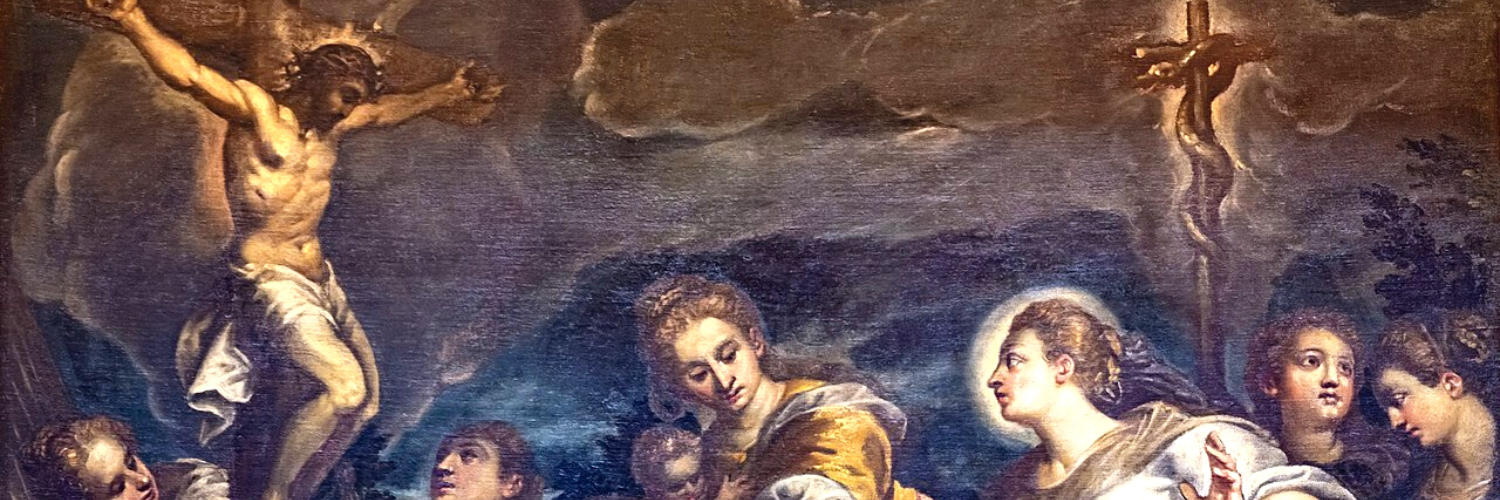
This is a symbolic “type” prefiguring the Cross, an instrument of death, which becomes the source of life as Jesus is nailed to it and transforms it into the instrument of our salvation.

The Old Testament goes on:

Psalm 2:7-9:
I will tell of the decree of the Lord: He said to me, “You are my son, today I have begotten you.  Ask of me, and I will make the nations your heritage, the ends of the earth your possession. You will rule them with an iron scepter, you will dash them to pieces like a petter’s vessel.”

Isaiah 7:14:
Therefore, the Lord himself will give you this sign: the virgin shall be with child, and bear a son, and shall name him Immanuel.

Isaiah 42:1,4:
Here is my servant, whom I uphold, my chosen one in whom I delight; I will put my Spirit on him and he will bring justice to the nations . . . He will not falter or be discouraged till he establishes justice on earth…

Isaiah 52:14-15
See, my servant shall prosper, he shall be raised high and greatly exalted.

Isaiah 53:3-10
There was in him no stately bearing to make us look at him, nor appearance that would attract us to him.  He was spurned and avoided by men, a man of suffering, accustomed to infirmity, one of those from whom men hide their faces, spurned, and we held him in no esteem.  Yet it was our infirmities that he bore, our sufferings that he endured, while we thought of him as stricken, as one smitten by God and afflicted.  But he was pierced for our offenses, crushed for our sins. Upon him was the chastisement that makes us whole, by his stripes we were healed.  We had all gone astray like sheep, each following his own way; But the LORD laid upon him the guilt of us all.
Though he was harshly treated, he submitted and opened not his mouth; Like a lamb led to the slaughter or a sheep before the shearers, he was silent and opened not his mouth.  Oppressed and condemned, he was taken away, and who would have thought any more of his destiny?  If he gives his life as an offering for sin, he shall see his descendants in a long life, and the will of the LORD shall be accomplished through him.

Daniel 7:13-14
As the visions during the night continued, I saw One like a son of man coming, on the clouds of heaven; When he reached the Ancient One and was presented before him.  He received dominion, glory, and kingship; nations and peoples of every language serve him. His dominion is an everlasting dominion that shall not be taken away, his kingship shall not be destroyed.

Lastly, we find ourselves back in the New Testament in Luke 1:32-33. As the Old Covenant is being fulfilled in Jesus in the New Covenant which will be consummated on Calvary, there is the figure of Simeon in the Temple, meeting the Messiah as he is presented by Mary and Joseph.  Although this is a New Testament passage, it highlights the transition, the completion of the old and the inauguration of the new. Simeon prophesies to Mary: He will be great and will be called the Son of the Most High; and the Lord God will give to him the throne of his father David, and he will reign over the house of Jacob forever; and of his kingdom there will be no end.

Though he was harshly treated,
he submitted and opened not his mouth;
Like a lamb led to the slaughter or a sheep before
the shearers, he was silent and opened not his mouth.

What This Means For Us

“The New Testament lies hidden in the Old and the Old Testament is unveiled in the New.”   St. Augustine
God’s plan for our salvation is coherent and cohesive, and one.  Jesus is the Way, the Truth, and the Life, prophesied of old, revealed in time.

FOR FURTHER READING ON THIS TOPIC

Who Is Jesus

| Behold-Jesus | No Comments
The English writer C.S. Lewis famously presented his argument for the identity of Jesus as God. It’s a famous argument also presented by the philosopher Peter Kreeft of Boston College.…

Begotten Not Made

| Behold-Jesus | No Comments
One of the approaches to understanding who Jesus is to look at the Nicene Creed, which we recite at mass every Sunday. The Nicene Creed is the most widely accepted…

In Accordance With The Scriptures

| Behold-Jesus | No Comments
How do we know that Jesus is the Messiah and not another prophet? Why do we follow him and not another? That is because the Old Testament prophecies of Christ’s…

Begotten Not Made

Begotten Not Made

Fr. Ed Pelrine

One of the approaches to understanding who Jesus is to look at the Nicene Creed, which we recite at mass every Sunday.

The Nicene Creed is the most widely accepted and used brief statement of the Christian Faith. It is common ground to Eastern Orthodox, Roman Catholics, Anglicans, Lutherans, Calvinists, and many other Christian groups. Many groups that do not have a tradition of using it in their services nevertheless are committed to the doctrines it teaches.

When the Nicene Creed was drawn up, the chief enemy was Arianism, which denied that Jesus was fully God. Arius was a priest in Alexandria in Egypt, in the early 300’s. He taught that the Father, in the beginning, created (or begot) the Son and that the Son, in conjunction with the Father, then proceeded to create the world. The result of this was to make the Son a created being, and hence not God in any meaningful sense.

It was also suspiciously like the theories of those Gnostics and pagans who held that God was too perfect to create something like a material world, and so introduced one or more intermediate beings between God and the world. God created A, who created B, who created C, . . . who created Z, who created the world. Alexander, Bishop of Alexandria, sent for Arius and questioned him. Arius stuck to his position and was finally excommunicated by a council of Egyptian bishops. He went to Nicomedia in Asia, where he wrote letters defending his position to various bishops. Finally, Emperor Constantine summoned a council of Bishops in Nicea (across the straits from modern Istanbul), and there in 325 the Bishops of the Church, by a decided majority, repudiated Arius and produced the first draft of what is now called the Nicene Creed.

The Arian position has been revived in our own day by the Watchtower Society (the Jehovah’s Witnesses), who explicitly hail Arius as a great witness to the truth. So here we have “begotten of the Father before all times, before all ages.” Arius was fond of saying, “The Logos is not eternal. God begat him, and before he was begotten, he did not exist.”

A chief spokesman for the full deity of Christ was St. Athanasius, deacon and later Bishop of Alexandria. The Athanasians replied that the begetting of the Logos was not an event in time, but an eternal relationship.

 A favorite analogy of the Athanasians was the following: Light is continuously streaming forth from the sun. (In those days, it was generally assumed that light was instantaneous so that there was no delay at all between the time that a ray of light left the sun and the time it struck the earth.) The rays of light are derived from the sun, and not vice versa. But it is not the case that first the sun existed and afterward the Light. It is possible to imagine that the sun has always existed, and always emitted light. The Light, then, is derived from the sun, but the Light and the sun exist simultaneously throughout eternity. They are co-eternal. Just so, the Son exists because the Father exists, but there was never a time before the Father produced the Son. The analogy is further appropriate because we can know the sun only through the rays of light that it emits. To see the sunlight is to see the sun. Just so, Jesus says, “He who has seen me has seen the Father.” (John 14:9)

begetting of the Logos was not an event in time,
but an eternal relationship

God is not in time. Time, like distance, is a relation between physical events and has meaning only in the context of the physical universe. When we say that the Son is begotten of the Father, we do not refer to an event in the remote past, but to an eternal and timeless relation between the Persons of the Godhead.

What This Means For Us

Although we can have a real relationship with Jesus, we can also speak of who he is in theological terms. This Jesus, whom we worship and proclaim as God and Lord, is in eternal relationship as Son to the Father, in the Holy Spirit. He is also fully human through the Blessed Virgin Mary. This joining of divine and human natures is called the Hypostatic Union – one person with two natures. Because he is God, he has the power to save humanity. Because he is man, we humans can receive this salvation. And the reason for all of this is summed up in John 3:16: “For God so loved the world that He gave His only begotten Son, that whoever believes in him shall not perish but have eternal life.”

FOR FURTHER READING ON THIS TOPIC

Who Is Jesus

| Behold-Jesus | No Comments
The English writer C.S. Lewis famously presented his argument for the identity of Jesus as God. It’s a famous argument also presented by the philosopher Peter Kreeft of Boston College.…

Begotten Not Made

| Behold-Jesus | No Comments
One of the approaches to understanding who Jesus is to look at the Nicene Creed, which we recite at mass every Sunday. The Nicene Creed is the most widely accepted…

In Accordance With The Scriptures

| Behold-Jesus | No Comments
How do we know that Jesus is the Messiah and not another prophet? Why do we follow him and not another? That is because the Old Testament prophecies of Christ’s…

Who Is Jesus

Who is Jesus

Fr. Ed Pelrine

The English writer C.S. Lewis famously presented his argument for the identity of Jesus as God. It’s a famous argument also presented by the philosopher Peter Kreeft of Boston College. Often referred to as “aut Deus aut homo malus:” either God or a bad man.  

In the fourteenth chapter of John’s Gospel, as Jesus is preparing for his death, he makes this claim to his Apostles: “I am the Way, the Truth, and the Life. No one comes to the Father except through me.”  Lewis argues that only God could make this claim, and if a mere human being did, he would be evil or mad.

Lewis refers to what he says are Jesus’ claims:

  • to have authority to forgive sins — behaving as if he really was the person chiefly offended in all offenses.
  • to have always existed
  • to intend to come back to judge the world at the end of time.

What do we know about Jesus’ life? He was a first century Jew from Palestine, believed by Christians to be the son of Mary of Nazareth, a devout Jewish woman, and the stepson of Joseph the carpenter. Mary is said to descend on her father’s side from the tribe of Judah and on her mother’s from the tribe of Levi. Joseph was of the House of David as well. Born in Bethlehem in Judea, just a few miles from the capital of Jerusalem, Jesus grew up in Nazareth in Galilee, in the north of the country, which was under Roman occupation.

Jesus began a ministry when he was around thirty years old, and revealed God the Father to the people of Israel. He also revealed himself as the Son of God, as he fulfilled the Old Testament prophecies about the coming Messiah. Gathering a group of chosen Apostles around him, Jesus carried out a ministry of healing and teaching, culminating with his arrest and trial, crucifixion, and death. This was his High Priestly sacrifice, as he fulfilled the sacrifices of the Old Covenant by his sacrificial offering of his own life on the Cross.

On the third day after he offered the Passover sacrifice of the New Covenant, Jesus was raised from the dead in his glorified body, and shortly thereafter returned to Heaven after commissioning his Apostles to preach the Gospel to all nations.

After Jesus revealed himself as the Way, the Truth, and the Life, he expressed his mission perhaps most beautifully to Philip the Apostle, when he said to him, Philip, “When you see me, you see the Father.” 

When you see me,
you see the Father

What This Means For Us

Jesus reveals the face of God the Father to us. He invites us into the relationship of dynamic love which is the Trinity: Father, Son, and Holy Spirit. Jesus desires an intimate friendship with us. He pours his life and love into us through his sacraments. He speaks to us through the Scriptures and through the apostolic witness in the teaching of his Church.

FOR FURTHER READING ON THIS TOPIC

Who Is Jesus

| Behold-Jesus | No Comments
The English writer C.S. Lewis famously presented his argument for the identity of Jesus as God. It’s a famous argument also presented by the philosopher Peter Kreeft of Boston College.…

Begotten Not Made

| Behold-Jesus | No Comments
One of the approaches to understanding who Jesus is to look at the Nicene Creed, which we recite at mass every Sunday. The Nicene Creed is the most widely accepted…

In Accordance With The Scriptures

| Behold-Jesus | No Comments
How do we know that Jesus is the Messiah and not another prophet? Why do we follow him and not another? That is because the Old Testament prophecies of Christ’s…